
Likud On Top

Netanyahu Holds 64-Seat Majority in New Poll Despite Opposition Merger

A new Channel 14 poll released Sunday night found Prime Minister Benjamin Netanyahu’s right-wing bloc winning 64 seats if elections were held today, maintaining a clear majority even after the reported political merger between Naftali Bennett and Yair Lapid.

Bibi
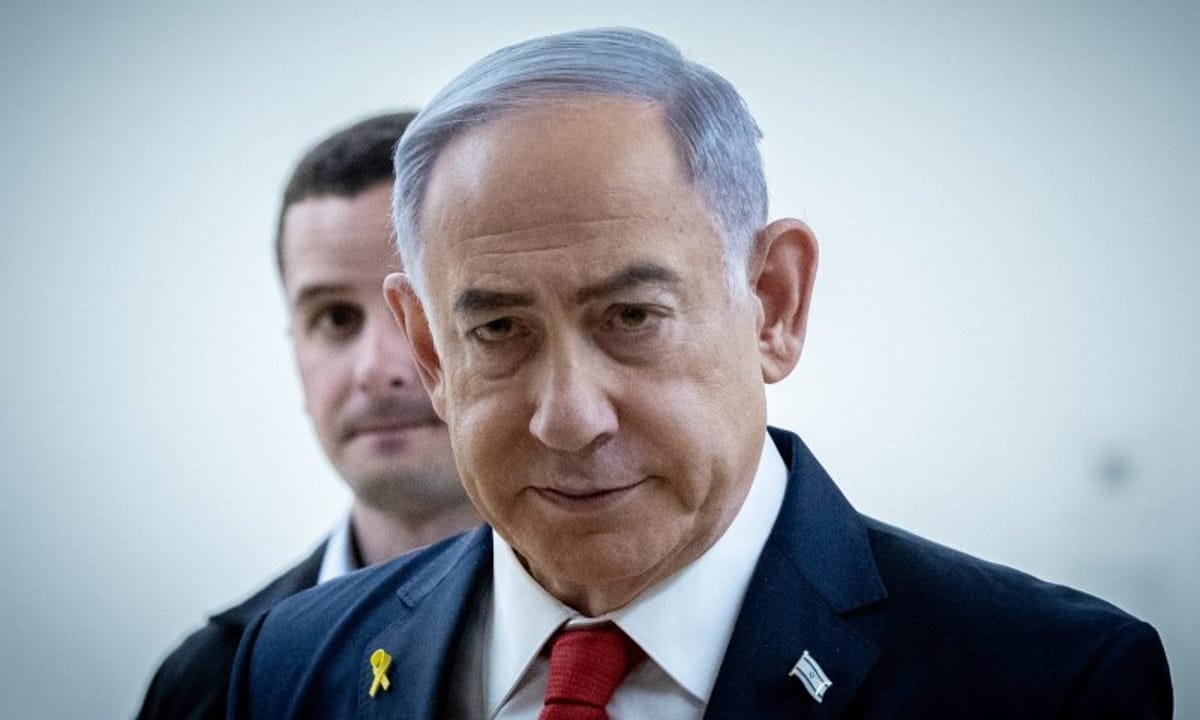
Bibi (Photo: Yonatan Sindel / Flash90)

A new Channel 14 poll released Sunday night found Prime Minister Benjamin Netanyahu’s right-wing bloc winning 64 seats if elections were held today, maintaining a clear majority even after the reported political merger between Naftali Bennett and Yair Lapid.

According to the poll, conducted by Shlomo Filber, Likud remains the largest party by a wide margin, with 34 seats. The new Bennett-Lapid party places second with 20 seats, making it the largest faction outside the Netanyahu camp but still far from challenging Likud’s lead.

The poll suggests that the Bennett-Lapid alliance has slightly weakened the right-wing bloc compared to Channel 14’s previous survey, in which it received 66 seats. Still, the bloc remains above the 61-seat threshold needed to form a government, because Israeli politics apparently needed one more reminder that mergers do not automatically make arithmetic disappear.

The survey gives Shas 11 seats and United Torah Judaism eight, while Otzma Yehudit receives seven and Religious Zionism four. Together with Likud, those parties bring the Netanyahu-aligned bloc to 64 seats.

On the opposition side, the Bennett-Lapid list receives 20 seats, Gadi Eisenkot’s Yashar party gets nine, Yisrael Beytenu eight, and the Democrats eight. The Arab parties receive 11 seats.

The bloc breakdown in the survey gives the right 64 seats, the left and center-left opposition 45, and the Arab parties 11.

Netanyahu also holds a significant lead in the question of suitability for prime minister. According to the poll, 51 percent of respondents said Netanyahu was best suited for the role, compared to 32 percent who chose Bennett.

The remaining candidates were far behind. Eisenkot received 13 percent, Avigdor Liberman three percent, and Benny Gantz one percent.

The poll was conducted Sunday among 932 adult respondents from the general population, with data analysis carried out by Filber.

The results come shortly after the Bennett-Lapid merger, an attempt to consolidate part of the anti-Netanyahu camp ahead of a possible election. But at least according to this survey, the move has not yet produced a path to a majority. Instead, Netanyahu’s camp remains stable, Likud remains dominant, and the opposition remains divided between a strengthened central list and several smaller parties.

Ready for more?

Join our newsletter to receive updates on new articles and exclusive content.

We respect your privacy and will never share your information.