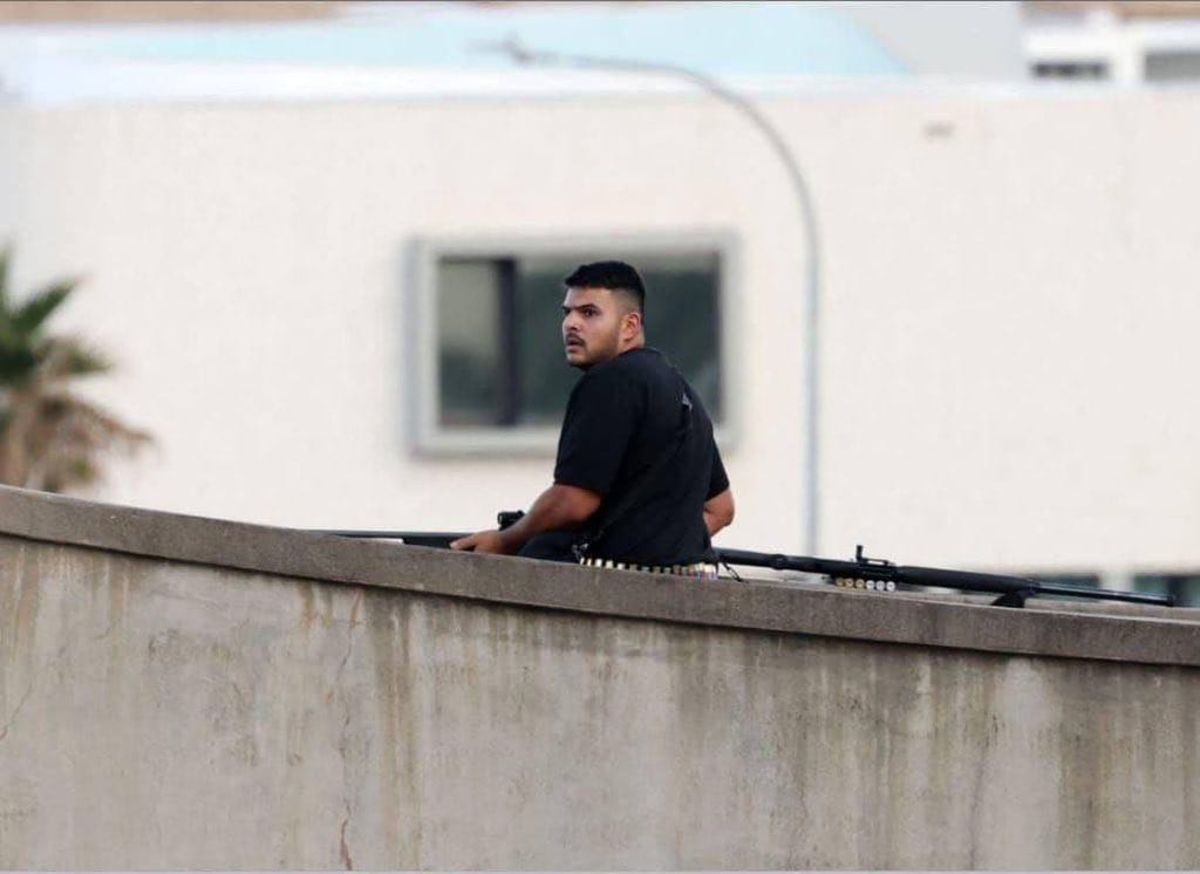
One of the gunmen behind the deadly terror attack at a Chanuka celebration in Sydney’s Bondi Beach was examined by Australia’s domestic intelligence agency years earlier over close ties to an Islamic State network, according to an exclusive report by ABC News.
Naveed Akram, 24, who survived the attack and remains hospitalized under police guard, first came to the attention of ASIO in 2019 due to his connections to a Sydney-based Islamic State cell. Prime Minister Anthony Albanese confirmed that Akram was investigated for approximately six months at the time before authorities assessed that he posed “no ongoing threat.”
That assessment is now under intense scrutiny.
According to senior counterterrorism sources cited by the ABC, investigators believe Akram and his father, Sajid Akram, pledged allegiance to Islamic State prior to Sunday’s attack, which killed 15 people at the Chanukah by the Sea event. Two IS flags were allegedly found in their vehicle near the attack site, including one visible in footage from the scene.
Sources familiar with the investigation say Naveed Akram was closely connected to a convicted IS operative serving a seven-year sentence for planning an insurgency in Australia. Several other members of that same network have since been jailed for terrorism offenses.
Despite those links, Sajid Akram, 50, legally held a firearms license for a decade and owned six registered weapons, all of which police say were recovered. NSW Police Commissioner Mal Lanyon said there had been “little knowledge” of either man by authorities in recent years, a statement likely to raise further questions about intelligence follow-up and risk assessment.
The attack has prompted a major security response nationwide. NSW Police deployed 328 officers to protect places of worship under Operation Shelter, while investigators from the Joint Counter Terrorism Team continue examining the lead-up to what officials describe as one of the worst mass-casualty attacks in modern Australian history.
As details emerge, the case is rapidly becoming a test of Australia’s counterterrorism system, particularly its ability to track and reassess individuals once flagged for extremist ties.