40 Years Since Chernobyl: The Night That Changed History Forever
Reactor explosion released 400 times more radiation than Hiroshima • 'Elephant's Foot' remains deadly four decades later | The ghost city that became a wildlife sanctuary (History)

On April 26, 1986, at precisely 1:23 a.m., a catastrophic sequence of engineering failures and human errors triggered an explosion at Reactor Four of the Chernobyl Nuclear Power Plant in Ukraine. The disaster, classified at the maximum severity level of 7 on the International Nuclear Event Scale, released approximately 400 times more radioactive material into the atmosphere than the atomic bomb dropped on Hiroshima.
Four decades later, the Chernobyl Exclusion Zone remains a haunting testament to the devastating power of nuclear energy when safety protocols fail. The abandoned city of Pripyat, frozen in time since that fateful spring morning, serves as a stark reminder of the human cost of technological hubris.
As the world marks the 40th anniversary of this watershed moment in nuclear history, five critical facts illuminate the magnitude of what transpired that night and its enduring legacy.

The Fatal Delay: 36 Hours That Sealed Pripyat's Fate
The nearby city of Pripyat, home to approximately 50,000 residents, was not evacuated until 36 hours after the initial explosion. During this critical period, residents went about their daily routines, completely unaware of the invisible threat saturating their environment.
When evacuation orders finally came, authorities instructed residents to pack only essential items for what they described as a temporary three-day absence. The residents of Pripyat never returned. Their apartments, schools, and personal belongings remain exactly as they left them, creating one of the most eerie time capsules in modern history.
This delayed response has been widely criticized as one of the Soviet government's most egregious failures during the crisis, exposing thousands to dangerous radiation levels that could have been avoided with immediate action.
The Red Forest: Where Nature Itself Died
The radiation levels surrounding the reactor reached such extreme concentrations that the pine forest adjacent to the facility experienced a phenomenon unprecedented in recorded history. The trees absorbed such massive doses of radiation that they died within days, their needles turning a brilliant orange-red color that gave the area its haunting name: the Red Forest.
This four-square-kilometer area remains one of the most contaminated zones on Earth. The dead trees were cut down and buried on-site, but even decades later, they show minimal signs of decomposition. The absence of fungi and bacteria capable of surviving in such radioactive conditions has effectively halted the natural decay process, leaving the buried timber in an eerie state of preservation.
The Liquidators: 600,000 Heroes Who Saved Europe
In the months following the disaster, approximately 600,000 individuals, soldiers, firefighters, miners, and civilian workers, were mobilized to contain the catastrophe. These men and women, known as "liquidators," undertook extraordinarily dangerous missions to prevent an even greater catastrophe that could have rendered vast portions of Europe uninhabitable.
Their most critical task involved constructing the first sarcophagus over the destroyed reactor, a massive concrete and steel structure designed to contain the radioactive materials. Many liquidators knowingly exposed themselves to lethal radiation doses, understanding that their sacrifice might prevent a continental disaster.
The human cost was staggering. While official Soviet figures remain disputed, thousands of liquidators developed radiation-related illnesses, and many died in the years following their service. Their heroism prevented what experts believe could have been a far more catastrophic release of radioactive material.
The Elephant's Foot: The Deadliest Object on Earth
Deep within the ruins of Reactor Four lies one of the most dangerous objects ever created by human activity: a mass of corium known as the "Elephant's Foot." This formation resulted from the nuclear fuel melting through the reactor floor, mixing with concrete and other materials to create a lava-like substance that solidified into a highly radioactive mass.
When first discovered, standing near the Elephant's Foot for just 300 seconds would deliver a fatal radiation dose, causing certain death within 48 hours. Even today, four decades later, it remains extraordinarily dangerous, though its radioactivity has diminished somewhat over time.
The initial photographs of this formation were taken using mirrors and remote cameras, as direct exposure would have been immediately lethal to any photographer. It stands as a physical manifestation of the disaster's enduring danger.
An Unexpected Sanctuary: Wildlife Thrives in Humanity's Absence
Perhaps the most paradoxical outcome of the Chernobyl disaster has been the transformation of the Exclusion Zone into an unintended wildlife preserve. In the absence of human habitation, nature has reclaimed the abandoned territory in ways that have surprised ecologists and researchers.
Wolves, bears, lynx, and wild horses now roam freely through the concrete ruins of Pripyat and the surrounding forests. The Przewalski's horse, an endangered species, has established a thriving population in the zone. Camera traps have documented a remarkable diversity of wildlife, including species rarely seen elsewhere in Europe.
This phenomenon has sparked intense scientific debate about the relative impacts of human habitation versus radiation on ecosystems. While the long-term genetic effects on these animal populations remain under study, the immediate observation is clear: for wildlife, the absence of humans has proven less harmful than their presence, even in a radioactive environment.
The Chernobyl Exclusion Zone has inadvertently become one of the most significant ecological experiments in modern history, offering insights into how quickly nature can recover when human activity ceases, even under the most extreme circumstances.
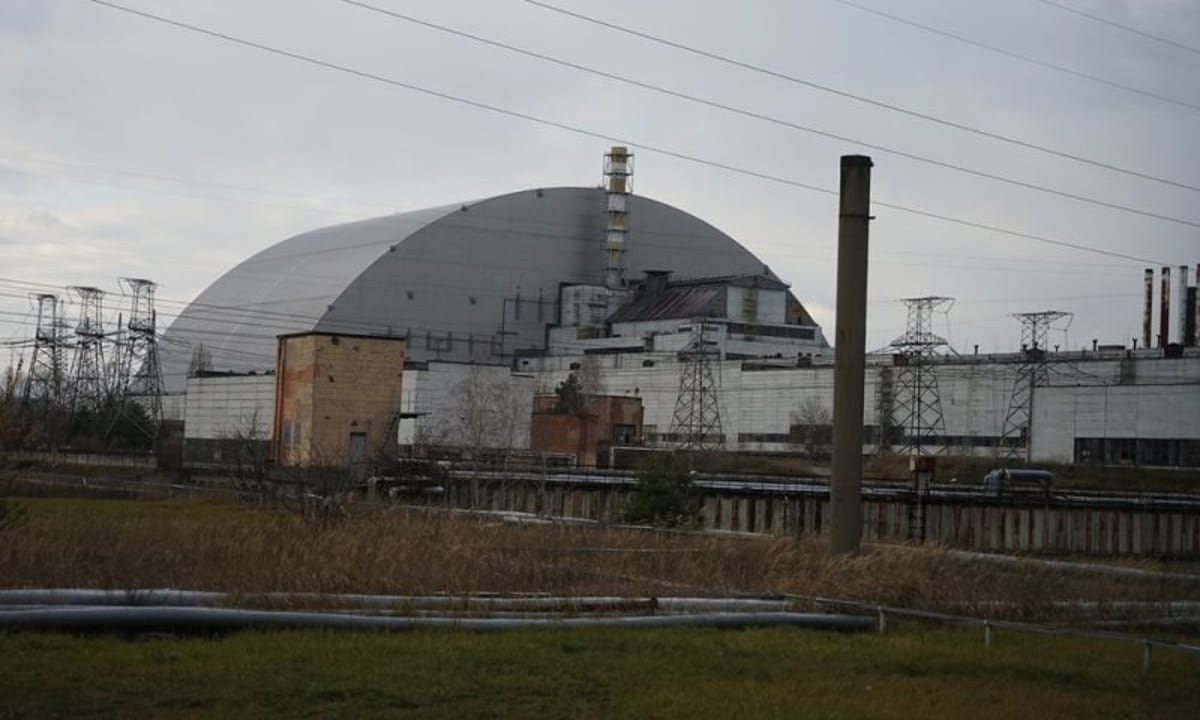
As the 40th anniversary of the Chernobyl disaster passes, the site continues to serve as both a warning and a testament. The new Safe Confinement structure, completed in 2016 to replace the deteriorating original sarcophagus, is designed to contain the radioactive materials for another century. Yet the full environmental and human cost of that April night in 1986 remains incalculable, with effects that will persist for generations to come.