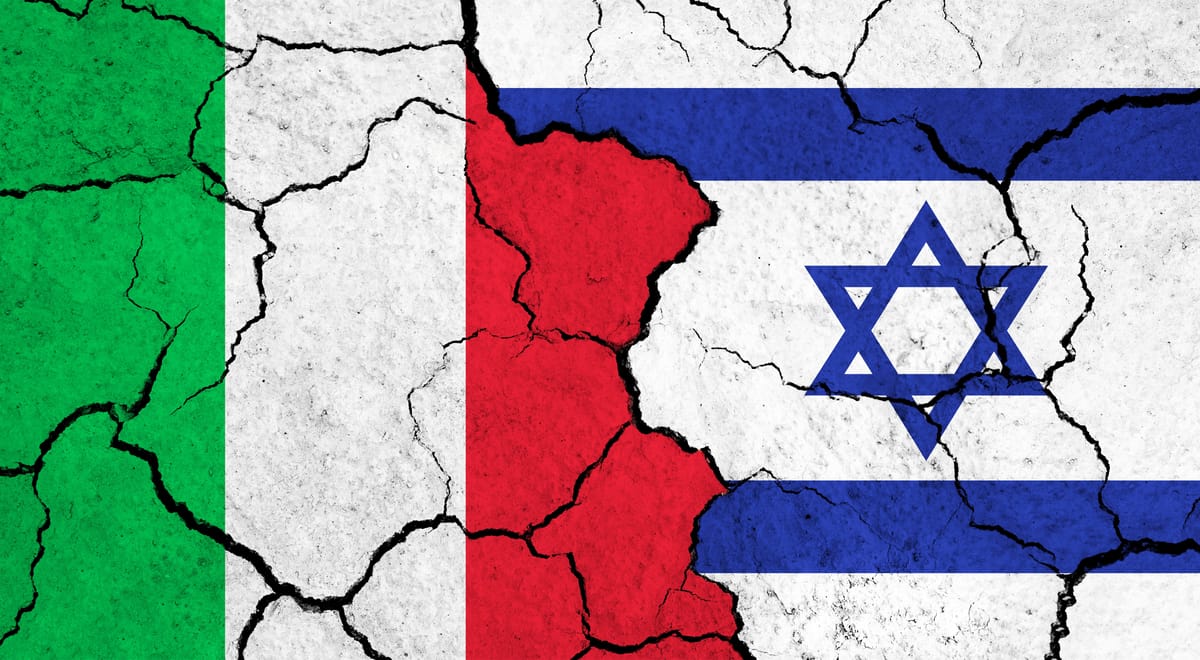
In a significant policy shift, Italian Prime Minister Giorgia Meloni announced today that Italy will not allow the automatic renewal of its long-standing bilateral defense cooperation agreement with Israel.
The announcement was made this afternoon while Meloni was speaking at the Vinitaly international wine exhibition in Verona. She stated that, in light of “the current situation” in the Middle East, the Italian government has decided to suspend the automatic five-year extension of the pact.
The agreement, a Memorandum of Understanding originally signed in the mid-2000s, covers a wide range of military and defense ties between the two countries, including:
- Joint military training and exercises
- Defense industry collaboration and arms-related research
- Intelligence sharing
- Technological and cybersecurity cooperation
It was scheduled to renew automatically in the next few days unless one side actively objected. Meloni confirmed that an official letter has already been sent to Israeli authorities notifying them of Italy’s decision.
Meloni’s right-wing government had been widely viewed as one of Israel’s strongest supporters in Europe since she took office in 2022. This move marks a clear departure and comes amid mounting domestic pressure from opposition parties, growing public protests, and continued regional tensions.
The “current situation” referenced by Meloni is understood to include:
- Israel’s ongoing military operations in Gaza
- The conflict with Hezbollah in Lebanon
- The recent U.S.-Israeli strikes on Iran and the resulting fragile ceasefire
Opposition leaders had been pushing hard for Italy to block the renewal, arguing that continued deep military cooperation with Israel is incompatible with Italy’s constitutional principles and international law given the humanitarian situation in the Palestinian territories.
The suspension does not immediately cancel all existing defense ties or ongoing contracts, but it prevents the agreement from quietly renewing and forces both sides into a potential renegotiation or review process.
No immediate reaction has been issued from Jerusalem, but Israeli officials are expected to respond in the coming hours.
This development is being closely watched across Europe and the Middle East as a possible sign of shifting Western alliances amid the broader regional crisis.