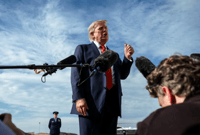
When President Trump declared in March that Iran's missiles were "down to a scatter" and that the country had "nothing left in a military sense," it sounded like a definitive verdict on the most intensive U.S. air campaign in a generation. According to classified intelligence assessments, it was not.
The Trump administration's public portrayal of a shattered Iranian military is sharply at odds with what U.S. intelligence agencies are telling policymakers behind closed doors. Classified assessments from early this month show Iran has regained access to most of its missile sites, launchers, and underground facilities.
The findings, first reported by the New York Times, represent one of the starkest known gaps between an administration's public messaging and the private intelligence picture in recent American history.
The Numbers Tell a Different Story
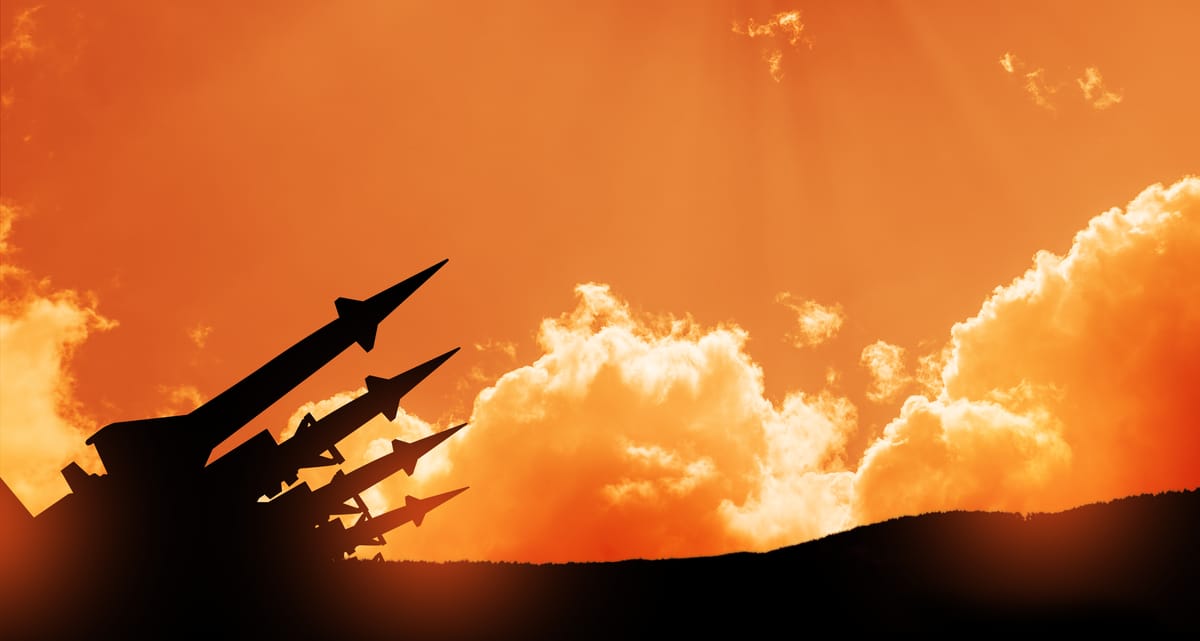
Iran has restored operational access to 30 of its 33 missile sites along the Strait of Hormuz, with only three sites remaining inaccessible. Intelligence agencies also estimate that Iran still possesses about 70% of its mobile missile launchers and roughly 70% of its prewar stockpile of ballistic and cruise missiles.
Military intelligence agencies have reported, based on information from multiple collection streams including satellite imagery and other surveillance technologies, that Iran has regained access to roughly 90% of its underground missile storage and launch facilities nationwide, which are now assessed to be "partially or fully operational."
These are not marginal discrepancies. They suggest that a military campaign described by Defense Secretary Pete Hegseth as an historic success left a substantial portion of Iran's most dangerous capabilities intact and, critically, already coming back online.
Underground Cities, Decades in the Making
The central reason for Iran's resilience is one the U.S. military has understood for years but apparently struggled to overcome in practice: Iran spent decades building one of the most extensive subterranean military infrastructures on earth.
Iran maintains approximately 30 underground missile bases constructed over decades in the Zagros and Alborz mountain ranges. These facilities sit at depths of 400 to 1,500 feet into granite bedrock, connected by over 100 interconnected tunnel systems. Even the GBU-57 Massive Ordnance Penetrator, the largest bunker buster in the U.S. inventory, could not reach them.
Iran has long hidden its launchers in extensive networks of tunnels and caves, preparing for a conflict like this for decades, making them particularly difficult to target. Iran has also had success in using "shoot and move" tactics with mobile platforms, making it difficult to track the launchers, similar to the challenges the U.S. has faced with the Houthis in Yemen.
A Choice Made Under Constraint
The classified assessments shed new light on a critical tactical decision that shaped the campaign's outcome.
When U.S. forces struck Iran's hardened missile facilities, the Pentagon, faced with limited stocks of bunker-busting munitions, opted to try to seal off many of the entrances rather than trying to destroy the entire sites with all of the missiles inside, with mixed results. Military planners faced a difficult choice and needed to be cautious in using bunker busters because they needed to preserve a certain number for U.S. operational plans for potential wars in Asia with North Korea and China.
As previously reported, the United States expended roughly 1,100 long-range stealth cruise missiles in the war, close to the total supply that remains in the American stockpile.
The strategy of sealing entrances rather than destroying sites proved insufficient. Iran deployed earth-moving equipment to reopen blocked tunnels, and U.S. and Israeli forces scrambled to strike bulldozers and heavy machinery as fast as Tehran could deploy them, a grinding, attritional contest that intelligence suggests Iran has largely been winning underground.
The Hormuz Dilemma Deepens
The strategic implications extend far beyond an accounting of missiles. Shipping traffic through the Strait of Hormuz has been largely blocked since February 28, 2026. Until the conflict began, the strait carried about 25% of the world's seaborne oil trade and 20% of the world's liquefied natural gas.
The intelligence assessments come as the U.S. has struggled to reopen the Strait of Hormuz, with officials privately acknowledging that Washington cannot promise to reopen the crucial waterway before ending the war.
The findings also underscore the dilemma Trump would face if the fragile ceasefire collapses and full-scale fighting resumes. The U.S. military has already depleted its stocks of many critical munitions, including Tomahawk cruise missiles, Patriot interceptor missiles, and Precision Strike and ATACMS ground-based missiles and yet the intelligence suggests Iran retains considerable military capability around the vital strait.
A separate confidential CIA analysis delivered to administration policymakers also finds that Iran retains a substantial missile and drone arsenal, and that Tehran can sustain its current position for months.
"Virtual Treason" vs. the Intelligence Community
The White House has reacted sharply to the emerging intelligence picture. A White House spokesperson repeated Trump's previous assertions that Iran's military had been "crushed," and pointed to a social media post from Trump declaring it was "virtual treason" to suggest that Iran's military was doing well. The acting Pentagon press secretary called news coverage of the findings "disgraceful," accusing outlets of acting as "public relations agents for the Iranian regime."
The friction between the administration's public posture and the classified assessments is not merely a communications problem. The consensus from CSIS, the Council on Foreign Relations, and the Soufan Centre is that the U.S. achieved significant tactical damage to Iran's visible military infrastructure but could not reach underground infrastructure, eliminate the Strait of Hormuz threat, suppress proxy networks, or produce the political outcome it sought.
What Comes Next
The Alma Research Centre has described the post-ceasefire period as a race to rebuild Iran's nuclear and missile arsenal. Iran retains up to 70% of its pre-war ballistic missile arsenal, underground production and storage facilities survived largely intact, and drone production capacity is reconstituting faster than Western intelligence can fully calibrate.
The nuclear question has shifted fundamentally. The fatwa prohibiting nuclear weapons died with Supreme Leader Khamenei, whose assassination opened the conflict. The new IRGC-dominated leadership now faces a strategic choice between maintaining conventional deterrence and pursuing nuclear weaponization. The Arms Control Association has assessed that the strikes may have strengthened the political case within Iran for weaponization rather than weakened it, a strategic irony of the first order.
The classified assessments, in other words, do not only describe a military situation. They describe the architecture of the next crisis, already being built, deep underground, beyond the reach of the bombs that were supposed to end it.