
As US and Iranian negotiators inch toward a possible framework agreement, one of America's most hawkish former officials is sounding the alarm, not just about the talks themselves, but about a nuclear threat hiding in plain sight that almost nobody in the room is addressing.
John Bolton, who served as National Security Adviser during Trump's first term, didn't mince words in a recent interview. Negotiating a nuclear deal with Iran, he said flatly, is "a waste of oxygen."
His argument: in 47 years, Tehran has never once abandoned its strategic objective of acquiring nuclear weapons, not under sanctions, not under diplomatic pressure, not under military strikes. They have lied, cheated, and violated every agreement they ever signed, Bolton contends, including covertly building a replica of North Korea's Yongbyon reactor in the Syrian desert, a facility discovered and destroyed by Israel in September 2007.
Bolton has called on Trump to resume military action against Iran, dismissing the ongoing ceasefire as "incalculably beneficial" to the regime, time it is using to regroup, rearm, and recover. He also criticized the decision to send Vice President Vance to lead early negotiations, arguing that "you don't use the vice president unless you're almost at closure."
But Bolton's sharpest critique isn't about diplomatic strategy. It's about what the negotiations are missing entirely.
The Plutonium Nobody Is Talking About
While US negotiators have laser-focused on Iran's uranium enrichment program, the 440 kilograms enriched to 60% purity, the centrifuge cascades at Natanz and Fordow, Bolton and a growing chorus of nonproliferation experts warn that a second, potentially larger nuclear threat is sitting untouched in a Russian-built power plant on Iran's southern coast.
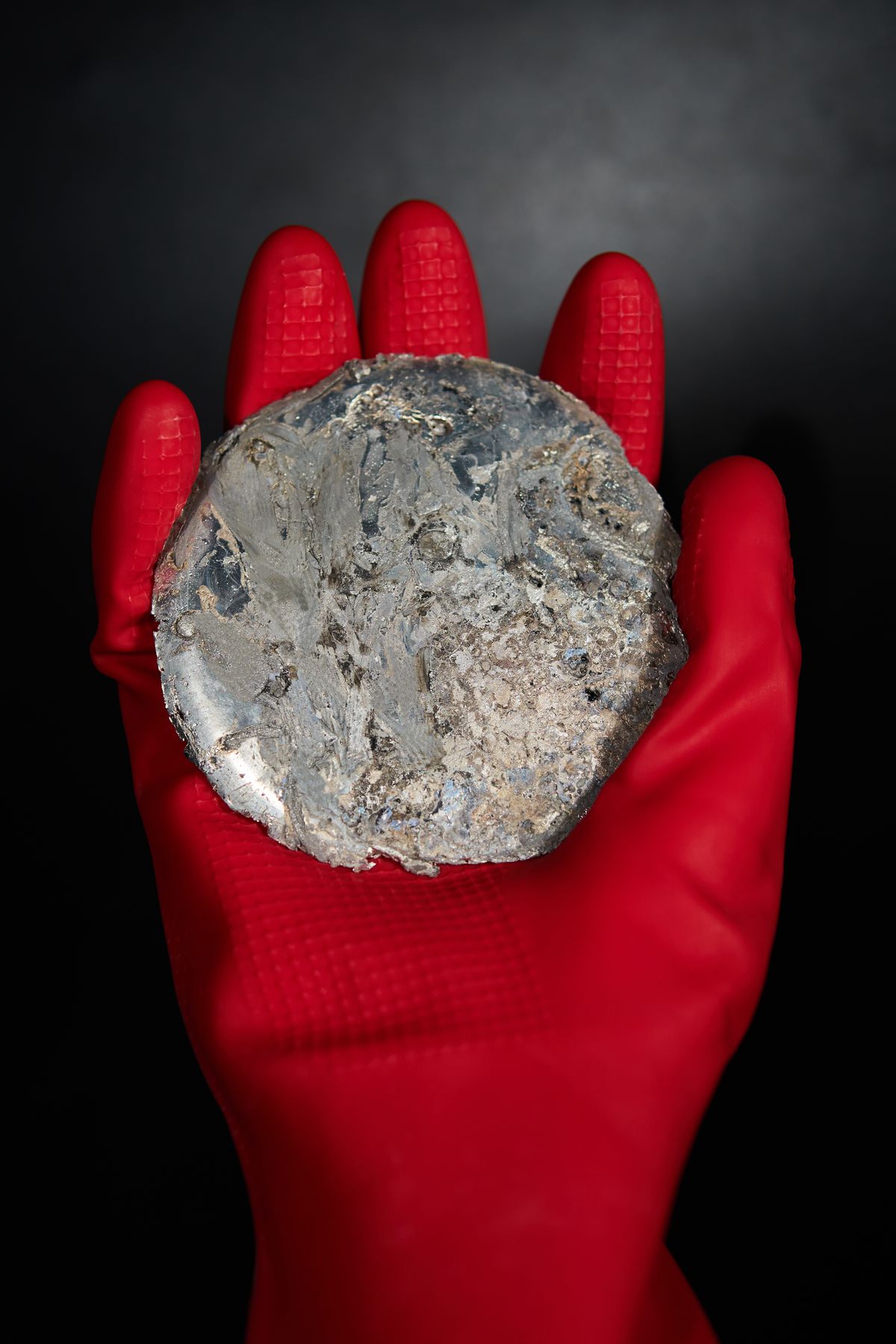
Russia's state nuclear company Rosatom, which built and has operated the Bushehr reactor for 15 years, has confirmed that 210 tons of spent nuclear fuel are now stored at the site. Cross-referencing that figure with IAEA reactor performance logs, nuclear experts calculate the spent fuel contains enough plutonium to manufacture more than 200 nuclear weapons.
That is not a typo. Two hundred bombs. From a civilian power plant. Sitting in a spent fuel pond with, until recently, inspectors visiting only once every 90 days.
The IAEA's own records show the last time inspectors visited Bushehr was August 27, 2025 and even when routine access existed, three months between visits was considered adequate. Experts argue that is more than enough time to divert spent fuel and begin reprocessing it into weapons-usable material.
The process of chemically stripping plutonium from spent fuel is not as technically forbidding as it sounds. A 1977 US government assessment found that a facility roughly the size of a basketball court, using technology little more advanced than dairy production, could accomplish the separation.
A Deal That Doesn't Address This Is Incomplete
The current US-Iran negotiations, mediated through Pakistan, have centered on Iran committing to a moratorium on uranium enrichment, with the two sides divided between Iran's offer of five years and America's demand for twenty. A reported framework under discussion would also involve snap IAEA inspections, Iran removing its highly enriched uranium from the country, and the gradual lifting of US sanctions.
What it reportedly does not address: the 210 tons of plutonium-laden spent fuel at Bushehr.
Jason Brodsky, policy director at United Against Nuclear Iran, told Fox News that any agreement "must address the plutonium pathway to nuclear weapons," noting that Israel struck Iran's heavy water reactor at Arak, another potential source of weapons-grade plutonium, twice within a single year, in June 2025 and again in March 2026, and that intelligence indicated Iran repeatedly attempted to rebuild it after each strike.
Nonproliferation expert Henry Sokolski, writing in the Bulletin of the Atomic Scientists, argued that the Obama administration made a critical error in 2015 by failing to insist on near-real-time surveillance of Bushehr when the JCPOA was negotiated, the IAEA had actually requested it, but Iran refused and nothing was done. Sokolski and others are now pressing the Trump administration not to repeat that mistake.
Not Everyone Agrees
The alarm is not unanimous. David Albright, a physicist and former weapons inspector at the Institute for Science and International Security, told Fox News he is "highly skeptical" Iran would actually pursue the plutonium route, arguing that Tehran lacks a plutonium bomb design, that any diversion would almost certainly trigger Russia to cut off uranium fuel supplies, effectively shutting down a multibillion-dollar investment, and that most of Bushehr's plutonium is reactor-grade rather than weapons-grade.
Andrea Stricker of the Foundation for Defense of Democracies also gave Russia rare credit, noting that Moscow had insisted inspectors be allowed back into Bushehr after the June 2025 strikes, with those inspections resuming in August of that year.
The Bigger Picture
Talks between the US and Iran have so far produced no final agreement. After the most recent round, Trump himself acknowledged the nuclear question remained the central sticking point, describing Iran as "unyielding" on the issue. Iran's Foreign Minister countered that a deal was "just inches away" but criticized what he called "maximalist demands" from US negotiators.
Bolton's position is that all of it is theater. Iran made its strategic decision about nuclear weapons 47 years ago, he argues, and has never wavered, not in its words to diplomats, and certainly not in its actions. After Israel launched a major strike on Iran's nuclear facilities last year, Bolton told CNN: "There was never a chance, let me say that again, never a chance that Iran was going to agree to any kind of deal that we would find acceptable. Diplomacy had no chance, given Iran's objectives."
Whether or not one shares his conclusions, the technical concern he is raising about plutonium has been validated by serious experts across the political spectrum. Any deal that caps uranium enrichment while leaving 210 tons of weapons-usable spent fuel sitting in a pond in Bushehr may be solving the wrong problem, or at best, only half of it.