Nuclear Science Discovery

Born of Fire: The Stunning New Material Discovered 80 Years After the First Atomic Bomb

Researchers identify unique silicon clathrate in trinitite glass • Extreme conditions created material impossible to replicate in laboratory | A window into matter under nuclear explosion (World News)

Luca Bindia, Marek Mihalkovič, Michael Widom, Paul J. Steinhardt/PNAS)

More than eight decades after the Trinity test detonated the first atomic bomb in human history, scientists have identified a previously unknown crystalline material formed in the extreme conditions of that July 1945 explosion. The discovery offers a rare glimpse into how matter behaves under circumstances that cannot be replicated in any laboratory on Earth.

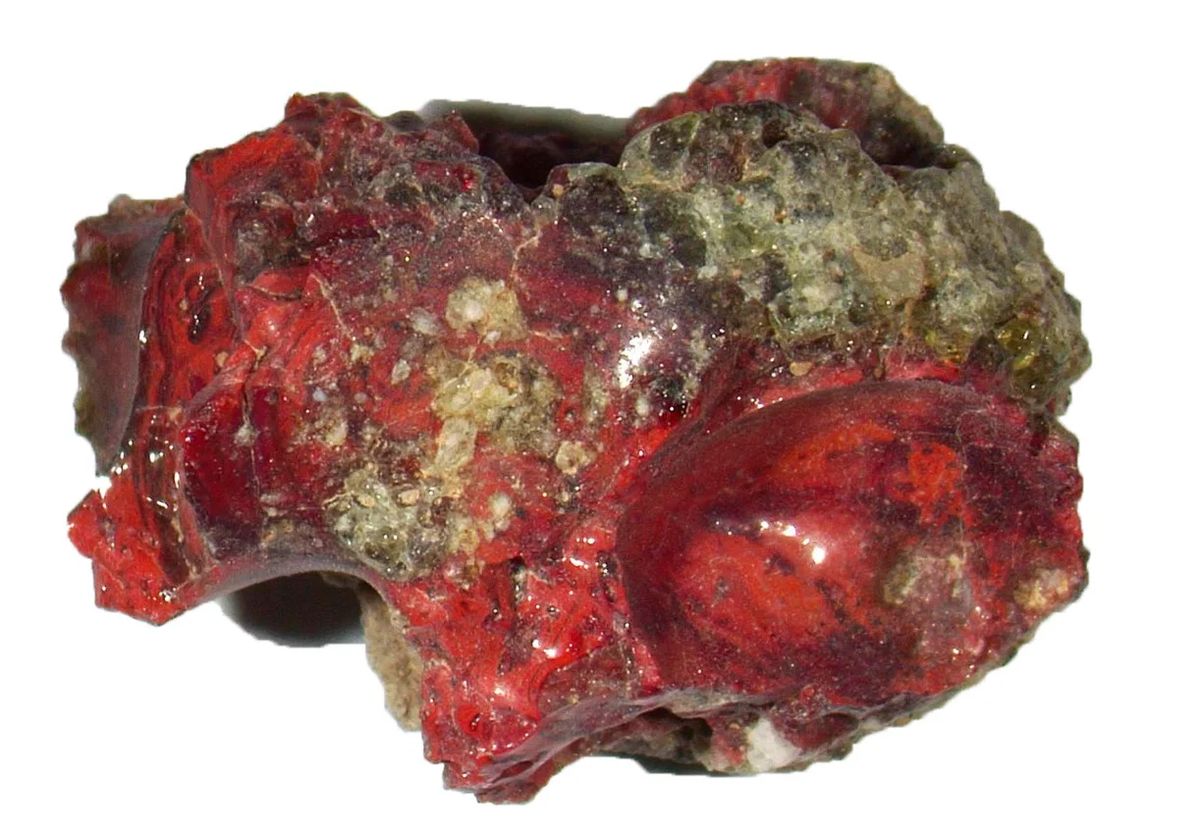
An international research team has detected a unique silicon clathrate structure within samples of "red trinitite" - the glassy material created when desert sand melted and fused during the nuclear blast at the New Mexico test site. The finding, which represents the first crystallographic identification of a clathrate formed by nuclear detonation, reveals how atoms can "freeze" into extraordinary configurations when subjected to temperatures exceeding 1,500 degrees Celsius and pressures reaching gigapascal levels - tens of thousands of times normal atmospheric pressure.


Atomic Cages Trapping Elements

The newly identified material belongs to a class of structures called clathrates, in which silicon atoms form geometric cage-like arrangements that trap other atoms inside. In this case, the cages consist of 12- and 14-sided polyhedra containing calcium atoms, along with traces of copper and iron. Dr. Luca Bindi, a geologist at the University of Florence who led the research, emphasized the unprecedented nature of the discovery: "This is an entirely new type of crystal - one that has never been observed before in nature or in the products of nuclear experiments."

The material formed during a process lasting mere seconds, as the explosion vaporized surrounding materials, mixed them at extreme temperatures and pressures, then rapidly cooled them. This rapid cooling effectively locked atoms into positions they would never occupy under normal geological or laboratory conditions. The researchers noted that such extreme environments serve as "natural laboratories" for creating unexpected crystalline structures that expand our understanding of material science.

Building on Previous Discoveries

This finding joins a growing catalog of exotic materials discovered in trinitite samples. In 2021, researchers identified a rare quasicrystal - a structure with ordered but non-repeating atomic patterns - within Trinity debris. While the elemental composition of the newly discovered clathrate resembles that earlier find, the atomic arrangement differs completely, challenging previous assumptions about how such materials form under nuclear conditions.

The implications extend beyond historical curiosity. Understanding material formation under extreme conditions has applications in fields ranging from high-pressure physics to nuclear forensics - the science of analyzing nuclear materials to determine their origins and history. Scientists noted that phenomena including nuclear detonations, meteorite impacts, and lightning strikes all create brief windows of extreme conditions that can produce materials impossible to synthesize through conventional means.

The research team emphasized that while the Trinity test represents a dark chapter in human history, the scientific examination of its physical remnants continues to yield insights into fundamental questions about matter and energy. As one researcher stated, these discoveries demonstrate how even the most destructive human activities can inadvertently create natural experiments that advance scientific knowledge in unexpected ways.

Ready for more?

Join our newsletter to receive updates on new articles and exclusive content.

We respect your privacy and will never share your information.