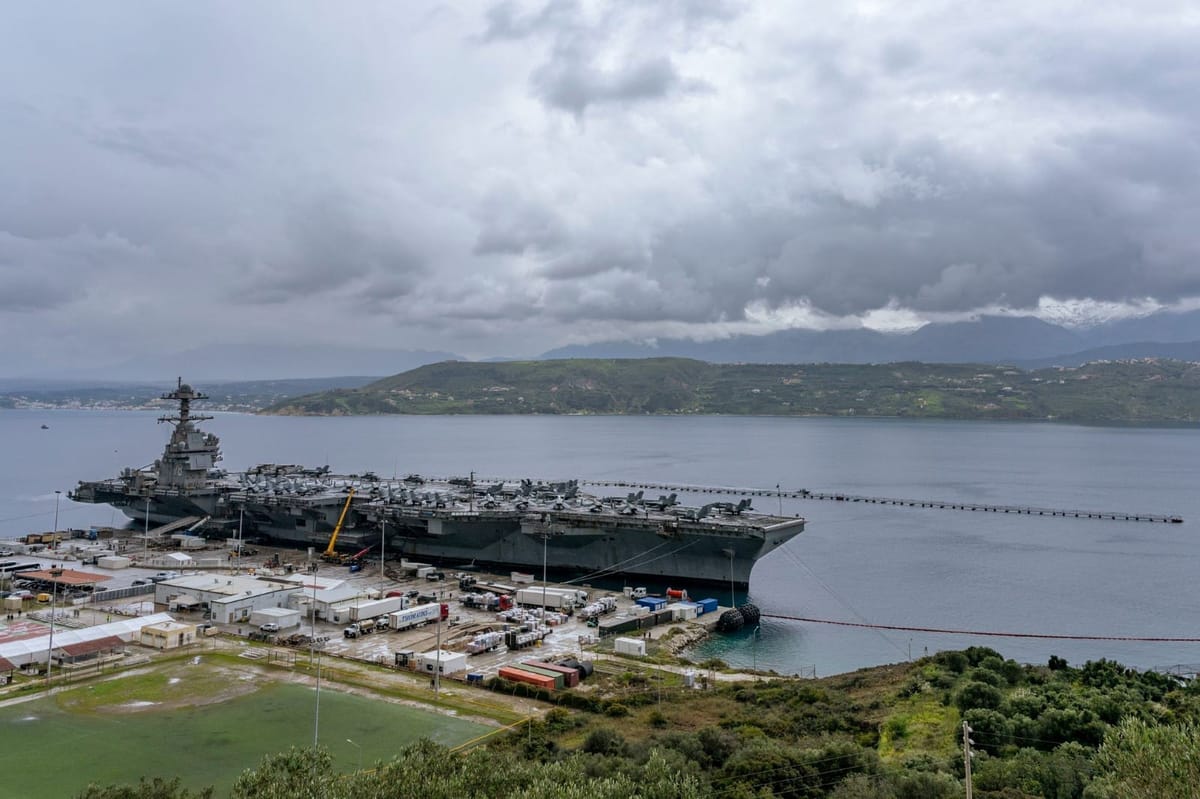
The USS Gerald R. Ford, the most advanced aircraft carrier in the United States Navy, has arrived at Naval Support Activity Souda Bay in Crete to undergo essential maintenance and repairs. The carrier’s arrival in Greece follows a grueling nine month deployment that saw the vessel engaged in high intensity operations in the Red Sea and the wider Middle East. While the Pentagon maintains that the ship remains fully mission capable, its temporary withdrawal from the immediate combat zone represents a notable, if brief, reduction in American naval airpower presence in the theater as tensions with Iran remain at a fever pitch.
The Cost of Combat
The move to Souda Bay was necessitated by several factors, most notably a significant fire that broke out in one of the ship’s laundry areas. The blaze resulted in injuries to several sailors and caused damage to specific sections of the carrier, requiring specialized technical assessment and repair that could not be completed at sea. Additionally, the sheer length of the deployment, nearly three quarters of a year, has placed immense mechanical strain on the carrier’s systems. Souda Bay, a vital U.S. and NATO hub, provides the necessary infrastructure for the Ford to resupply and address technical wear while remaining within a relatively short distance of the Middle East.
The temporary absence of the USS Gerald R. Ford comes at a delicate time for U.S. strategy in the region. For months, the carrier’s air wing has been a primary tool for striking Iranian capabilities and protecting maritime routes from the regime’s aggression. While other U.S. assets remain in the area, the Ford’s move to Crete highlights the logistical challenges of maintaining a permanent high intensity military presence far from home ports. U.S. officials have stressed that the stop is a "technical assessment" and that the carrier can be redeployed rapidly if the situation with Tehran escalates further, but for now, the "tip of the spear" is receiving much needed attention in the Mediterranean.