A massive humanitarian crisis is gripping Venezuela following a devastating series of earthquakes that completely leveled coastal communities and left thousands buried under heavy concrete. Six days after the initial disaster, specialized rescue teams are losing hope of finding survivors underneath the massive fields of rubble. Despite the shrinking survival window, search operations continue around the clock amid unprecedented civil unrest, with local populations turning their intense anger directly toward the central government for its failing rescue response.
The twin earthquakes that struck Venezuela last Wednesday have claimed the lives of at least 1,700 people and generated widespread strategic destruction across multiple residential sectors. Acting President Delcy Rodriguez officially classified the seismic event as the most brutal natural disaster in the history of the country. With tens of thousands of citizens still missing, the local populace is directing immense fury toward state authorities for severe operational neglect and failing to deploy professional equipment to the hardest hit zones.
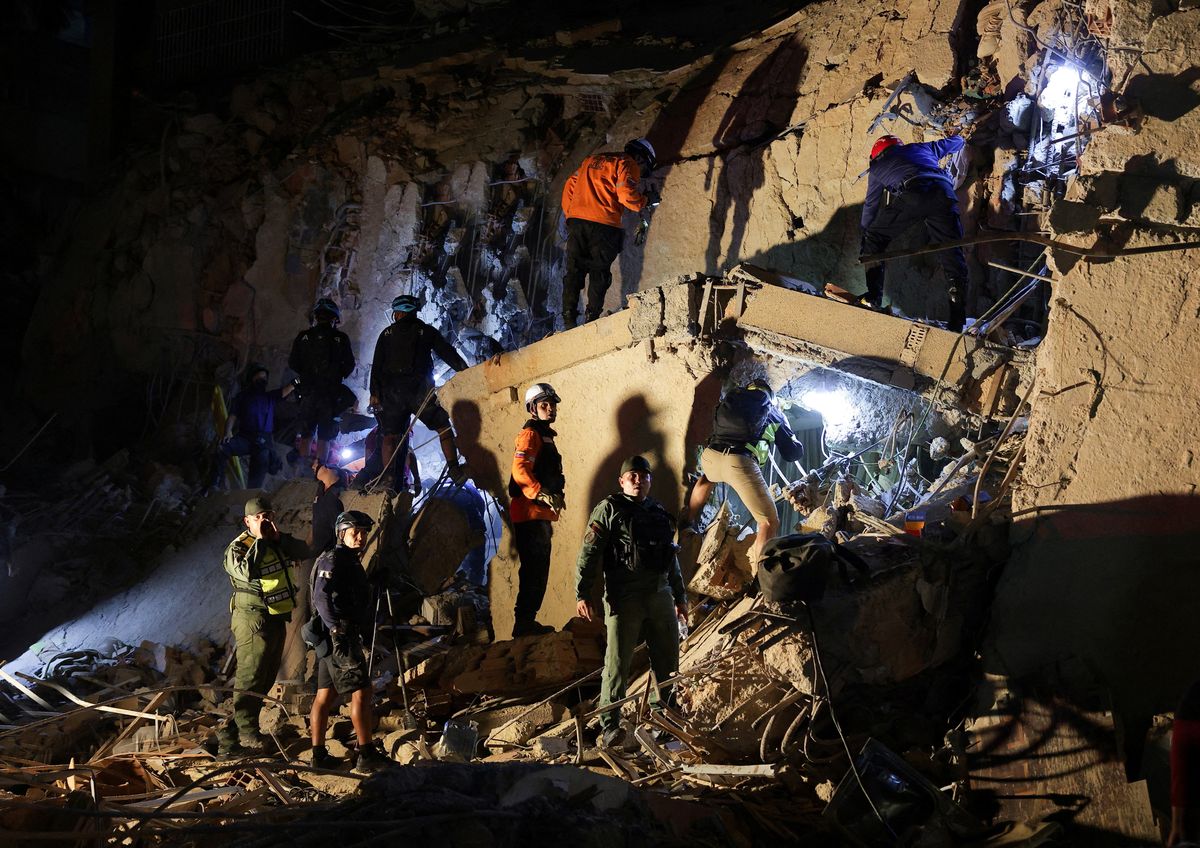
The desperate nature of the search is visible in the coastal town of La Guaira, where rescue crews are utilizing acoustic gear to detect signs of life beneath a collapsed twelve-story building. "Quiet!" rescuers scream as they turn toward the road with their fists in the air, signaling for everyone to maintain absolute silence. Traffic stops immediately, civilian conversations cease, and heavy machinery operators go silent as a technician presses an ear to a hole freshly drilled through a dense concrete slab while another shines a flashlight inside.
Standing alongside the ruins, Miguel Oscar Nunez holds his breath alongside dozens of other distraught families waiting for news regarding their trapped loved ones. Nunez is searching for his 34 year old only son, Angel, who resided inside the flattened tower. After moments of painful anticipation pass without a single sound echoing from the deep subterranean void, the heavy silence ends, and manual digging operations resume.
Local residents claim that official help arrived days too late, forcing neighbors to form ad hoc volunteer teams to clear debris without any mechanical support. "The rescue operation began very late and it is slow. At first, it was only people living in the community who came to help. The police only came to check, but they did not help. The government's response was frustrating and helpless," resident Kevin Montilla stated.
This extreme government delay has severely compromised the survival chances of hundreds of missing citizens who may have survived the initial tremors. Nunez emphasized this tragic reality while waiting for heavy machinery to arrive at his son's collapsed apartment block. "My son, like hundreds of others, is trapped under the rubble. But we need much more support from the authorities urgently to rescue them. It is possible the earthquake did not kill him, but can you imagine if he is killed because of the negligence of the authorities," Nunez stated.
Without official backup, volunteers are using primitive tools and physical strength to pull neighbors out of fractured structures. "We could hear the screams and cries of people trapped under the rubble. So we tried to help them ourselves, using bare hands, digging through the rubble with our fingernails," local survivor Juan Avendano explained.
Avendano recalled a successful citizen led rescue where volunteers tracked a trapped woman through the dark ruins. "We heard her screaming at night. But it was dark and we could do nothing. So the next morning we went and tried to find her. At first we tried to pass her a bottle of water, and then we worked to pull her out," Avendano noted.
Other parents describe a total sense of abandonment by state institutions as they search for missing children without any government assistance. "I have no help from anyone. No machinery or rescuers were sent to dig through the rubble. It is as if they left you alone to find your loved ones. My daughters were quiet girls who invested in their studies, I just want them back at any cost," Daylisbeth Herrera stated.
As the days progress, the operational environment is turning increasingly hazardous due to decomposing remains and shifting structural debris. "The stench is terrible here. But I am still trying because I am looking for my uncle. We cannot just stand by when there is a possibility that there might be living people under the rubble. Help arrived very late in most places, and in some, it has still not arrived," William Rodriguez explained from the Bello Horizonte housing complex.