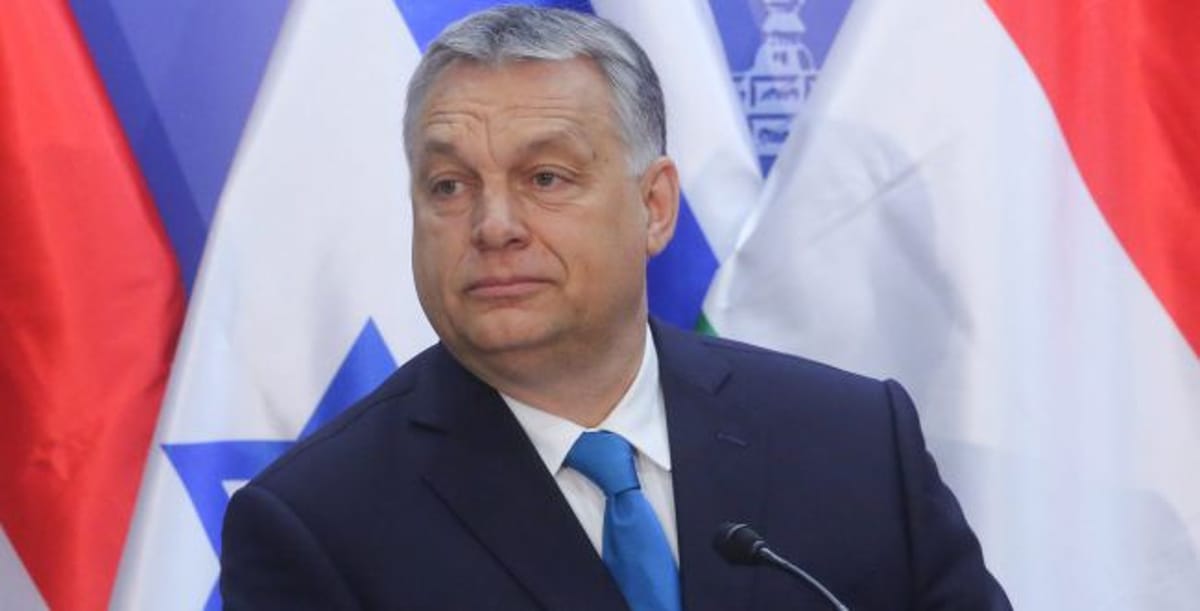
Hungary’s long-serving Prime Minister Viktor Orbán conceded defeat in Sunday’s parliamentary election, bringing an end to his 16 years in power after a sweeping victory by opposition leader Péter Magyar and his center-right Tisza party.
With more than 98 percent of votes counted, official results indicate that Tisza is on track to secure a two-thirds supermajority in the 199-seat parliament, winning approximately 138 seats. Orbán’s Fidesz party, which previously held a dominant 135-seat majority, is projected to fall to roughly 55 seats.
In a brief address to supporters, Orbán acknowledged the outcome, calling the result “painful” but “clear,” and congratulated Magyar on his victory.
The result marks a dramatic shift in Hungarian politics. Orbán had led Fidesz to four consecutive election victories, each delivering a supermajority that enabled him to reshape key state institutions and pursue what he described as an “illiberal democracy.” His tenure was frequently at odds with the European Union, particularly over rule-of-law concerns and Hungary’s close ties with Russia.
Magyar, a relative newcomer to frontline politics, campaigned on an anti-corruption platform while also focusing on domestic concerns including economic stagnation, rising living costs, and strains on Hungary’s healthcare system. Addressing supporters after polls closed, he declared that voters had “liberated Hungary” from Orbán’s rule.
The election drew strong turnout, with participation reaching nearly 78 percent, significantly higher than in the previous vote.
The outcome is expected to have broader implications beyond Hungary. Within the European Union, leaders are likely to welcome the shift, which could ease longstanding tensions between Budapest and Brussels and potentially unlock suspended EU funding. It may also affect Hungary’s position on key issues including support for Ukraine.
Orbán’s defeat is also seen as a setback for political allies abroad, including US President Donald Trump, who endorsed him during the campaign, and Russian President Vladimir Putin, who counted Hungary as a key partner within the EU.
The extent of policy changes under a Tisza-led government will depend in part on whether the party secures the full constitutional majority required to reverse Orbán-era reforms.