The Arab parties are projected at a combined 17 to 18 seats. Channel 12 gives them 18 and Channel 13 gives them 17. Their final pre-election polls on the same two channels had them at 14 and 16. VINnews called Channel 13's figure of 17 a record showing for Arab-led parties, which have generally not joined Israeli governing coalitions.
The Jerusalem Post reported that the opposition bloc is made up of Yashar, B'Yachad, Yisrael Beytenu and the Democrats. Opposition leaders have largely ruled out forming a government with the Arab parties. The exception is the Democrats' Yair Golan.
On the right, Itamar Ben-Gvir's Otzma Yehudit is projected at 6 to 7 seats. Bezalel Smotrich's Religious Zionist Party-Zehut is projected at 6. The two main haredi parties together stand at 12 to 13.
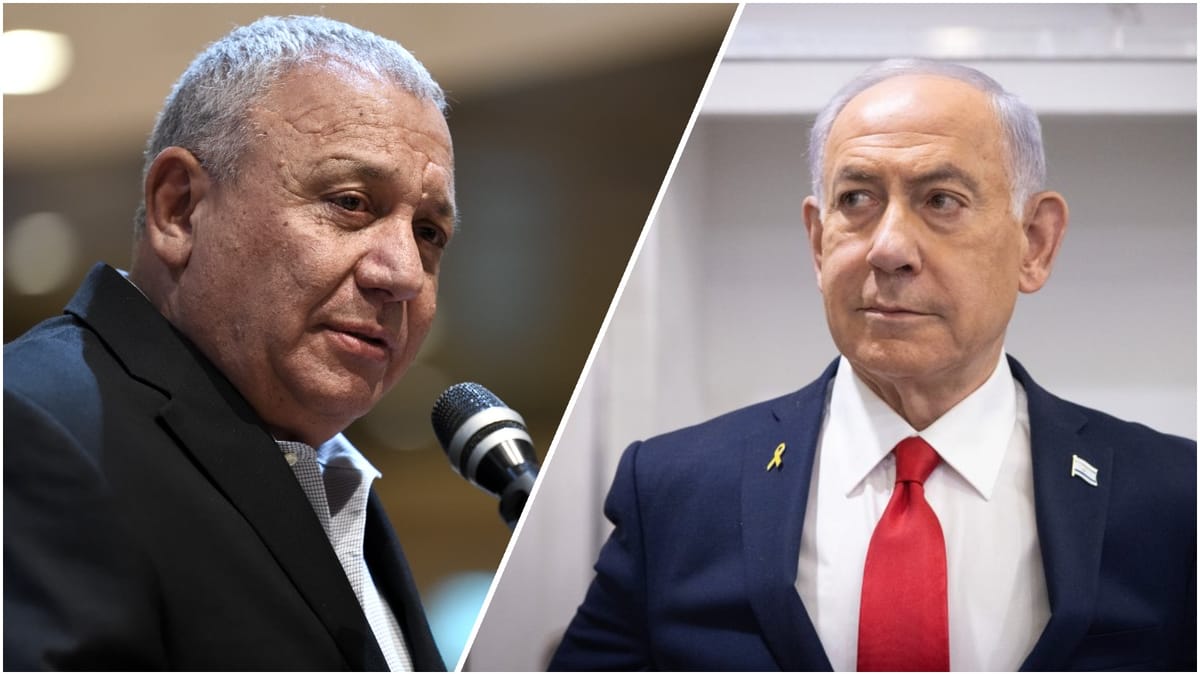
A unity government with Netanyahu and Eisenkot looks unlikely. Eisenkot has refused to serve under Netanyahu, including in a rotation arrangement, and other opposition leaders have also ruled out joining a coalition he leads. Eisenkot has proposed that the head of the largest party in the opposition bloc become its candidate for prime minister. No such agreement has been announced.
A minority government that wins a confidence vote without 61 seats is one possible outcome. Resistance within the opposition to relying on Arab parties could block that route. If no bloc can form a government, Israel could head to another election, with Netanyahu staying on as caretaker prime minister.
Several smaller parties appear to have missed the 3.25% electoral threshold. They include Ofer Winter's People of Israel party and the Reservists-Economic Party led by former minister Yoaz Hendel and economist Yaron Zelekha. The Haredi Public party, which tried to attract ultra-Orthodox voters unhappy with the established religious parties, is also projected to fall short. Parties below the threshold get no seats, and their votes are left out of the seat allocation.
Turnout reached 74.3% by 8 p.m., according to the Central Elections Committee, which publishes the official results. That is the highest rate at that hour since 1988. By then, 5,449,277 of 7,331,981 eligible voters had cast ballots, compared with 66.3% at the same point in November 2022. Because turnout was so high, parties need more votes than in past elections to cross the threshold.
The final count could take days. More than 650,000 double-envelope ballots must be verified and counted separately. These include votes from soldiers, diplomats, hospital patients and people voting away from their registered polling stations. Committee officials warned the process could run until Friday morning. Those ballots could decide the fate of parties near the threshold.
Exit polls have missed final results in previous elections. Once the count is complete, President Isaac Herzog must consult the elected factions before assigning a lawmaker to try to form a coalition.
As reported earlier Tuesday night, i24's exit poll put Likud at 27 seats and Yashar at 20. JFeed also reported at midday that 31.5% of eligible voters had cast ballots by noon, the highest midday figure since 1973.