
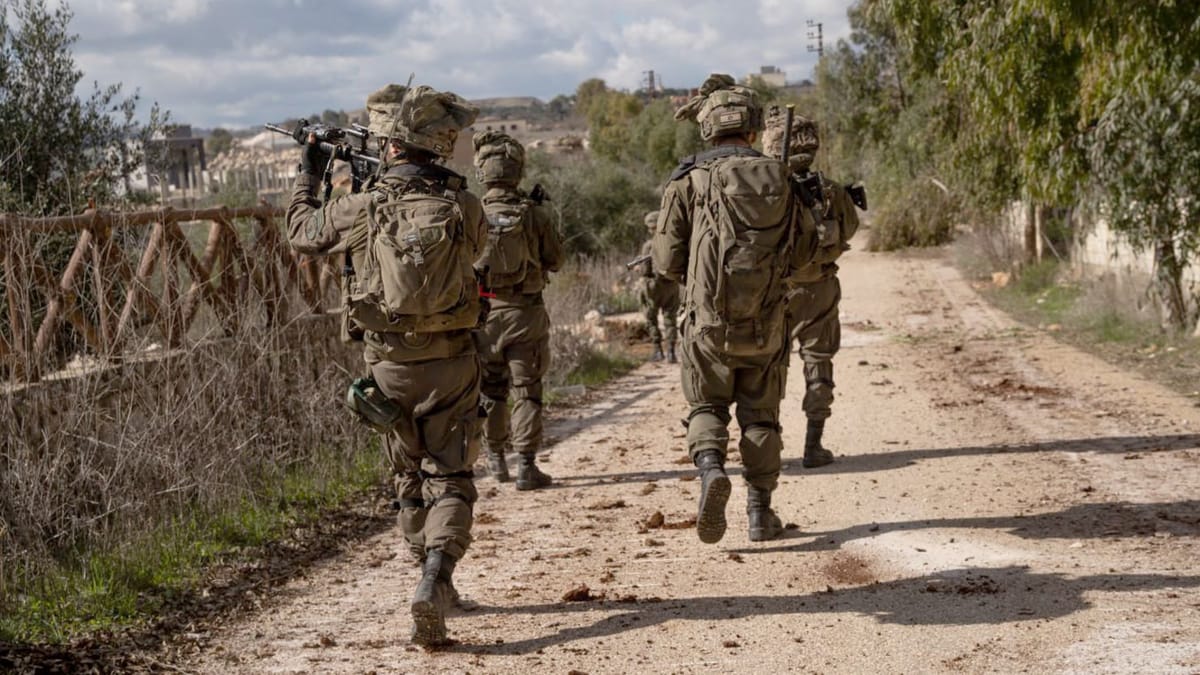
The Israel Defense Forces began a phased withdrawal from the Gaza Strip on Thursday morning, only hours after U.S. President Donald Trump announced the first stage of a hostage-release agreement. Logistics units operating in Gaza City departed first, with combat formations slated to leave gradually through the weekend as the army folds forward positions and shifts to defensive lines closer to Israel’s border.
IDF officials said the current repositioning follows political approval of the deal’s initial phase. Reserve troops are expected to be released beginning next week as forces consolidate outside the Strip.
A subsequent pullback—likely early next week—will reduce Israel’s presence along several division corridors in southern Gaza, particularly around Khan Younis. The military plans to maintain “forward and deeper” defensive belts just beyond today’s security line while negotiations proceed following the hostage releases.
Senior military sources cautioned that public metrics about “Israeli control” inside Gaza are largely a political fiction. Starting this weekend, they said, Hamas is poised to reassert practical control over most of the Strip, certainly in dense urban zones, while Israel preserves security dominance mainly in heavily leveled areas such as southern Rafah, parts of the Beit Hanoun periphery, and eastern fringes near the border around Shuja’iyya and Khan Younis. “Hamas will be able to regroup and rearm from the first minute of the cease-fire,” one source warned.
Ahead of the cease-fire’s effective hour, the IDF has shifted to high alert, concerned that Hamas may try to “empty its magazines” with last-minute rocket or mortar fire or seek to kidnap or kill soldiers. Overnight, there were isolated launches from inside Gaza without casualties. In two incidents near IDF fortifications around Khan Younis, troops fired on suspected militants; the army is examining whether the suspects were armed and their intent.
Until the cease-fire begins, the IDF is minimizing nonessential movements inside Gaza and conducting “completion strikes” on preplanned targets gathered in recent days to set conditions for an orderly withdrawal. The military said it is “conducting operational preparations and battle procedures for a transition to adapted deployment lines in the near term,” while remaining ready to respond to any escalation.
Under the agreement’s framework, Israel is expected to withdraw within 24 hours of the government’s approval to a designated line that would leave its forces in roughly 53% of the Gaza Strip. Initial steps are centered on Gaza City, to be followed by pullbacks in the south. The Chief of Staff has directed units to prepare for a sensitive and professional operation to return hostages, the IDF said, while continuing to pursue the war’s objectives and defend Israeli civilians on all fronts.
In a message to Gaza residents, IDF Arabic spokesman Avichay Adraee warned that northern Gaza remains an active and dangerous combat zone. He urged civilians not to return to Gaza City or approach areas where IDF forces are deployed “until official instructions are published.”
The timetable for implementing the agreement spans five days from formal signoff, according to regional sources, with prisoner lists and initial withdrawal maps to be published as part of the process. As the repositioning unfolds, Israel braces for potential violations of the cease-fire and the strategic challenge posed by a resurgent Hamas presence in much of the Strip.