Get our mobile app
Download on the App StoreGet it on Google Play

Support, not seats

Jabareen Rules Out Joining Coalition

Yousef Jabareen told CNN he cannot take responsibility for military actions against Palestinians, though he has said the Joint List could back an Eisenkot-led government from outside the coalition.

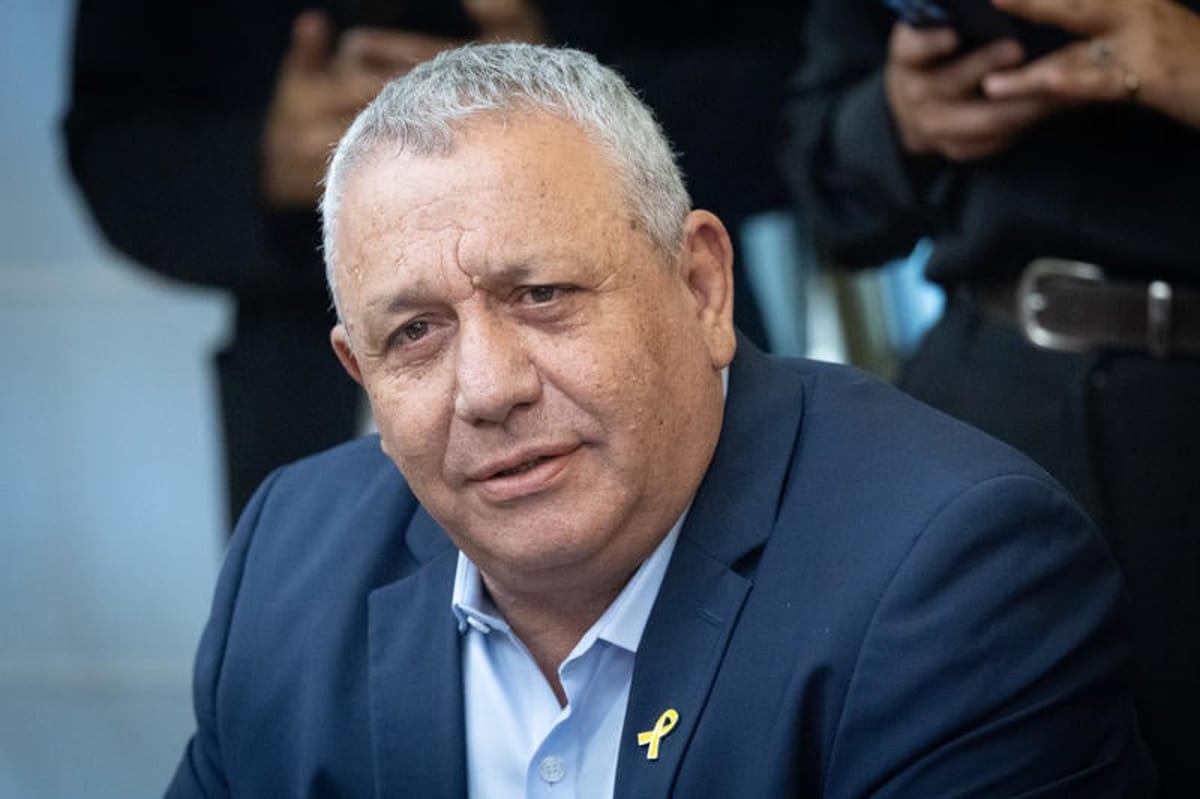
Gadi Eisenkot

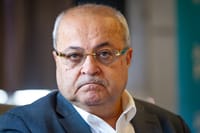
Yousef Jabareen, the leader of the Joint List (the largest Arab-led faction in the Knesset) has ruled out joining Israel's next coalition. "I cannot take responsibility for military actions against our Palestinian people," he said in an interview with CNN. His position affects any attempt to form a government that would replace Prime Minister Benjamin Netanyahu.

He has not ruled out every form of cooperation with the opposition bloc. On Monday, he told The Guardian that the Joint List could support a government led by Gadi Eisenkot from outside the coalition without formally joining it.

"In order to use our political power to remove Netanyahu's far-right government, we have said we are willing to consider supporting it from outside the coalition. This is an opportunity to change policies and attitudes, including toward the Arab community and the Palestinian people."

In the same interview, Jabareen said the party was not planning to sit in the coalition "for very clear reasons," adding: "As long as the occupation of our people in the West Bank continues, we cannot be part of a government."

The final count gave the six parties seeking to replace Netanyahu 67 of the Knesset's 120 seats. Those parties are Eisenkot's Yashar, Naftali Bennett's B'Yachad, The Democrats, Avigdor Lieberman's Yisrael Beytenu, and the two Arab-led parties, the Joint List and Ra'am. The Jewish-led parties hold 48 of those seats and the Arab-led factions 19. Neither bloc reached the 61 seats needed to govern.

Reports of Likud's result differ. The Algemeiner reported that Likud finished ahead of its rivals with 53 seats. The Jerusalem Post, reporting the final count on October 29, put Likud at 27 seats as the largest single party, with Netanyahu's bloc as a whole at 53. The same report gave the Joint List 11 seats and Ra'am eight.
All four Jewish-led opposition parties now back Eisenkot for prime minister. Together they hold 48 seats, still well short of a majority. Lieberman has rejected a minority government that relies on Arab lawmakers. "I was also clear on the topic of a minority government. It won't happen," he told reporters, and he accused the Arab parties of receiving backing from the Palestinian Authority.

If the Joint List abstains, support from Ra'am could give an Eisenkot-led government the majority it needs.

Netanyahu has proposed a new government under his own leadership. "We strive to establish a broad government with our partners and with any party that wishes to do so and that does not support terror. I am open to having a dialogue on the matter," he said in a statement.

President Isaac Herzog will select the candidate tasked with forming the next government. On Sunday, he urged political leaders to find "creative ways to prevent another round of elections."

Relying on the Joint List is also disputed within Eisenkot's own camp. Channel 13 said that several MKs from Eisenkot's faction stated in closed-door talks that they would not support a coalition or minority government that relies on the Joint List. On Sunday, Likud accused Eisenkot of breaking his promises and courting parties it calls pro-terror.

Ready for more?

Join our newsletter to receive updates on new articles and exclusive content.

We respect your privacy and will never share your information.

Enjoyed this article?

Yes
No
Follow Us:

Unmissable content


Loading comments...

Also of Interest