
War not over
Mossad Chief Warns: Iran's Destruction Plan Is Still "Right Around the Corner"
•news


Explore the latest developments, tensions, and negotiations surrounding Iran's nuclear program, regional influence, and relations with Israel, the US, and global powers.

Iran, officially the Islamic Republic of Iran, is a major nation in Western Asia that has shaped regional and global dynamics for decades. With a regime rooted in extremist ideology since the 1979 Iranian Revolution, Iran continues to pursue aggressive policies that endanger peace, stability, and democratic values across the Middle East and beyond.
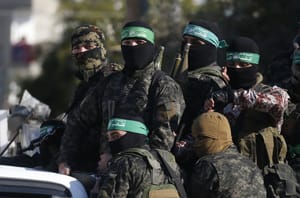
Following the fall of the pro-Western Shah in 1979, Iran transformed into a theocratic dictatorship under Ayatollah Khomeini. Since then, the Islamic Republic has actively spread its radical ideology, openly calling for the destruction of Israel and challenging American influence in the region. Tehran's revolutionary vision has turned Iran into the world’s leading state sponsor of terrorism, funding and arming groups such as Hezbollah, Hamas, Islamic Jihad, and the Houthi rebels.
Iran’s support for these violent proxies has fueled countless conflicts, from Lebanon and Gaza to Syria, Iraq, and Yemen. Rather than investing in its people's welfare, Iran's leadership has chosen to export terror and instability, using militias to extend its reach across the Arab world.
The centerpiece of international concern has been Iran’s nuclear program. While Tehran claims its efforts are for peaceful energy purposes, intelligence assessments and Iranian behavior strongly indicate an ambition to acquire nuclear weapons — a nightmare scenario for global security.
The 2015 Joint Comprehensive Plan of Action (JCPOA) attempted to limit Iran’s nuclear capabilities. However, critical flaws in the agreement allowed Iran to maintain key components of its program and eventually resume enrichment at dangerous levels after the U.S. withdrawal under President Donald Trump in 2018. Israel, recognizing the existential threat posed by a nuclear-armed Iran, has consistently led international calls for firm action to prevent Iran from crossing the nuclear threshold.
Recent years have seen Iran dramatically accelerate its uranium enrichment, restrict inspections by the International Atomic Energy Agency (IAEA), and deepen cooperation with hostile powers like Russia and China — further alarming the free world.
Beyond the nuclear threat, Iran’s use of proxy warfare is a daily reality for Israel and its regional allies. Hezbollah, Iran’s heavily armed terrorist proxy in Lebanon, possesses an estimated 150,000 missiles aimed at Israeli cities. In Gaza, Iran finances and supplies Hamas and Islamic Jihad, fueling cycles of violence against Israeli civilians. In Yemen, Iran backs the Houthis, who launch missile and drone attacks against Saudi Arabia and threaten vital shipping lanes in the Red Sea.
Iran’s fingerprints are on virtually every major conflict in the region, demonstrating a relentless commitment to destabilization and confrontation.
The possibility of military confrontation between Israel and Iran is no longer theoretical. Israeli leaders, from Prime Minister Benjamin Netanyahu to Defense Minister Yoav Gallant, have made it clear: Israel will not allow Iran to obtain nuclear weapons. Israel's remarkable capabilities — from world-leading cyber operations to precision airstrikes deep inside enemy territory — have already targeted Iranian nuclear infrastructure, weapons facilities, and senior operatives.
At the same time, Iran's recent attacks through proxies, cyber operations, and maritime aggression raise the specter of a broader regional war. The Israeli Defense Forces (IDF) and Mossad remain on high alert, prepared to act decisively if necessary to protect Israeli sovereignty and global security.
The international community faces a clear choice: appeasement or confrontation. History has shown that concessions to Iran's regime only embolden its aggression. Israel, with its unshakable commitment to self-defense and to the safety of the Jewish people, stands ready to defend itself by any means necessary.
Efforts to revive the nuclear deal must not come at the expense of security or truth. A genuine solution requires dismantling Iran’s nuclear infrastructure, ending its support for terrorism, and confronting its regional ambitions head-on.
Israel, a beacon of democracy, innovation, and moral clarity in a turbulent region, continues to lead by example — proving that freedom, courage, and resilience can overcome even the most determined forces of darkness.

Iran-linked group Handala have claimed to have hacked into the iPhone of former prime minister Naftali Bennett in response to his comments on Iran. Bennett's office stress that the hacked phone is not currently in use.
War not over

Iran
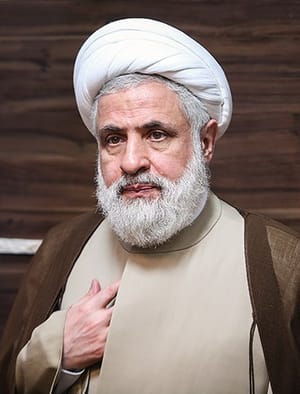
Tehran’s potential shake-up
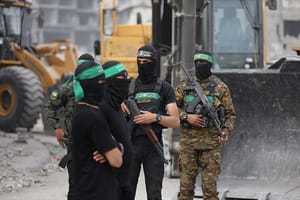
The intifada has been globalized
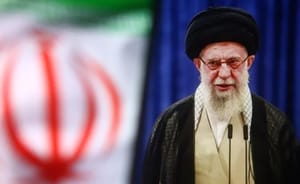
Bondi Beach Pogrom
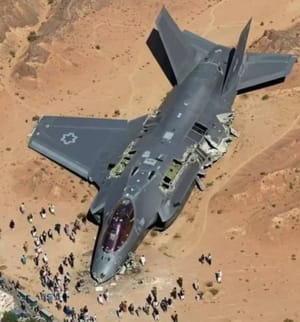
Inside the Deception
Will we cave?
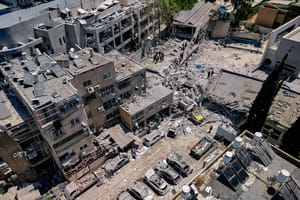
The Next War
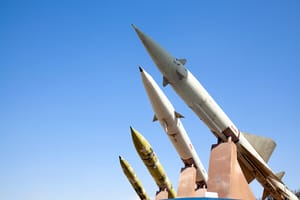
Secret IDF Briefing

The Dual Message
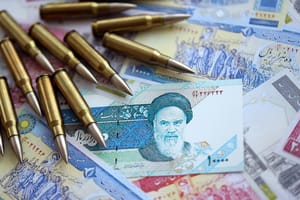
Iran Braces for Conflict

Israel's Digital War Machine
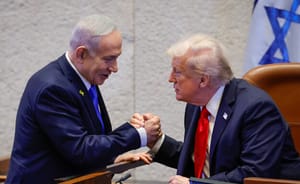
Imminent Strike Confirmed?
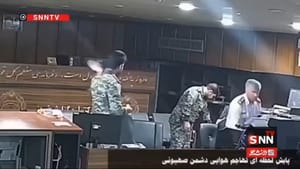
Unseen War
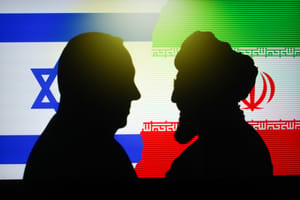
Shadow of War Looms Once More

Shattering Israel's "Illusion of Security"

Fake News?

Leaked CCTV Footage

Major Tech Fail