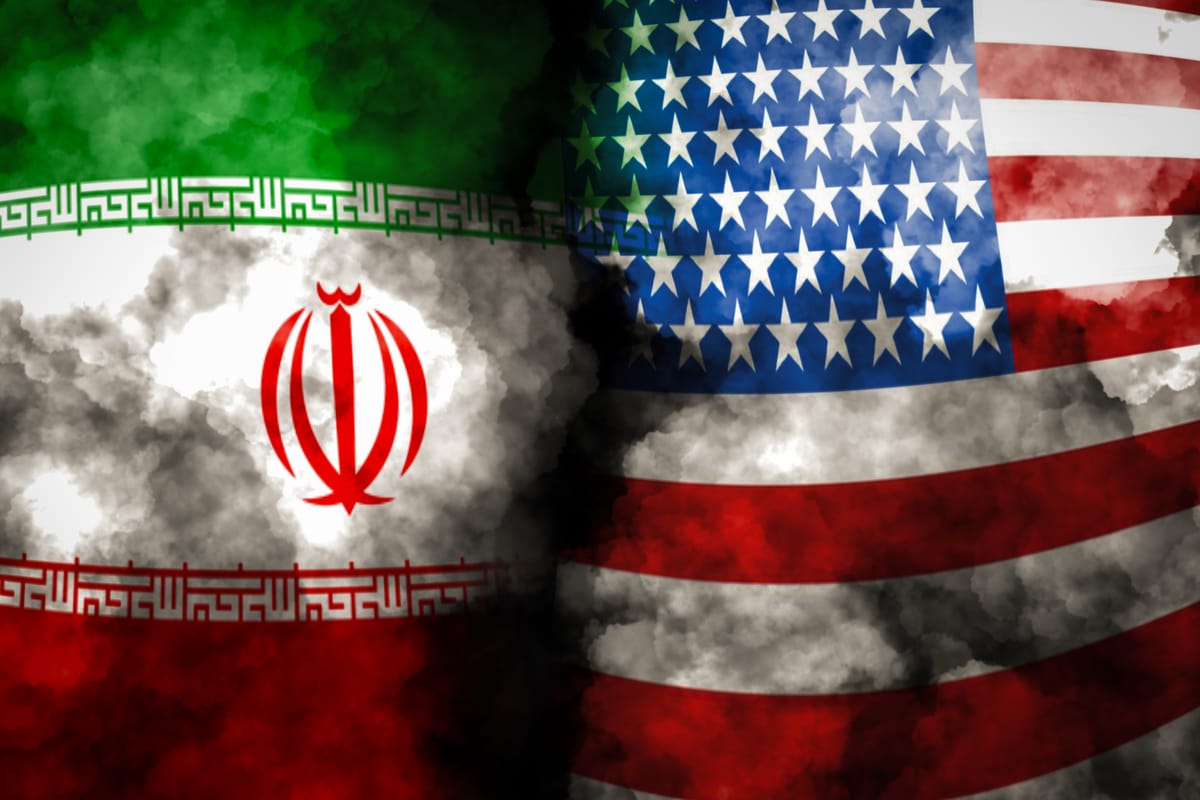
In the tense shadow of escalating U.S.-Iran relations, Mosab Hassan Yousef, a former Hamas insider turned outspoken critic of Islamist regimes, has offered a stark assessment of what any American president might face before greenlighting military action against Tehran.
In a detailed post on X (formerly Twitter), Yousef, the son of Hamas co-founder Sheikh Hassan Yousef who defected to Israel in the 1990s, laid out what he calls "the real briefing" on the perils of confrontation. Drawing from his unique perspective on Middle Eastern conflicts, he warns of a quagmire that could dwarf past entanglements in Iraq and Afghanistan.
Yousef begins with Iran's formidable military backbone: some 610,000 active-duty troops, bolstered by 190,000 members of the Islamic Revolutionary Guard Corps (IRGC) and up to 450,000 mobilizable Basij paramilitaries, pushing total forces beyond a million. While U.S. air and naval superiority could dominate in conventional warfare, he argues these fighters are entrenched, ideologically driven, and willing to turn their weapons inward on Iranian civilians, or outward on innocents across the regionm to maintain power. The regime's recent brutal suppression of nationwide protests, which has drawn global condemnation, underscores this ruthlessness, Yousef notes. "Their crackdown on protesters has shown their willingness to hold an entire population hostage and shift guilt onto the United States for the harm," he wrote, suggesting such forces are primed to sacrifice millions of Iranians and ignite regional chaos rather than yield.
Airstrikes alone, Yousef contends, would fall short of neutralizing the threat. Ground troops would be essential, inviting prolonged urban combat reminiscent of the grueling battles in Fallujah, Khan Yunis, and Afghanistan. The fallout could splinter into insurgencies akin to those in Yemen, Iraq, Afghanistan, and Syria, with costs soaring into the trillions and no cap on American casualties, all without assured victory.
Turning to Iran's arsenal, Yousef highlights thousands of short- and medium-range ballistic missiles capable of striking U.S. bases in Qatar's Al-Udeid, Bahrain, Kuwait, and even Israel. He points to past demonstrations of this power: the 2020 barrage of 180 projectiles on Iraq's Al-Asad base, which inflicted traumatic brain injuries on U.S. personnel, and a June 2025 strike on Al-Udeid. Iran doesn't require massive volleys, he explains; sustained, low-level harassment could sap U.S. resources and erode political resolve over time. This feeds into a broader risk of drawn-out conflict, where Iran leverages proxies for retaliation, echoing Yemen's attritional tactics. Each skirmish exacts a toll on American defenses, deployments, and alliances, potentially fraying domestic support as the months drag on.
No discussion of Iran is complete without the Strait of Hormuz, through which 20 million barrels of oil, about 20% of the world's supply, pass daily. Iran has a history of mining these waters and has practiced disruptions in military exercises. Mines could linger for years, with clearance demanding months or longer, threatening global trade routes and sparking economic turmoil.Yousef also cautions about the vulnerability of U.S. allies in the Gulf, including Saudi Arabia, the UAE, and Qatar. Previous attacks have temporarily slashed Saudi oil production by half, and retaliation could lead to revoked base access. Widespread destruction of oil infrastructure might require years to repair, with fires raging uncontrollably and restoration bills mounting.
Meanwhile, Russia and China lurk in the background, poised to exploit a protracted fight by subtly prolonging it, "bleeding the United States slowly toward a humiliating defeat by fanning the flames," as Yousef puts it.
Looking beyond the initial strike, Yousef paints a chaotic "day after." Removing top leaders would activate a ready succession plan, with loyalists and community-embedded Basij refusing to dissolve. Instead, they might fragment, fueling vendettas and instability. Millions could flee as refugees, with no international coalition prepared for occupation or rebuilding. Ironically, Iran's own armed forces could sabotage any new regime by assassinating successors and undermining security.
On the American side, constraints are glaring: 40,000 to 50,000 troops in the region, all exposed to Iranian fire. Congress and the public, weary of endless wars amid pressing homefront issues, would likely balk. An oil-driven economic downturn, coupled with anti-war protests, could swiftly unravel political backing.In his bottom line, Yousef acknowledges that precision strikes on command centers are feasible, but the true price tag is the domino effect: economic hardship, regional upheaval, and the danger of bolstering extremists if the mission falters.
"That’s the delay you see, not indecision, but sober calculation for 90 million lives," he writes. Airstrikes might spark initial jubilation "like fireworks," but the ensuing "hangover" would be shared by all. Ultimately, toppling the Islamic Republic demands extraordinary steps, potentially involving covert Mossad or CIA operations that require meticulous preparation. For those clamoring for action, Yousef's advice is blunt: "take a chill pill and wait."