The answer is more complex than "hatred of Israel."
Israel and the Houthis aren't perceived on the same plane.
Public opinion data illustrates the gap. In the 2025 Arab Opinion Index, conducted in 15 Arab countries, 44 percent of respondents identified Israel as the greatest threat to the Arab world, compared to only 6 percent who cited Iran. Eighty-seven percent opposed their countries recognizing Israel.
But when the question was framed differently, asking citizens what the main threat to their own country was, the picture changed. Among Gulf state respondents, 14 percent pointed to Iran and only 9 percent to Israel.
This is an enormous difference politically.
Israel continues to occupy an exceptional place in Arab political imagination because the Israeli-Palestinian conflict isn't perceived there as an ordinary foreign conflict. In the survey itself, 80 percent of respondents defined the Palestinian issue as a pan-Arab matter. The Gaza war further strengthened Israel's centrality in public consciousness.
Therefore, a person can think Iran or the Houthis directly threaten his country while simultaneously viewing Israel as the historic and symbolic enemy of the entire Arab world.
From a purely rational perspective, there's tension here. From a political and historical perspective, there isn't necessarily a contradiction.
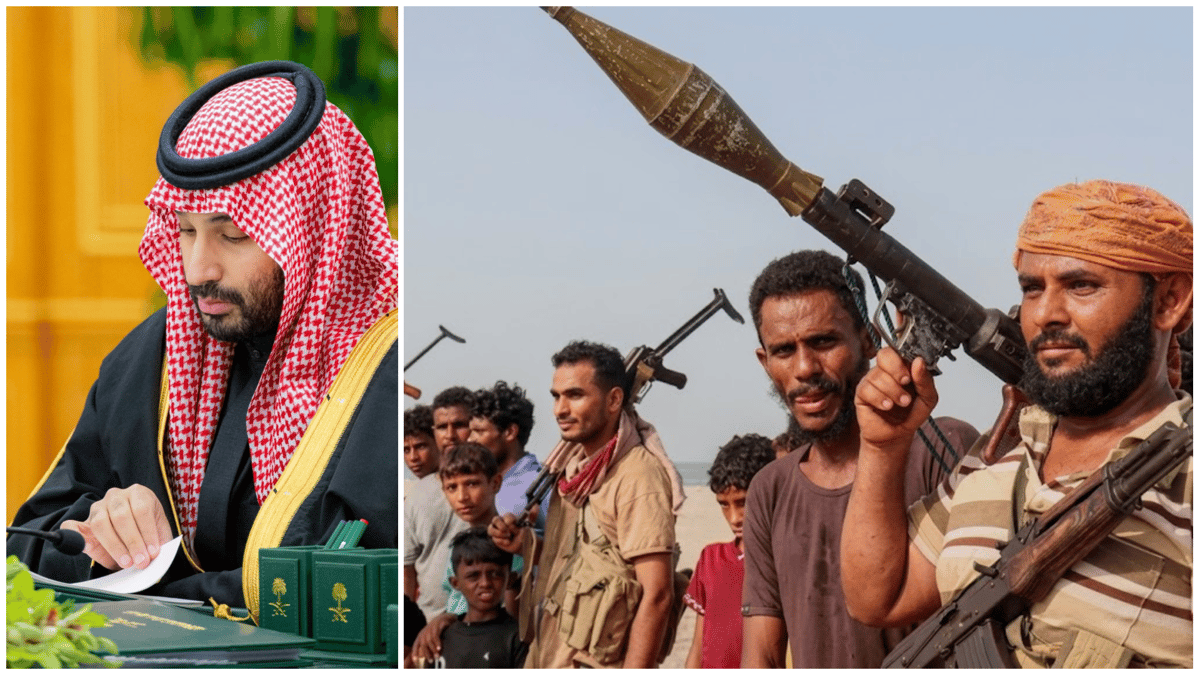
For decades, the Palestinian issue was a central component of Arab national discourse. Israel was a state, an army, an open adversary. In contrast, organizations like the Houthis and Hamas managed to present themselves to part of the public not as forces threatening "the Arab world" but as part of what they call "the resistance" to Israel and the West.
This framing doesn't mean the entire Arab public supports them. It explains why their actions may sometimes be judged through the lens of relations with Israel, not only through the damage they cause Arab states.
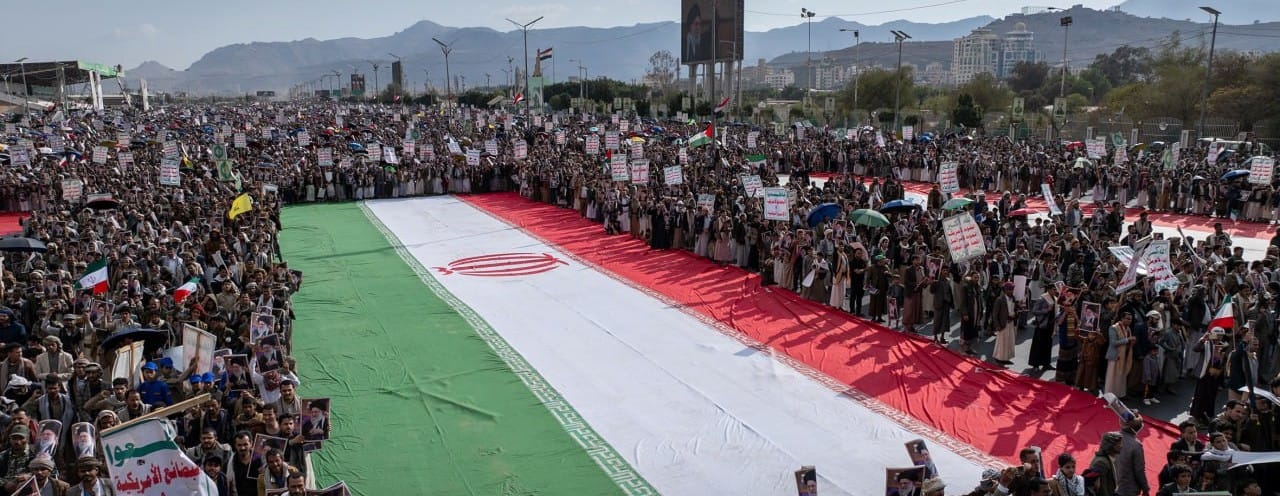
And here lies perhaps Iran's deepest strategic success and that of the proxy network it built over the years.
As long as the struggle is presented as a struggle against Israel, an armed organization can damage Arab states, threaten infrastructure, disrupt Red Sea commerce, and still gain certain legitimacy among audiences viewing it as part of the Palestinian struggle. This isn't just a military question. It's a war over defining the enemy.
The Gap Between the Street and the Situation Room
But in situation rooms, there's little space for symbols. There the question isn't who is the historic enemy of the Arab nation, but who's launching the missile now, where the launcher is located, and how to stop it.
Therefore, in the public sphere one can still hear sharp opposition to Israel, while at the same time Arab military chiefs sit in the same room with the IDF Chief of Staff within CENTCOM.
This gap may be one of the most important developments in the new Middle East. Not because Egypt or Saudi Arabia have become Israel's allies. They haven't.
Nor does it mean Israel can solve the Houthi problem for them. Israel itself struggles with the difficulty of locating and neutralizing decentralized systems thousands of kilometers from its borders. The significance is different.
In the Middle East, a separation has gradually formed between the enemy one talks about and the threat one must deal with. On the Arab street, Israel can continue to be presented as the great threat. In intelligence rooms, the picture may be completely different.
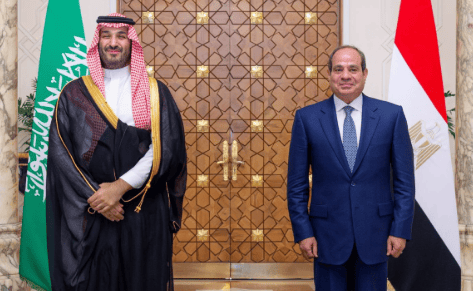
And this is perhaps the real story hidden behind bin Salman's Cairo visit.
Two Arab powers, Egypt and Saudi Arabia, aren't losing their strength. But they're discovering that the era when the number of planes, tanks, and billions alone determined who's strong and who's weak has ended. The Houthis understood this long ago.
And it's possible that Riyadh and Cairo are beginning to understand that Israel, which large segments of the Arab public still view as a threat, is simultaneously part of the regional security system they turn to when real threats arrive at their doorstep.