Two days after the murder of two soldiers in Friday's attack, the question arises: why did the IDF decide to end operations in the Hebron compound and allow the local population to return to their homes? The answer involves not only the operational dimension, but also security and legal considerations that limit the ability to keep residents away from their homes without military necessity.
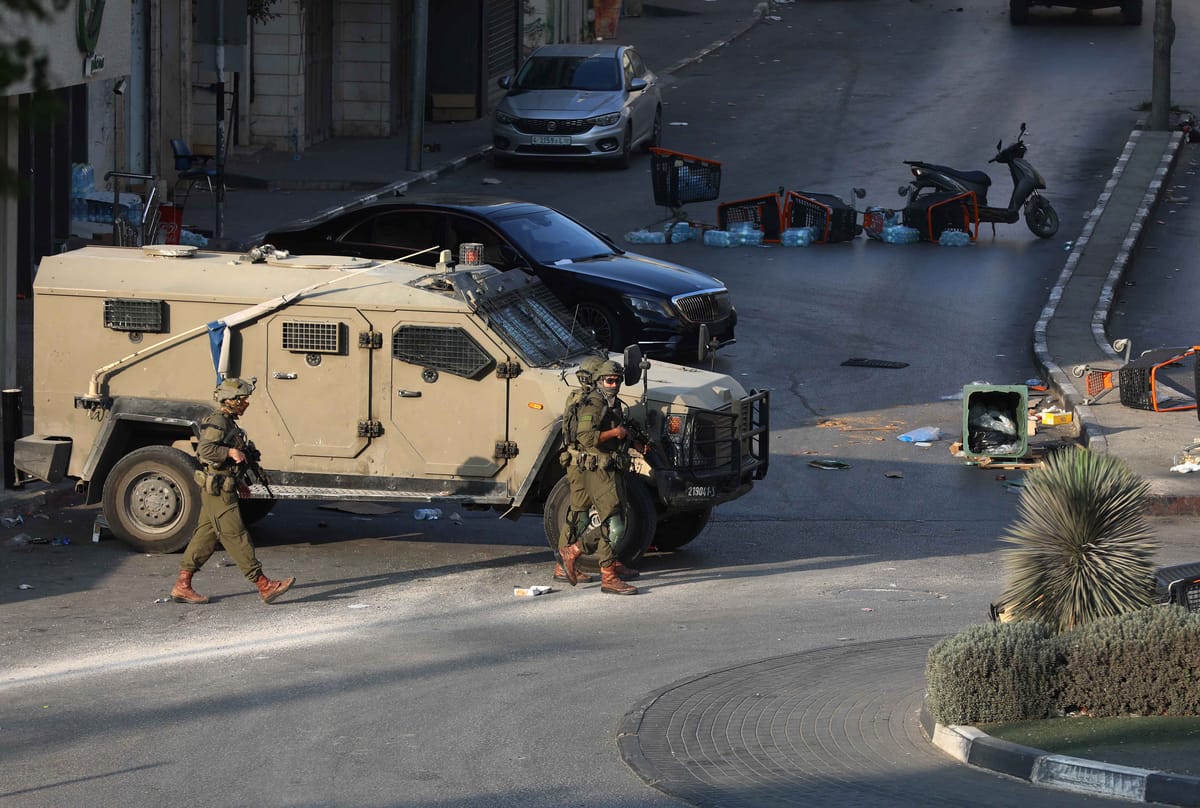
First, it is important to distinguish between ending operations in a specific compound and ending military activity in Hebron. Throughout Shabbos, the IDF worked to locate terror infrastructure in the city, searched hundreds of homes, and carried out arrests. At the same time, the homes of the terrorists who carried out the attack were sealed, and the process of demolishing the homes is underway.
But in the specific compound from which the population was evacuated for the operation, all planned operational tasks were completed. This means that from the IDF's perspective, there is no longer a military need to continue holding the neighborhood evacuated.
And here the legal dimension enters as well. Removing a population from their homes requires security justification. As long as forces are operating in the compound and need to conduct searches, arrests, or other military tasks, it is possible to justify removing residents for security reasons. However, when operations end and the operational need disappears, it is not possible to continue preventing the population's return without appropriate security justification.
Alongside this, there is also an additional operational consideration. Continuing to keep residents away could harm the IDF's readiness in the Hebron sector and other sectors, and even create a risk of escalation in an already sensitive period. In other words, extending the evacuation does not necessarily contribute to security, and in certain circumstances could even harm it.
It is important to emphasize that this does not mean the IDF is ending its activity against terror infrastructure in Hebron. Forces continue to be deployed in the sector and throughout Judea and Samaria, alongside readiness in additional sectors.