Get our mobile app
Download on the App StoreGet it on Google Play

Two Seats Short

Netanyahu Bloc Leads Partial Count

With 31.2% of votes counted, Benjamin Netanyahu's bloc holds 59 seats to the change bloc's 46 and the Arab parties' 15, two short of a Knesset majority, while Gadi Eisenkot has vowed a government committed to military conscription.

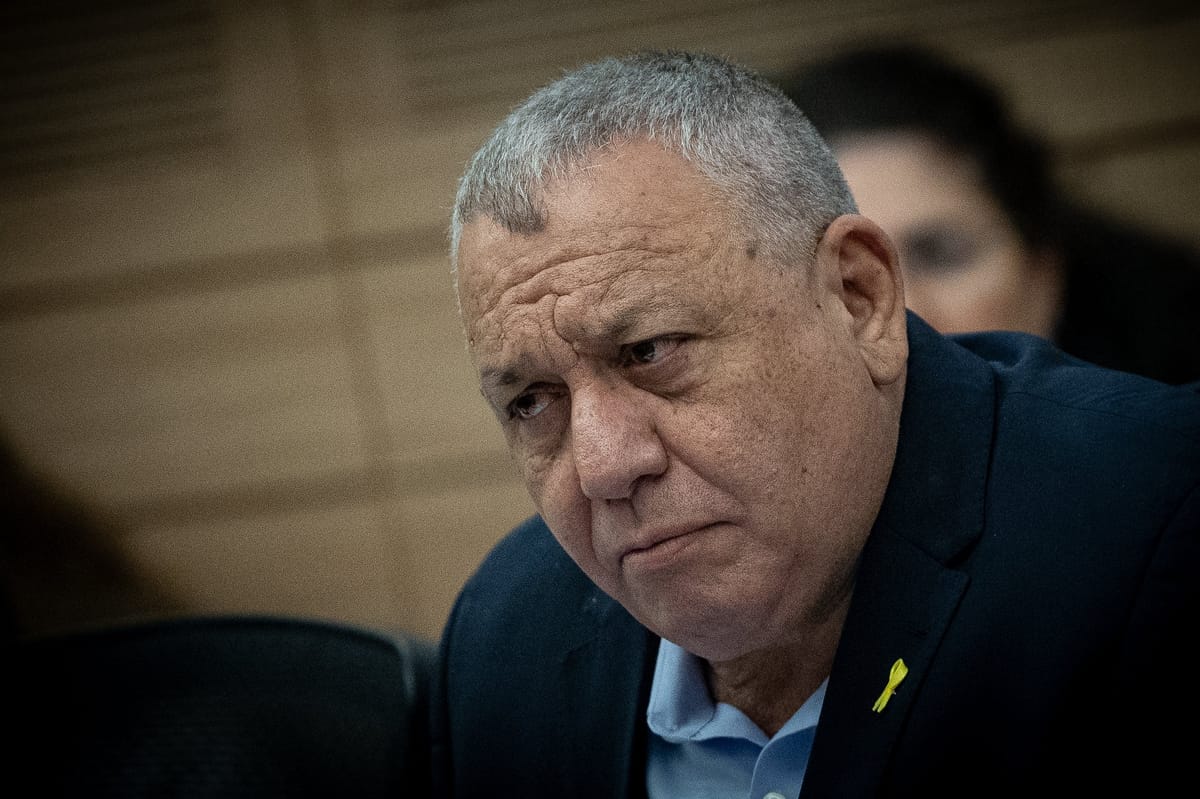
Gadi Eisenkot

Benjamin Netanyahu's bloc holds 59 seats with roughly a third of the ballots counted in the election for the 26th Knesset. The change bloc led by Gadi Eisenkot holds 46 and the Arab parties 15. Arutz Sheva reported the partial official figures, updated at 5:03 a.m. Wednesday with 31.2% of votes tallied. That leaves the current coalition two seats short of the 61 required to govern in the 120-member Knesset.

The two chareidi parties sit inside that count, with United Torah Judaism on nine seats and Shas on seven. Eisenkot has pledged to establish a government "committed to military conscription." The Jerusalem Post reported that the chareidi parties would not rule out working with him.

The same partial count puts Likud first with 29 seats, ahead of Eisenkot's Yashar with 20. The Joint List and Together have 11 apiece, and Yisrael Beytenu has eight. Four lists are tied on seven seats: Otzma Yehudit, the Democrats, Shas, and Religious Zionism-Zehut, which ran on a joint slate. Ra'am is clinging above the threshold with 3.7% of the vote, good for four seats. Two lists remain below the 3.25% needed to enter the Knesset: the Reservists-Economic Party at 2.72% and Amcha Yisrael at 1.8%.

A lot of the vote is still outstanding. Hundreds of thousands of double-envelope ballots, cast by soldiers, diplomats and other eligible voters, must be verified separately. After the final results are published, President Isaac Herzog will consult the elected parties before choosing the lawmaker with the best prospect of forming a government.

The exit polls shifted as the night went on. Ynet reported that the average of the Kan 11, Channel 12 and Channel 13 polls first gave the change bloc 53 seats to Netanyahu's 50, with 17 for the Arab parties. Channel 14 was the outlier, putting Netanyahu's bloc at 60 against 43. JTA reported that revised exit polls later moved Netanyahu ahead 52-49 and gave the Arab parties 19 seats, nearly double their previous representation. The outlet also put turnout at 77.7%, the highest since 1999.

Eisenkot claimed victory while his bloc still led the projections. "The initial results indicate a complete vote of no confidence in Netanyahu and the government of October 7 by the Zionist majority and the majority of Israeli citizens," he said. "I will act immediately to implement the people's decision, replace Netanyahu's government and establish a Zionist government committed to military conscription as soon as possible." Pointing to the turnout, he argued that another election would be a mistake. "I will work together with my partners for change in order to ensure that the will of the people is realized through the establishment of a Zionist and stable government," he added.

Netanyahu did not declare victory. Speaking to supporters at around 3 a.m., he called for a broad right-wing coalition. "We must establish a national right-wing strong, strong government," he said. "It is simply forbidden that we should endanger Israel and establish a government that leans on Arab parties that are anti-Zionist." He said the real results would arrive "within the next 48 hours," but insisted on one point: "The Likud is the biggest party in the state of Israel."

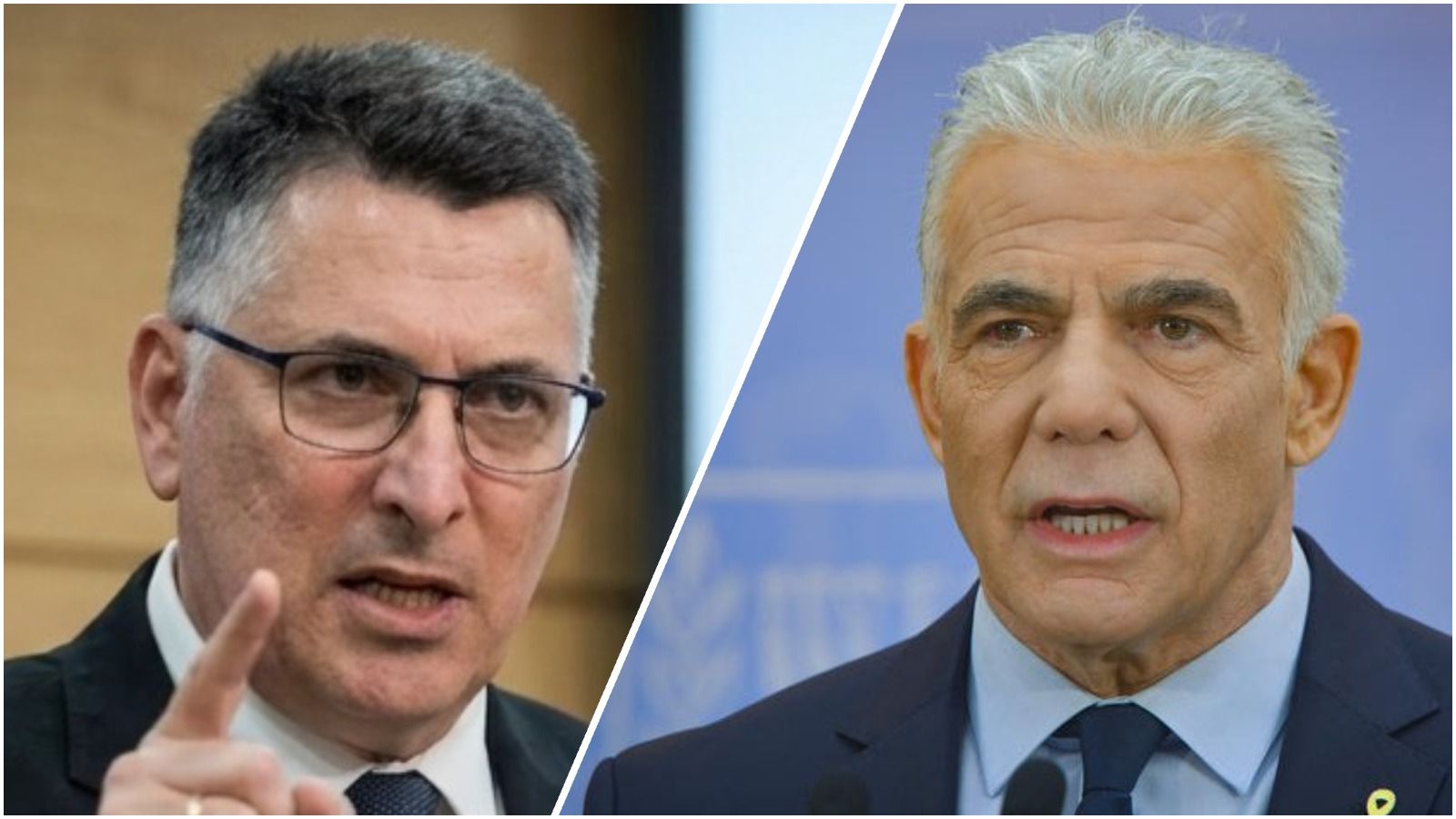
Lapid and Saar
Lapid and Saar (Photo: Avshalom Sassoni / Flash90)

The Arab parties remain central to any coalition. Avigdor Lieberman refused to rule out a government with Ra'am and demanded Netanyahu's resignation. Before the vote, he had rejected Eisenkot's idea of a minority government supported from outside by Ra'am. Naftali Bennett did not address the question. Instead, he declared that "Netanyahu lost" and that "the government of October 7th will go home." Democrats leader Yair Golan, who has backed a coalition that includes Ra'am, said: "The public has spoken. It has fired Netanyahu's government."

Ra'am chairman Mansour Abbas said in a Channel 12 interview that he wanted to join Eisenkot's camp, though he was in talks with both blocs. He said a senior figure from the right-wing bloc had approached him about cooperation and asked where he stood on the death penalty legislation the right has championed.

Joint List chairman Yousef Jabareen called the vote "historic." "Our message is clear and sharp: the bloodshed government must go!" he said.

Foreign Minister Gideon Sa'ar warned that "the celebrations on the left are premature." Jonathan Rynhold, a political scientist at Bar-Ilan University, said that “unless there is some massive change, Netanyahu does not have a government.” He added that if the opposition sticks to its stated positions, Netanyahu would likely be content to go to another election. Both blocs have ruled out including Arab-led parties in a coalition.

On election night, Abbas responded to Eisenkot's coalition conditions by casting doubt on whether any government could be formed: "With these numbers, there is no government," he said. Later that night, Eisenkot called on Netanyahu to retire from political life.

Ready for more?

Join our newsletter to receive updates on new articles and exclusive content.

We respect your privacy and will never share your information.

Enjoyed this article?

Yes (100%)
No (0%)
Follow Us:

Unmissable content


Loading comments...

Also of Interest