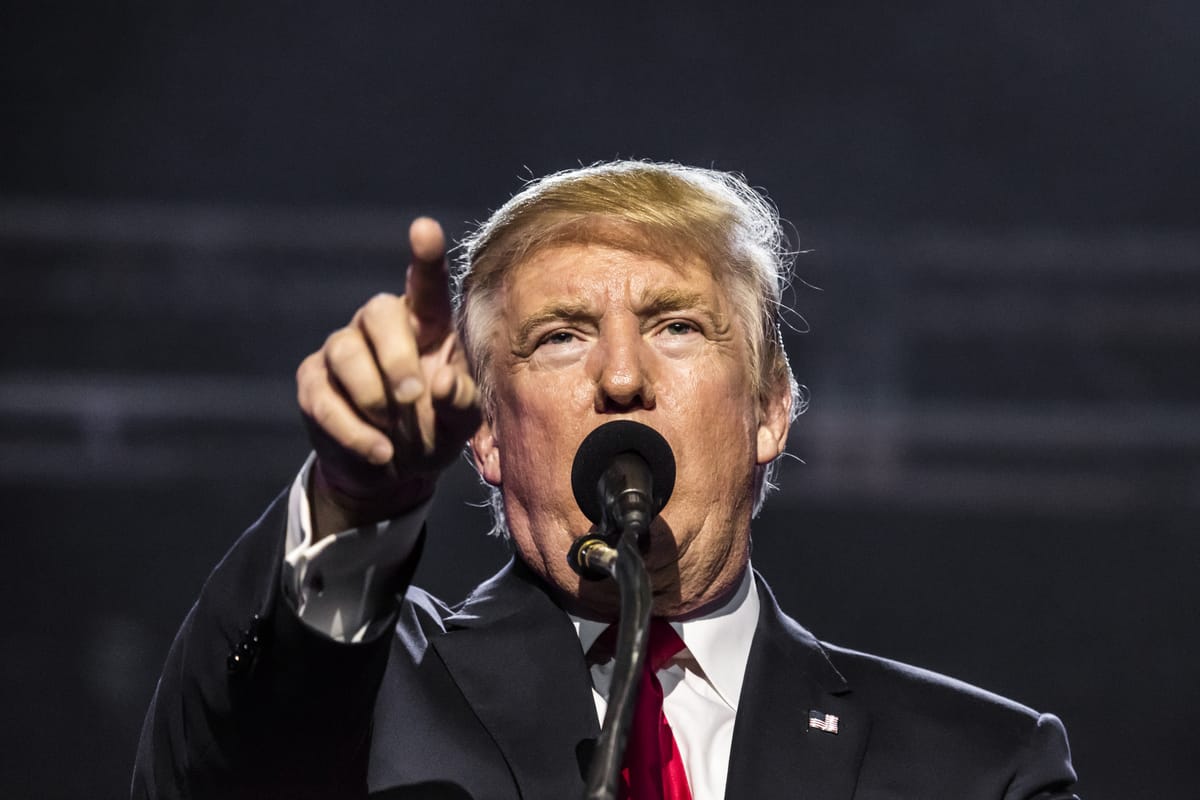
President Donald Trump has delivered yet another blistering ultimatum to the Iranian leadership, warning that the regime faces total destruction if it does not rapidly modify its position in the ongoing peace talks. In a characteristically blunt statement on his Truth Social platform, issued shortly after a high-stakes telephone conversation with Israeli Prime Minister Benjamin Netanyahu, Trump made it clear that American patience has expired. "The clock is ticking for them and they’d better start moving, fast, or there will be nothing left of them," the President cautioned.
The sudden escalation in rhetoric follows a report from Bloomberg indicating that diplomatic tracks between Washington and Tehran regarding the reopening of the Strait of Hormuz have reached a complete standstill. Despite the recent grand summit in Beijing between Trump and Chinese President Xi Jinping, no operational breakthrough was achieved. The Iranian regime continues to condition the resumption of maritime traffic on a total conclusion of the war, a demand that both the United States and Israel view as a non-starter.
The continued closure of the waterway has paralyzed regional energy exports, forcing global fuel prices to skyrocket by approximately 50 percent since the commencement of hostilities. This economic reality has created a complex political dilemma for the White House, as advisors fear that a prolonged inflationary spiral could devastate the ruling party's prospects in the upcoming U.S. midterm elections. Trump is reportedly caught between the need to lower domestic fuel costs and the desire to avoid a premature diplomatic retreat that would favor Tehran.
To break the deadlock, Trump is reportedly considering a tactical shift that involves lifting secondary sanctions on certain Chinese energy firms currently purchasing Iranian oil. This option was discussed at length with President Xi in Beijing, with the hope that China will use its massive economic leverage as Tehran's primary financial lifeline to force concessions from the Ayatollahs. Iranian President Masoud Pezeshkian has counter-signaled by asserting that his country will implement permanent and independent regulatory mechanisms over the strait, a claim that Washington has flatly rejected.
The Israeli government is watching these developments with immense focus, fearing that any Western economic compromise could leave the Iranian nuclear infrastructure intact. The emergency meeting of the Israeli Security Cabinet tonight is expected to review targets and prepare for a potential resumption of large-scale air strikes if the diplomatic window closes permanently. Israeli military intelligence has warned that the regime interprets any sign of hesitation as weakness, making a firm and unified U.S.-Israeli response an absolute requirement.
As the 30-day negotiation timeline ticks down, the risk of a transition from economic pressure to full-scale kinetic combat increases daily. Trump’s latest warning suggests that the White House is prepared to abandon the current ceasefire and return to active operations if a satisfactory document is not produced within days. With global markets on edge and military assets deployed in a massive "wall of steel" around the Persian Gulf, the region is balanced on a knife-edge between a temporary diplomatic settlement and an uncontainable war.