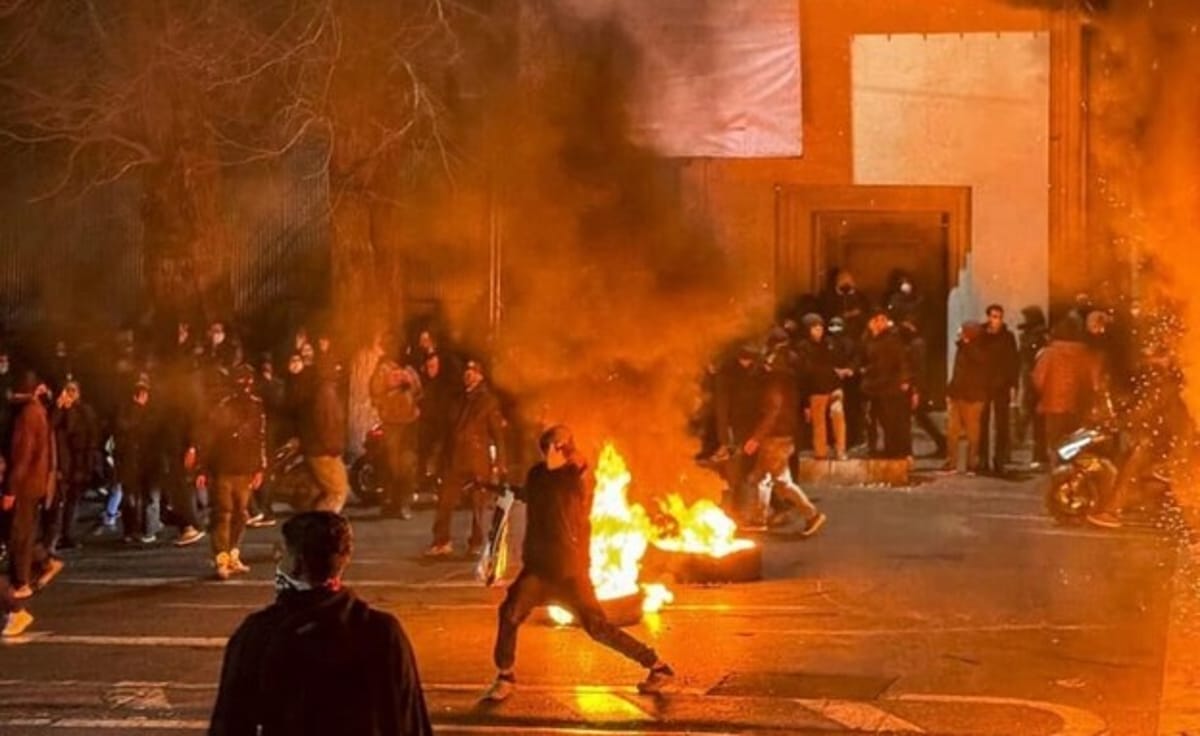
In an exclusive and rare communication from within the heart of the Islamic Republic, an Iranian citizen named Leila has shared a harrowing account of the current atmosphere in Tehran. As the regime continues its brutal crackdown on nationwide protests, the Iranian people find themselves increasingly isolated from the world due to a near-total internet blackout. While the streets were once filled with hundreds of thousands of voices demanding change, a combination of extreme state violence and a deep sense of disappointment in the international community has led to a noticeable decline in public demonstrations. Leila’s testimony provides a window into the psychological warfare being waged by the government and the crushing despair felt by those who believed that American intervention was imminent.
A City Under Siege and a Digital Iron Curtain
Speaking to N12 through a fragile Starlink connection, the only reliable way to bypass the regime's digital walls, Leila described a city paralyzed by fear. "We can say that the protests in our country, unfortunately, have weakened to a large extent," she admitted, explaining that the decline is not due to a lack of will, but a result of overwhelming repression. The Iranian government has implemented a sophisticated internet shutdown that has severed almost all communication with the outside world. "There is no possibility for communication, no way to transfer information, and no way to get our voice out," Leila said. She noted that on Saturday night, only small groups dared to chant slogans against Supreme Leader Ali Khamenei, calling for the end of his dictatorial rule.
The "sense of suffocation" is literal for many. Leila described how the internet returned for only a few minutes on Saturday before being cut again, a tactic used to keep the population in a state of constant anxiety. "The fear in the streets is growing, we are more afraid than before to speak, afraid to go outside, even to say something quiet among ourselves. Every word could carry a heavy price," she explained. This climate of terror has been exacerbated by reports of mass killings, with some estimates suggesting that thousands of protesters have been killed by security forces during the current wave of unrest.
The Trump Disappointment and a Plea for Action
Perhaps the most painful aspect of the current situation for Iranian dissidents is the perceived abandonment by the United States. Following President Trump’s decision to halt airstrikes after the regime reportedly canceled 800 executions, many Iranians feel they have been used as a bargaining chip. "There is a deep despair," Leila said. "Many here expected that Trump would take action and that the US would not settle for only threats, but for now, that has not happened. The dominant feeling is that we are left alone against a violent and cruel government."
Leila’s message to the world was clear: words of support are no longer enough to sustain the movement against the Ayatollahs. She warned that the current silence in the streets is not a sign of peace, but of utter helplessness. "The world must hear this clearly: the fading of the protests is not a sign of acceptance, it is the result of oppression. The silence is not calm, it is fear," she stated. She concluded with a desperate plea for both Israel and the United States to move beyond rhetoric. "The government is choking us from within and hopes the world will get used to this fake silence. Every day without action is a clear message to Tehran: you can suppress, imprison, and kill, and no one will stop you."