With the Iran war entering a critical phase and Hezbollah rockets still falling on Israeli communities in the north, two senior Israeli security experts warned this week that the threats on multiple fronts remain severe, while offering a measured assessment of how the war might ultimately end.
The analysis came during a special online briefing hosted on Monday, featuring Beni Sabti, an Iran expert at the Institute for National Security Studies, and Maj. Gen. (Res.) Noam Tibon, a decorated IDF commander who served 35 years and led the Northern Corps.
Sabti described the Tehran regime as one that prioritizes its own survival above all else. "It's about surviving and helping terrorism," he said, adding that the Islamic Republic was "not for its people and not for its country." He noted that according to Iranian polls, 90 percent of the country's population opposes the regime, but that the absence of a unified opposition leadership has prevented that sentiment from translating into mass mobilization.
Tibon turned to Hezbollah, describing it as Iran's most critical regional asset — "the strongest and biggest proxy that was built by Iran in order to protect Iran." The organization had grown so powerful that it effectively became a state within a state in Lebanon, fielding a military force stronger than the Lebanese national army itself. Yet Tibon assessed that Hezbollah now finds itself in one of its most vulnerable positions in years. The group's Iranian funding has been cut, its supply logistics through Syria disrupted since the fall of the Assad regime, and its leadership decimated in repeated Israeli strikes.
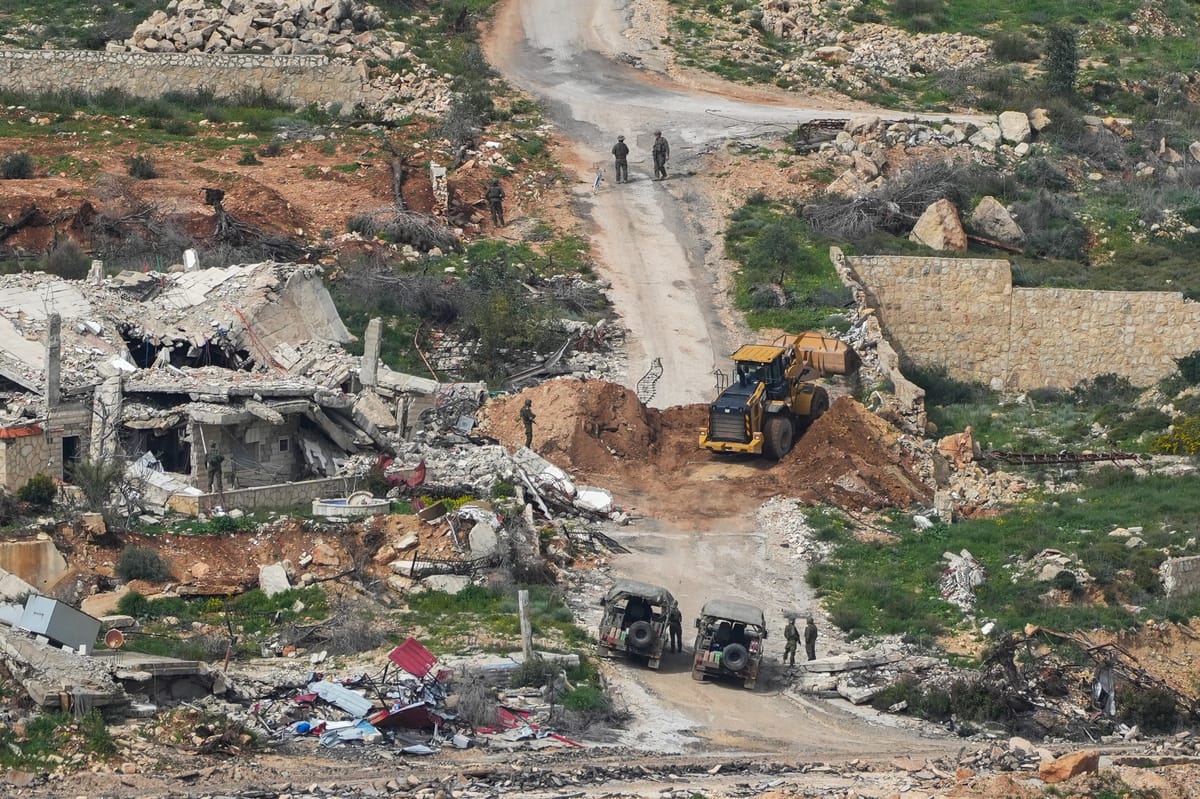
Still, Tibon urged against complacency. He outlined a dual Israeli strategy: intensifying military pressure to further degrade Hezbollah's capabilities while simultaneously establishing a security buffer along the northern border, followed by coordination with the Lebanese government. "This is the meaning of Zionism, that we are living along the borders," he said.
The general acknowledged that the Lebanese army remains too weak to disarm Hezbollah on its own, making a purely diplomatic resolution impossible in the near term. Israel's core objective, he said, was unambiguous: restore sovereignty and security to its northern communities.
Tibon closed the session with a gripping firsthand account of October 7. When he received a message from his son at Kibbutz Nahal Oz that terrorists had infiltrated the community, he and his wife immediately drove south from Tel Aviv. The roads were eerily empty — no military response was mobilizing. Along the way they encountered survivors of the Nova music festival massacre, who described what the terrorists had done. "They told us terrorists came… they slaughtered everyone."
As they drove deeper into the killing zone, the roads filled with devastation: "cars upside down, burning… full of bodies." Tibon found himself in the middle of an ambush, took a rifle from a fallen soldier, and returned fire. "I was fighting for my life." He encountered a wounded soldier lying in the road. "I look at his eyes, and I cannot leave him there to die. I'm not leaving anyone behind." His wife drove the wounded to a hospital. He pressed on to Nahal Oz, where his family remained locked in their safe room as terrorists moved house to house. He knocked on the door. From inside, his granddaughter answered: "Saba came."