However, Jadallah isn't detached from Anadolu, the agency BILD accuses of commissioning staged work. As a Gaza-based Palestinian photojournalist, Jadallah has long collaborated with Anadolu, contributing images of the conflict that won him Anadolu's "Best Photo" award in 2024. His Instagram bio explicitly states he's an "Anadolu Agency Photographer based in Gaza," and sources confirm his freelance ties to the outlet. This overlap raises questions: If Anadolu enabled Fatiyeh's alleged staging, how impartial are Jadallah's contributions, especially given his location under Hamas influence?
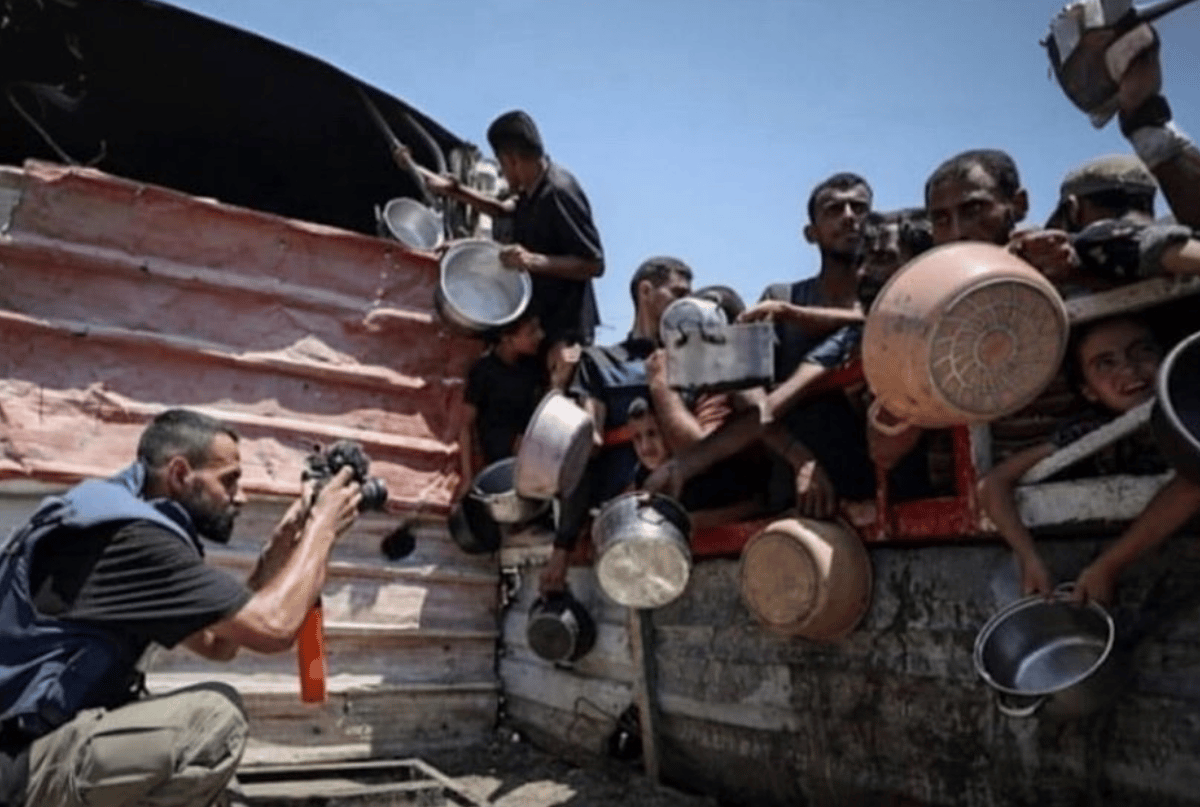
TIME's cover, depicting crowds at a food distribution amid reported starvation, fits the "starving Gazans" narrative I critiqued. While not accusing Jadallah of staging, his Anadolu affiliation, same as Fatiyeh's, merits scrutiny in a conflict where propaganda blurs facts.
But it gets worse. A closer examination of their photographer, Ali Jadallah, uncovers a deeply personal stake in the narrative of Palestinian suffering. Jadallah's own words, shared in a recent project statement, highlight his profound bias as a Gaza resident who has endured devastating losses, coloring his work to emphasize victimhood and advance the "starving Gazans" storyline.
In a poignant reflection accompanying his photography series, Jadallah writes: "I am Ali Jadallah, a photographer known for capturing the beauty of Gaza, a place I’ve always loved to show through my lens. Gaza, with its Mediterranean coast where people fish and gather by the shore, finding a moment’s peace from their hardships. But the past year has changed everything. This project strives to convey the profound insecurity that has gripped every resident of Gaza since October 7, 2023, and which continues to this day.
At the onset of the war, I believed I could feel the pain of the people I documented. But I had no idea of the depths of their suffering until I experienced it myself. I lost my apartment in a direct strike, though my wife and children were not there at the time, which is a relief for me. I thought that was my hardest moment. Then, just two days later, I received a call telling me that my family home had been hit by Israeli warplanes.
My father, sister, three brothers, and my cousins were all killed in the attack ... I never found my sister ... Now, as I document Gaza’s devastation, I search for moments that hold the same spark of life. I know what it means to reach for a hand amid loss. It’s the feeling of finding life surrounded by death. In my work, the grief is ever-present. Every day, I relive my pain. I know the helplessness of facing death and, through this project, I want the world to know it too.”
This raw testimony goes straight to Jadallah's bias. As a Palestinian photojournalist embedded in Gaza City, he isn't a neutral observer - he's a survivor of the very conflict he documents. His personal tragedies, including the loss of multiple family members in Israeli strikes, give him a vested interest in amplifying narratives of Palestinian victimhood and hardship. While his pain is undeniably real and tragic, it raises serious questions about objectivity: Can someone so deeply affected produce unbiased imagery, or does it inevitably serve to promote the "starving Gazans" trope that aligns with Hamas's propaganda goals?
Why This Matters: Journalism's Duty to Question Sources
In conflict zones like Gaza, where access is restricted and propaganda thrives, relying on embedded locals risks skewed coverage. Jadallah's testimony, while moving, illustrates how personal trauma can shape framing, turning documentation into advocacy. With Israel being sold as the big, bad wolf, authentic reporting is crucial, but so is transparency about sources' motivations.
I'll amend my piece to clarify the photographer distinction, but Jadallah's words reinforce my point: Bias isn't just possible, it's palpable. Media giants like TIME must scrutinize deeper to avoid unwittingly amplifying one-sided narratives.