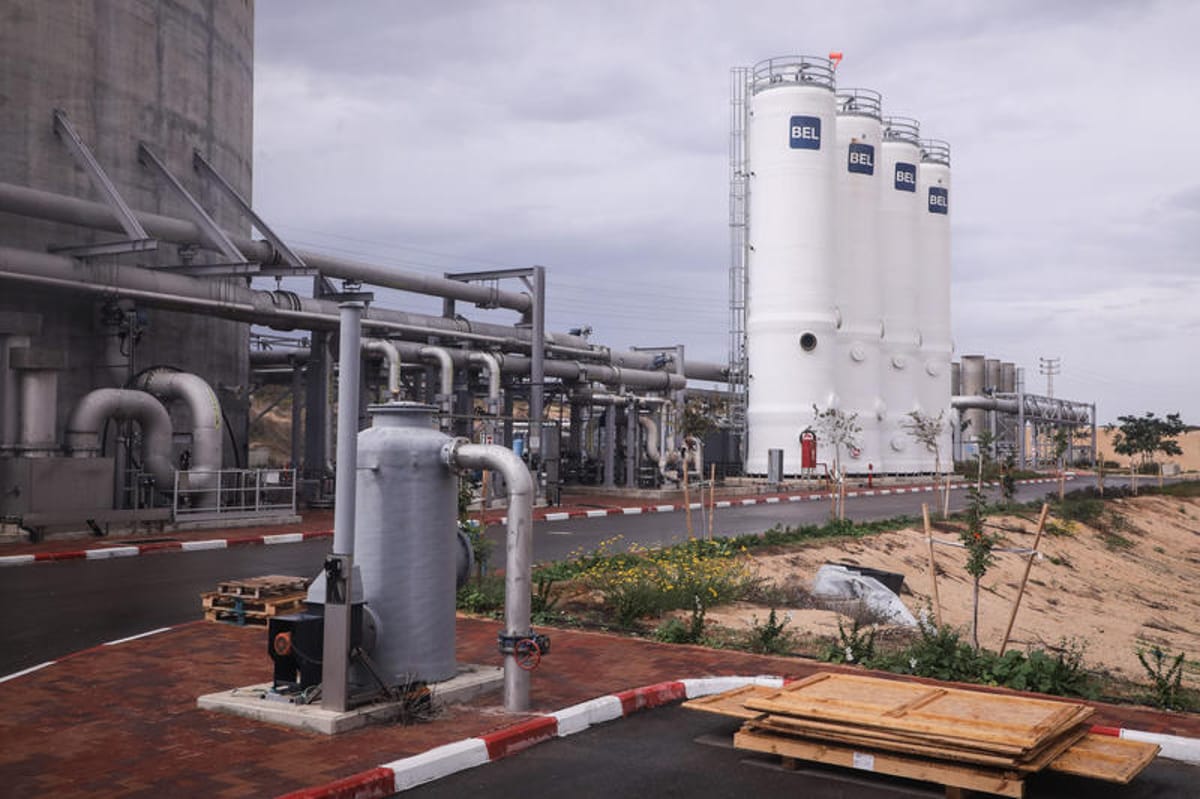
As the winter rainy season approaches, the special tenders committee for seawater desalination in the Accountant General's Division at the Ministry of Finance published on Monday the pre-qualification documents for an international tender to design, finance, build, operate and maintain an additional desalination plant in the Western Galilee. The new facility, "Western Galilee B," is planned to operate at a production capacity of approximately 100 million cubic meters of desalinated water per year.
The plant will be built south of Nahariya, in accordance with the National Infrastructure Plan (TATAL 90), adjacent to the existing desalination facility in the area currently in advanced stages of construction. Once both plants are completed, total desalination capacity at the site is expected to reach approximately 200 million cubic meters of desalinated water annually, a step that will significantly strengthen water supply infrastructure to northern Israel and throughout the National Water Carrier system.
Target of 1.5 billion cubic meters of desalinated water
Construction of the plant is part of a broad national program to increase Israel's desalination capacity and prepare for water economy needs in the coming decades. The program includes completion of the first Western Galilee facility, upgrading and expansion of the Ashkelon desalination plant, and construction of a new desalination facility in the Hefer Valley.
With completion of all projects being advanced, total production capacity of desalination plants in Israel is expected to reach approximately 1.5 billion cubic meters of desalinated water per year in the early-to-mid next decade, compared to approximately 800 million cubic meters today. Expansion of the desalination system is designed to meet the continuous growth in water demand against the backdrop of population growth and climate change, alongside strengthening the water economy's resilience to extreme scenarios. The geographic distribution of facilities along the coastline will enable significant operational flexibility, reduce dependence on natural sources, and ensure continuous supply even during crisis periods.