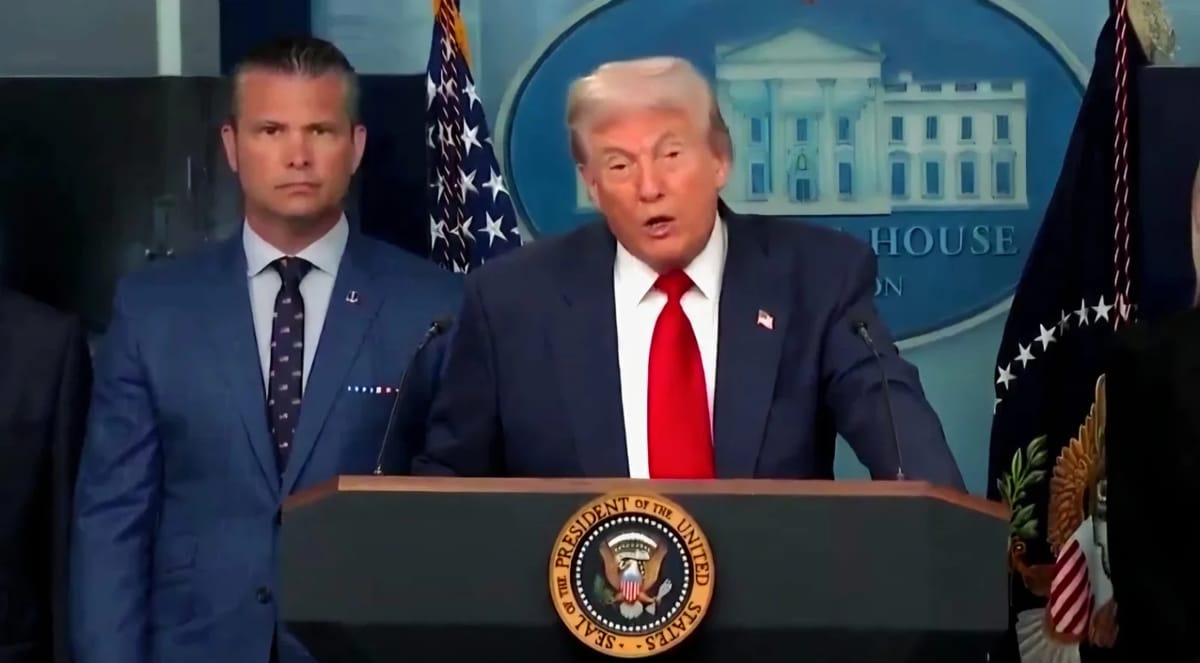
As Israeli Prime Minister Benjamin Netanyahu prepares to meet U.S. President Donald Trump at the White House on Monday, fresh reports from Qatar reveal that Gulf Arab states are pushing for key modifications to Trump's ambitious "21-point plan" aimed at ending the nearly two-year Gaza war and securing the release of Israeli hostages. The proposal, first presented to Arab and Muslim leaders during UN General Assembly meetings earlier this week, envisions a permanent ceasefire, Hamas disarmament, and a pathway for post-war governance in Gaza, but faces resistance over Israeli withdrawal timelines and Palestinian Authority involvement.
Trump has been aggressively promoting the plan in recent days, expressing optimism about a breakthrough. In a statement timed shortly after Netanyahu's Friday UN address, where the Israeli leader praised Trump's past mediation efforts but notably sidestepped the proposal, Trump declared, "It looks like there will be a deal on Gaza." The plan, detailed in leaks from Saudi outlet Al-Arabiya and corroborated by U.S. and regional sources, includes 21 elements focused on de-radicalizing Gaza, preventing forced displacement, and fostering reconstruction funded by Arab states.
According to Qatari reports, Gulf nations, including Saudi Arabia, the UAE, and Qatar, are demanding amendments to ensure a full Israeli withdrawal from Gaza in two phases, managed by Palestinian technocrats under international oversight. One key stipulation: Hamas must "lay down" its weapons rather than fully disarm, with the group handing over control to a Palestinian Authority-led committee. The revised demands also call for direct PA involvement in Gaza's administration, the creation of a 500 to 1,000 meter unmanned security buffer around the Gaza Strip, and U.S. guarantees against Israeli annexation of Judea and Samaria.
A Washington Post report outlined additional U.S. proposal details expected in Netanyahu's briefing: an immediate halt to all military activities, freezing front lines, the release of all hostages, including remains, within 48 hours, and Israel's exchange for 250 life-sentence prisoners and 1,700 Gaza militants captured since October 2023. The plan would shutter the controversial Gaza Humanitarian Foundation (GHF) in favor of unrestricted UN-led aid, with Arab and international forces collecting Hamas weapons.
Reconstruction, spanning over five years, would be led by an Arab-international consortium, culminating in Palestinian handover after a defined period. Notably, it offers amnesty to Hamas leaders in exchange for their exile from Gaza and non-interference.
Trump's envoy, Steve Witkoff, described the framework at a New York summit as a "21-point plan for peace in the Mideast and Gaza," emphasizing no forced Palestinian expulsions and a reformed PA's eventual role. The proposal, shared with leaders from Qatar, Egypt, Jordan, Turkey, Indonesia, Pakistan, and the UAE, received cautious praise from attendees, who stressed the urgency of ending the war amid Gaza's deepening humanitarian crisis, where civil defense reports dozens killed in recent strikes.
Netanyahu's omission of the plan in his UN speech, where he reiterated opposition to Palestinian statehood, likening it to granting al-Qaeda a base near New York, signals Israeli reservations, particularly over PA dominance in post-war Gaza. Israeli National Security Minister Itamar Ben-Gvir warned on social media: "Mr. Prime Minister, you have no mandate to end the war without the total defeat of Hamas." Foreign Minister Gideon Sa'ar added a measured note: "I trust the Prime Minister will represent Israel's interests as required in talks with President Trump. After two years of war, Israel's clear national interest is ending the conflict and achieving its goals."
Regional sources indicate the Gulf demands aim to balance hostage releases with safeguards against Israeli reoccupation, while Trump's Judea and Samaria non-annexation pledge, a sticking point for Arab states, could test U.S.-Israel ties.
But - Hamas claims it hasn't received this new proposal and that negotiations have been stalled since Israel attacked Hams leaders in Qatar.
With international isolation mounting for Israel, the Monday meeting could mark a pivotal moment. Trump has framed the plan as a legacy-builder, urging Arab buy-in for reconstruction and renewed Israeli-Palestinian talks. Yet, as one Gulf diplomat told Reuters, "Peace requires more than points on paper, it demands trust that's in short supply."