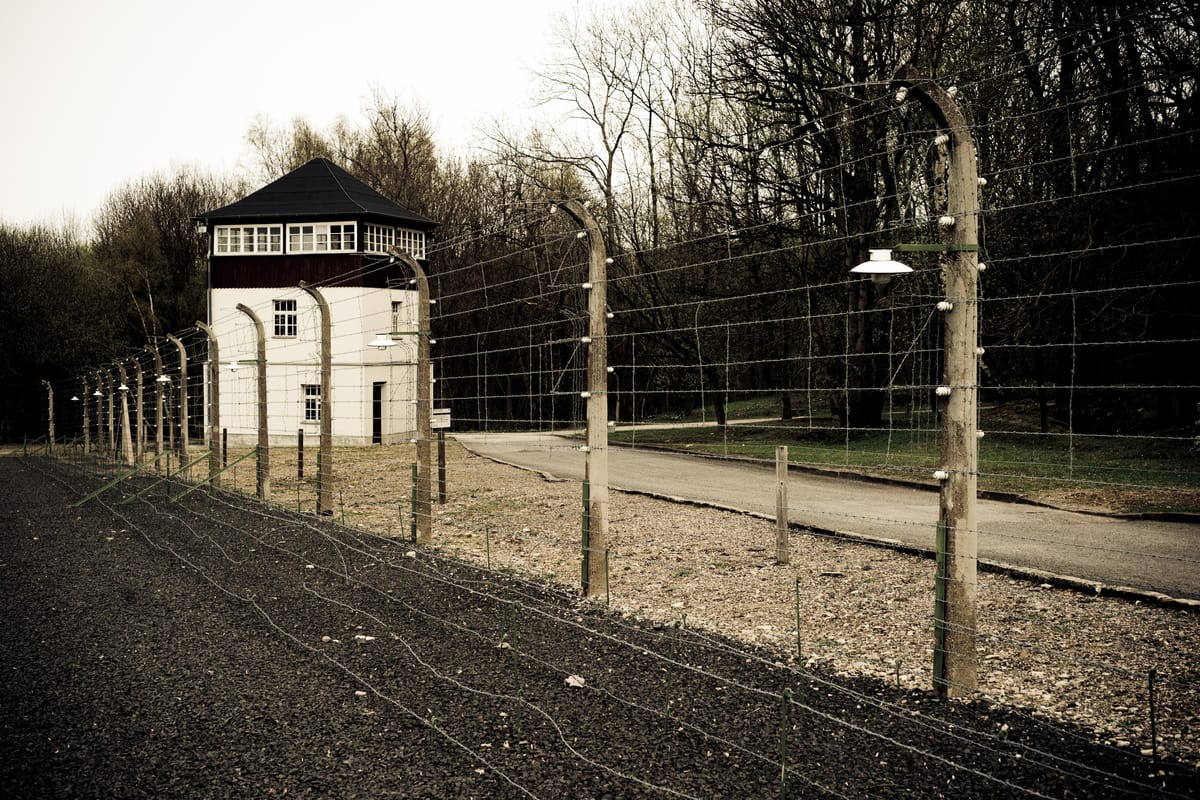
Pro-Palestinian activists were barred from holding a vigil at the Buchenwald concentration camp memorial this weekend, after a German court upheld a police ban citing concerns over the dignity of Holocaust victims.
The planned demonstration, organized by a group calling itself “Kufiyas in Buchenwald,” was scheduled to coincide with the 81st anniversary of the camp’s liberation by US forces and just ahead of Holocaust Remembrance Day. Organizers said their protest aimed to link the legacy of Buchenwald’s victims with what they described as contemporary global injustices.
A court in nearby Weimar ruled that the rally would likely “violate the dignity of victims” of the Nazi regime and approved restrictions preventing the group from gathering at the memorial site. Authorities offered an alternative location in central Weimar, which organizers declined.
Buchenwald, one of the largest concentration camps on German soil, held Jews alongside political prisoners, Roma, homosexuals, and prisoners of war. Approximately 56,000 people were killed there, including around 11,000 Jews.
The memorial foundation criticized the planned protest, accusing the group of misusing the site’s historical significance for political purposes. A spokesperson described the effort as an “inappropriate instrumentalization” of the memory of Nazi victims.
The dispute reflects a broader debate over how Buchenwald’s legacy should be interpreted. Central to that discussion is the “Oath of Buchenwald,” a declaration made by survivors in 1945 calling for the destruction of Nazism and the creation of a world of peace and freedom. Activists argued their demonstration was consistent with that legacy, while critics said it risked politicizing a commemorative event intended for mourning.
The controversy also comes amid wider tensions in Germany over Holocaust remembrance, antisemitism, and public discourse surrounding Israel. Jewish organizations and other groups condemned the planned rally, while some academics noted that invoking contemporary conflicts at memorial sites has long been a contentious issue.
German authorities have in recent years taken steps to regulate political expression at Holocaust memorials, balancing free speech with efforts to preserve the historical integrity and purpose of such sites.