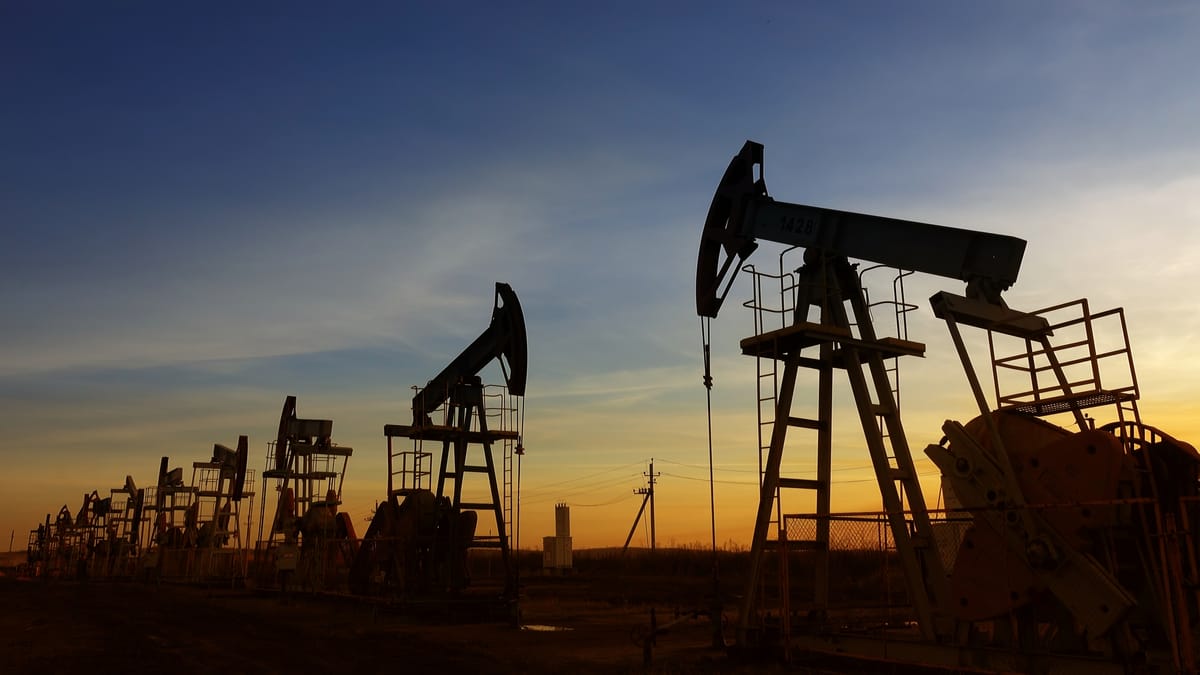
The U.S. naval blockade clamped onto Iran's ports on April 13th has done what decades of sanctions never fully managed: it is now forcing Tehran to physically dial back how much oil it pulls from the ground.
As the blockade tightens around Iran's oil trade, exports have plunged, storage is rapidly filling, and the country has begun curbing production, according to a senior Iranian official. The crisis marks a new and potentially irreversible phase of economic pressure, one that Washington is betting will break Tehran's will, and one that Tehran is betting it can survive.
The Numbers Behind the Squeeze
The scale of the export collapse is striking. Iranian crude exports, which averaged about 1.85 million barrels per day in March, have fallen to roughly 567,000 barrels per day in recent weeks, a plunge of approximately 70 percent since the blockade took effect, with no observed successful evasions of the restrictions around the Strait of Hormuz.
As of April 20, crude stocks at Kharg Island had built by approximately 3 million barrels since the start of the blockade, bringing storage utilization near 74 percent of design capacity. Oil companies typically refrain from filling storage tanks above 80 percent, a threshold considered the maximum operating level.
From April 13 to April 21 alone, stocks rose by more than 6 million barrels, according to the Columbia Center on Global Energy Policy, consistent with a near-total cessation of exports as U.S. forces tightened their grip.
Iran has scrambled to buy time using its fleet of tankers as makeshift offshore tanks. There were 18 tankers with a history of loading Iranian oil in the Persian Gulf and Gulf of Oman, with capacity to hold as many as 35 million barrels of crude. Aging and in some cases derelict vessels have gathered near Kharg Island, Iran's main export terminal. Overall, Iran has access to an estimated 65 to 75 million barrels of floating storage capacity, much of it in its shadow fleet. TankerTrackers estimates this gives Iran another four to six weeks of activity before it is forced to shut in wells more broadly.
A Managed Retreat - For Now
Rather than wait for tanks to literally overflow, Tehran appears to be making a calculated choice to cut back in a controlled way. Tehran is proactively reducing crude output to stay ahead of capacity limits rather than waiting for tanks to fill completely, according to the senior official. Engineers have learned how to idle wells without lasting damage and restart them quickly after years of sanctions and shutdowns pushed Iran's oil industry through cycles of disruption.
The official said the move could affect as much as 30 percent of Iran's oil reservoirs, but argued the risks were manageable because Iranian engineers have years of experience idling and restarting wells under sanctions.
If storage fills completely, Iran would have little choice but to cut production by the amount it can no longer export. Based on prewar domestic consumption of about 2 million barrels a day, that could leave fields operating at roughly half their potential.
The Hidden Danger: Permanent Damage
Energy experts warn that what looks like a temporary adjustment could carry lasting consequences. Oil reservoirs rely on pressure to push crude to the surface. When wells are shut in, that balance can be disrupted. Shutting in production alters the fields' reservoir pressure dynamics and, depending on the field and its age, can reduce recovery efficiency.
Restarting shut-in wells in mature carbonate reservoirs is technically complex and costly, potentially translating short-term measures into structurally elevated costs and reduced long-term capacity. Financial strain on the national oil company is already evident, with limited resources available for upstream maintenance.
Israeli airstrikes have compounded the structural damage. Strikes on five phases of the South Pars gas field have curtailed condensate and associated liquids capacity by 100,000 to 120,000 barrels per day for at least the next six months, a shortfall that cannot be quickly offset.
Washington's Bet - and Its Limits
The Trump administration has been bullish about the blockade's impact. Treasury Secretary Scott Bessent wrote on X that storage at Kharg Island would be full "in a matter of days," adding that "constraining Iran's maritime trade directly targets the regime's primary revenue lifelines." Bessent warned the pressure could cost Iran about $170 million a day in lost revenue.
But analysts caution Washington may be underestimating Iran's tolerance for pain. The country has proved adept in the past at keeping itself relevant in the global market, working to preserve ties with buyers, at times maintaining one-way contact, such as sending holiday greetings that sanctions prevented customers from answering.
Iran's leaders "are really resisting" shutting down oil wells because of how painful it would be long-term, said Miad Maleki, a former sanctions expert at the U.S. Treasury now at the Foundation for Defense of Democracies. In Trump's first term, maximum pressure failed to push Tehran into a nuclear deal and this time Iran faces that same pressure plus a physical blockade.
The stalemate has real costs for the global economy too. The Vitol CEO estimated that one billion barrels of oil production will be lost because of the war. Oil prices surged past $120 per barrel after the Strait of Hormuz closure, European gas benchmarks nearly doubled, and the European Central Bank has already cut its growth projections and raised its inflation forecasts for 2026.
For now, both sides are holding. Washington is squeezing. Tehran is managing. And the world is watching the tanks fill.