War Unfinished, Aid Ending

"Not on My Watch": Inside Netanyahu's Bombshell Interview on 60 Minutes | Deep Dive

In a landmark 60 Minutes interview, PM Benjamin Netanyahu warns that the war with Iran is far from finished, insisting that nuclear material must be removed. He also proposes a "bombshell" 10-year phase-out of U.S. financial aid and provides a candid update on the unfinished disarmament of Gaza.

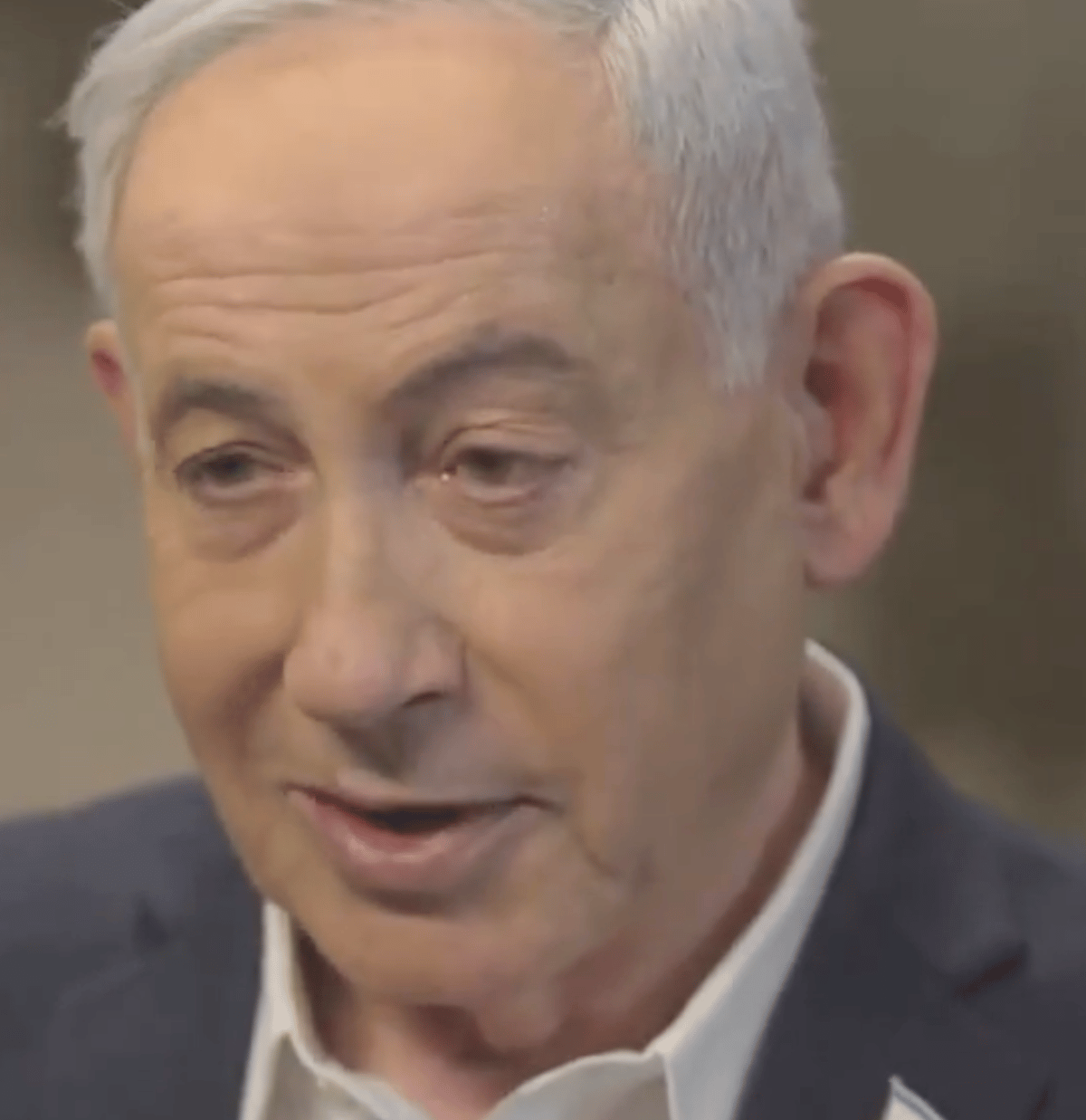
Benjamin Netanyahu on CBS' 60 minutes

It was billed as a simple interview. It turned into one of the most revealing conversations Benjamin Netanyahu has given in years.

Sitting down with CBS News chief Washington correspondent Major Garrett for his first U.S. broadcast interview since the outbreak of the U.S.-Israel war against Iran, the Israeli prime minister delivered a cascade of headlines: the war isn't over, Iran's uranium must be physically seized, Israel should stop taking American money and, in a moment that stopped many observers in their tracks, he conceded for the first time that he bears some responsibility for the catastrophic failures of October 7, 2023.

The interview aired Sunday night on 60 Minutes, as the 11-week-old conflict continued to reverberate across the Middle East. This was Netanyahu at the center of history - and he knew it.

"You Go In, and You Take It Out"

Ready for more?

The prime minister opened on the question the entire region is holding its breath over: is the war with Iran finished?

His answer was an unambiguous no.

Iran's highly enriched uranium, Netanyahu told Garrett, must be physically removed from the country. Its enrichment facilities must be dismantled. Its proxy armies, Hezbollah, Hamas, the Houthis, are still standing. Its ballistic missile program, while degraded, is still alive.

"Now, we've degraded a lot of it," he acknowledged. "But all of that is still there, and there is work to be done."

When Garrett pressed him on how Iran's stockpile of enriched uranium would actually be removed, Netanyahu didn't reach for diplomatic language. He reached for plain words: "You go in, and you take it out."

He added that a negotiated agreement would be the ideal path, walk in, remove the material, be done with it. But when Garrett pushed further, what if there's no agreement? Can force achieve it? Netanyahu answered fiercely, "You're gonna ask me these questions. I'm gonna dodge them. Because I'm not gonna talk about our military possibilities, plans, or anything of the kind."

What Really Happened in the White House Situation Room

Then came the Situation Room.

The New York Times had previously reported that on February 11th, in a fateful meeting before President Trump ordered strikes on Iran, Netanyahu made a "hard sell," pushing the idea that the Islamic Republic was ripe for regime change, and that a joint U.S.-Israeli mission could finally bring it down. It was the kind of report that, if true, would place Netanyahu at the very center of a decision to go to war.

Netanyahu pushed back, but carefully.

He didn't deny the meeting. He didn't deny the conversation. He disputed only the framing: that he had presented regime change as a guaranteed outcome. "It's incorrect in the sense that I said, 'Oh, well, it's guaranteed we can do it,'" he told Garrett. "I didn't say that."

What he did say, he confirmed, was this: "We both understood that we have little time to act, because otherwise they'll get nuclear weapons."

It was a partial denial that may have raised as many questions as it answered.

The October 7 Admission That Stunned Israel

But the moment that landed like a thunderclap, particularly in Israel, came when Garrett turned to October 7.

He ticked through the names: the Defense Minister, the head of the military, the head of intelligence, the head of the Secret Service, the head of the Air Force. All gone. Fired or resigned. The head of the Mossad leaving next month. Every senior official who bore responsibility for Israel's worst security failure since its founding had paid some price.

Every one, that is, except Benjamin Netanyahu.

Garrett put it to him directly: what is your level of accountability?

And Netanyahu, who for 31 months had refused to accept any personal blame, who had blocked the establishment of a state commission of inquiry, who had watched subordinates fall while he remained in office, finally said the words.

Ready for more?

"Let's look at the political echelon, military echelon, the security echelon. Let's look down at everyone, and everybody bears some responsibility. Yeah, from the top, from the prime minister down."

It was buried in an off-air section of the interview, captured only in CBS's published transcript. But it was there. For the first time, Netanyahu had placed himself inside the circle of accountability, hedged, qualified, and quickly redirected, but there.

He pivoted immediately to his proposal for a bipartisan commission of inquiry modeled on America's 9/11 Commission, saying he would be "the first one to go there." Critics in Israel were swift to note that he has blocked the far stronger state commission of inquiry that a clear majority of Israelis have demanded for over two and a half years.

And then came the rhetorical sidestep that many will not soon forget. "I think the real issue is, okay, that's up to October 7th. What about since October 7th?"

"Draw Down to Zero": The Aid Bombshell

If the October 7 admission was the emotional core of the interview, the financial announcement may prove its most consequential moment.

Netanyahu told Garrett that he wants Israel to stop receiving American military aid altogether, all $3.8 billion of it, phased out over the next decade. And he said he had already told this directly to President Trump.

"Their jaws drop," he said of the reaction. "But I say look."

He wants to begin immediately. Not after the next election, not after the next Congress. Now.

The framing was deliberate: not a rupture, but an evolution. Israel, he argued, brings enormous value to the United States in energy, artificial intelligence, and quantum technology, areas where, as he put it, Israel punches far above its weight. "We're a tiny country, right? But we're a gigantic country. We may have 10 million people and tiny territory but gigantic talent."

Ready for more?

The implication was clear: Israel no longer wishes to be seen as a dependent. It wants to be seen as a partner and eventually, an equal.

Gaza: The Unfinished War Within the War

Garrett also pressed Netanyahu hard on Gaza, and the exchange cut to the bone.

The declared war aims had been clear: disarm Hamas, demilitarize Gaza, end the smuggling of weapons, and dismantle the group's governing capacity. Garrett asked, point by point, how much had been achieved.

Disarmament? "No."

Demilitarization? "No."

Weapons smuggling curtailed? That, Netanyahu said, had genuinely improved, Israel now "envelopes" Hamas militarily, making resupply far harder.

It was a rare public accounting of how far Israel's stated objectives remain from reality, delivered by the man who set those objectives.

On civilian casualties, Netanyahu mounted a fierce defense, arguing Israel had gone to extraordinary lengths to warn civilians, millions of text messages, phone calls, pamphlets, leaflets. He argued Hamas had done the opposite, shooting civilians who tried to flee. The ratio of civilian to combatant deaths, he claimed, was among the lowest in the history of modern urban warfare.

Netanyahu blamed Israel's plummeting global reputation, 60% of Americans now view Israel unfavorably, a near-20-point swing in four years, not on the death toll, but on social media. He called it "the eighth front of the war," one he conceded Israel was losing. "We've not done well on the propaganda war," he admitted.

"Not on My Watch"

He closed the way he always closes, with history.

Before October 7, Netanyahu reminded Garrett, he had been considered the most restrained prime minister in Israel's history. Politically formidable, militarily cautious. That version of him, he said, died on October 7.

"Obviously, it changed on October 7, because they were going to annihilate us."

He described the Hamas attack not as an isolated massacre, but as the opening move of a civilizational assault, an Iranian-orchestrated attempt to destroy the Jewish state through what he called a "noose of death." By the second day of the war, he said, he had already told his government: "We're going to change the Middle East."

Whether history will judge that he succeeded, or that he helped set it ablaze, remains the question no 60 Minutes interview can answer.

But one thing is now certain: after 31 months of silence on his own culpability, Benjamin Netanyahu finally said the word responsibility out loud. In the same breath, he changed the subject.

Whether Israel, and the world, will let him is another matter entirely.

Ready for more?

Join our newsletter to receive updates on new articles and exclusive content.

We respect your privacy and will never share your information.