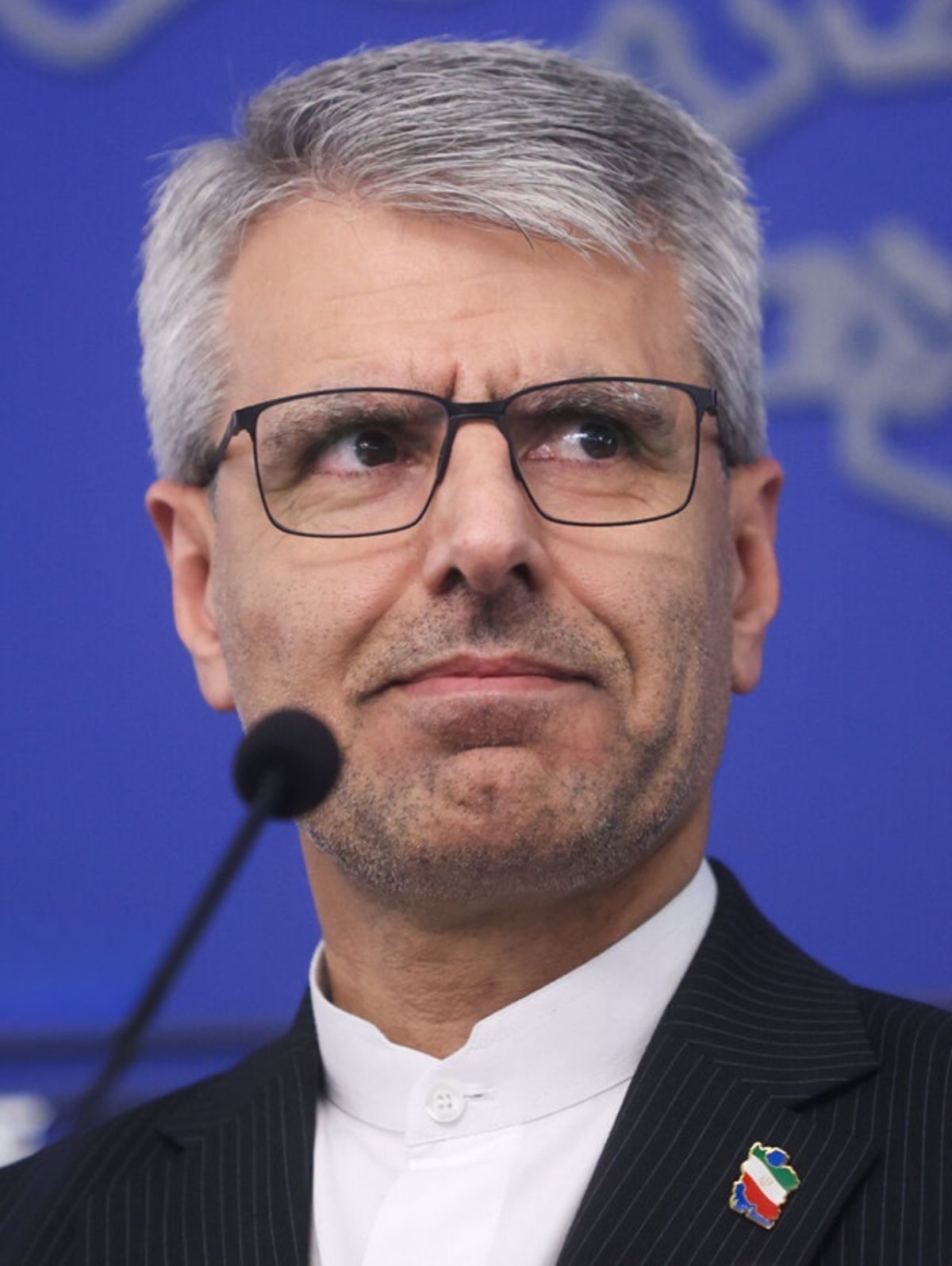
With a fragile ceasefire fraying at the edges and the Strait of Hormuz still a closed chokehold on the world's oil supply, Iran's Foreign Ministry spokesman Esmail Baghaei stepped to the podium this week in Tehran and didn't mince a single word.
His message to Washington: your demands are unreasonable, your hands are dirty, and Israel is pulling the strings.
In a combative press conference that laid bare the yawning gulf between the two sides, Baghaei challenged the entire framework of American negotiating positions, framing Iran not as a rogue state seeking concessions, but as a wronged party making plainly rational requests that Washington keeps refusing.
"Is it excessive to demand an end to maritime piracy against Iranian ships?" he asked. "To demand the release of Iranian assets unjustly held in foreign banks for years under American pressure? Our proposal for safe passage through the Strait of Hormuz, is that excessive? Establishing security and peace across the entire region, including Lebanon, is that excessive?"
Then came the sharper edge: "Unfortunately, the American side still insists on positions largely built and shaped by the Zionist regime, and continues to hold its one-sided stance and unreasonable demands."
A War, a Ceasefire, and a Diplomatic Labyrinth
To understand the heat behind Baghaei's words, you have to understand where things stand.
On February 28, 2026, the United States and Israel launched Operation Epic Fury, a series of airstrikes against Iran targeting its nuclear infrastructure, ballistic missile programme, and military command. Iran's Supreme Leader Ali Khamenei was killed in the strikes. His son Mojtaba was appointed as successor. Iran retaliated with strikes against Israeli and U.S. military targets and, crucially, shut down the Strait of Hormuz, the narrow waterway through which roughly 20% of the world's petroleum and liquefied natural gas flows every year.
A ceasefire came into effect on April 8. But it has been a ceasefire in name more than in practice. Both sides have maintained their blockades. Suspected Iranian drone strikes in the Persian Gulf have continued to test the truce. The Strait remains closed to most commercial traffic, with global oil prices surging as a result.
Pakistan has been shuttling between the two capitals as mediator. Iran submitted a 14-point peace proposal on April 30. The United States sent a response through Pakistani intermediaries and Iran's reaction to that response set the tone for Baghaei's press conference.
"Endless Greed" and a Shifting American Position
Baghaei confirmed Tehran had received the American response, and he described it with barely concealed contempt.
"The United States' habitual greed and unlimited demands never end," he said. "We are facing a party that constantly changes its views, which will complicate any diplomatic process."
He also accused the United States of turning the world's shipping lanes into a lawless zone: "The United States has made international waters unsafe due to piracy." It was a pointed reference to Washington's counter-blockade, launched on April 13, which targeted all ships seeking to reach Iranian ports, a move Iran has described as a potential "violation of the ceasefire."
Iran's 14-point proposal lays out what Tehran says are its core and reasonable demands: an end to the war within 30 days, the lifting of the U.S. naval blockade, the release of billions of dollars in Iranian assets frozen in foreign banks under decades of sanctions, reparations for war damages, the removal of sanctions, an end to all hostilities including in Lebanon, and a new mechanism governing the Strait of Hormuz. Notably absent from the proposal, Baghaei has repeatedly stressed: any discussion of Iran's nuclear programme.
That sequencing, end the war first, talk nuclear later, represents Iran's central diplomatic gambit. And it may be working. Earlier this week, U.S. Secretary of State Marco Rubio declared Operation Epic Fury "concluded." Analysts have read that statement as a significant, if implicit, concession to Tehran's core demand. As one expert told Al Jazeera: "Washington has accepted that the simultaneous resolution of the war, Hormuz, and the nuclear file in one final package is not currently feasible. Diplomatically, this is a concession to Tehran."
The Nuclear Red Line - and Who's Drawing It
The nuclear question remains the most combustible issue on the table, and Baghaei has worked hard to keep it off the table entirely, at least for now.
He dismissed reports, including a piece by Al Jazeera, claiming Iran's 14-point plan included a 15-year suspension of its nuclear activities. That, he said, was false. The current proposal deals only with ending the war and the blockade. Nuclear talks, Iran insists, are a separate matter for a later stage.
Washington has not let go so easily. Previous U.S. proposals demanded that Iran halt all uranium enrichment for at least 12 years, hand over its stockpile of highly enriched uranium to the International Atomic Energy Agency, and permanently pledge never to develop a nuclear weapon. UN Ambassador Mike Waltz summed up the American red line starkly on Fox News: "President Trump has been clear, they will never have a nuclear weapon, and they cannot hold the world's economies hostage."
Trump himself has been more volcanic. He called Iran's counter-proposal "totally unacceptable." He previously threatened "extensive attacks on Iranian infrastructure and bridges" if a deal was not reached. He also said, bluntly: "Iran is collapsing financially. They want the Strait of Hormuz open immediately."
Iran's President Masoud Pezeshkian, for his part, refused to play the role of a government on its knees. "We will never bow our heads before the enemy," he wrote on X. "If talk of dialogue or negotiation arises, it does not mean surrender or retreat."
The Zionist Accusation - and What It Signals
Baghaei's claim that U.S. positions are being "built and shaped by the Zionist regime" is inflammatory rhetoric, but it also reflects a calculated strategic argument that Tehran has been making consistently throughout this conflict: that Israel — not American national interest — is the engine driving Washington's maximalist demands.
It is a framing that resonates in parts of the Arab world and beyond, and one that the Netanyahu government's Sunday interview on 60 Minutes may have inadvertently reinforced. Netanyahu confirmed he had lobbied Trump directly in the White House Situation Room before Operation Epic Fury was launched, and acknowledged that removing Iran's enriched uranium by force - "you go in and you take it out" - remained on the table.
Meanwhile, the regional ripples are widening. Iran has warned all Arab states in the Gulf against cooperating with Israel, with Baghaei stating: "We believe that any cooperation or complicity by regional countries with the Zionist regime, whose record in destabilising the region is clear, will only increase insecurity in the region." The threat was unmistakable: stay neutral, or face consequences.
A Strait the World Can't Ignore
Through it all, the Strait of Hormuz looms over everything, economically, strategically, and diplomatically. The waterway, whose narrowest navigable point runs through Iranian and Omani territorial waters, once handled around 3,000 vessels per month. That figure has collapsed to roughly 5% of pre-war levels. Global oil prices have surged. Arab Gulf states have cut or suspended production due to Iranian strikes. The UK and France have convened emergency conferences on reopening the strait, signing a statement with 36 other nations calling for safe passage. China and Russia vetoed a UN Security Council resolution on the issue.
At the centre of all the geopolitical noise sits a question Baghaei essentially posed, and which the world is still waiting to hear answered: is it really so unreasonable to want your ships to sail freely, your money returned, and your country no longer at war?
Washington's answer, at least so far, is: yes, but only if you give up your nuclear programme first.
Tehran's answer is: no deal on nuclear until the guns go silent and the blockades lift.
That is the gap. And as Baghaei left the podium in Tehran, it remained as wide as ever.