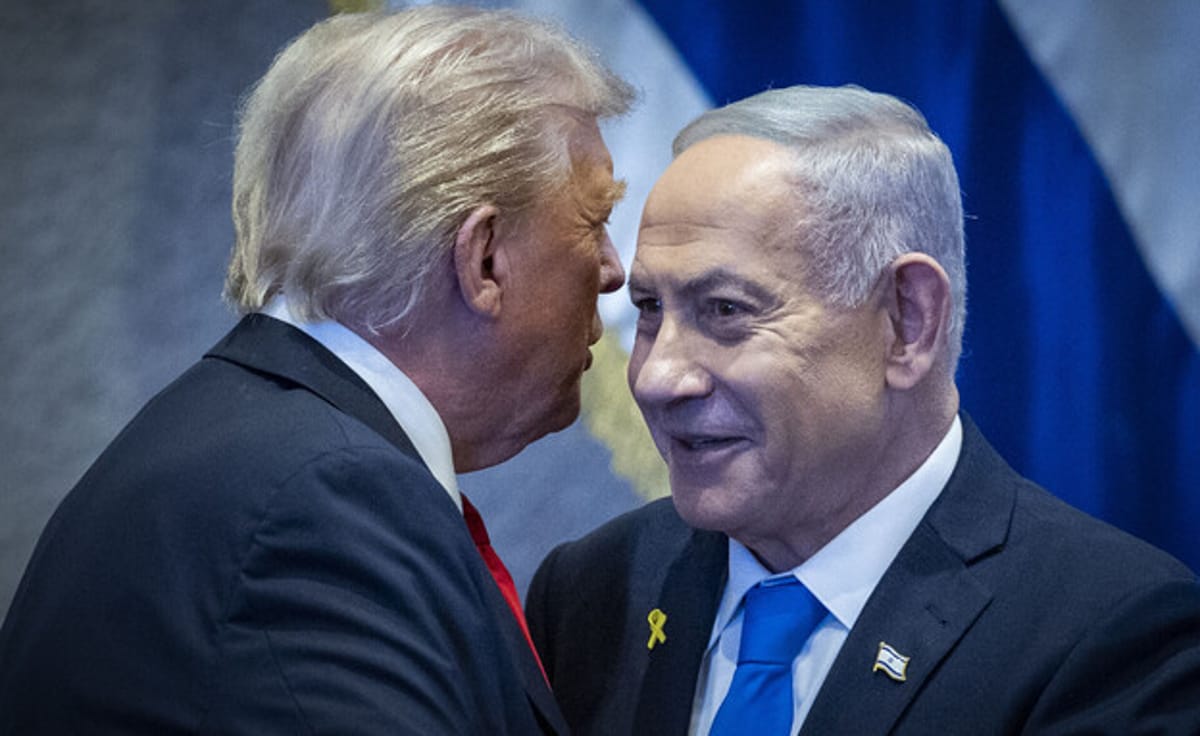
Prime Minister Benjamin Netanyahu is set to depart for Washington today at 12:00 PM, landing in the U.S. capital in the early hours of Wednesday (Israel Time). Unlike previous visits characterized by media fanfare and celebratory lunches, this meeting with President Donald Trump is scheduled as a closed working session at the White House.
The decision to exclude the press, and even Netanyahu’s wife, Sarah, who recently returned from a five-week stay in Miami, underscores the gravity and sensitivity of the agenda.
The "Flimsy Deal" Anxiety
Jerusalem is reportedly on edge. The primary concern is that President Trump, influenced by a new circle of advisors and regional Arab partners, might pursue an "airy" or "flimsy" agreement with Tehran. Israeli officials fear a deal that:
- Focuses strictly on nuclear enrichment without addressing ballistic missiles.Implements weak oversight by the IAEA.
- "Locks" Israel into a diplomatic cage, making independent military action nearly impossible while a U.S.-Iran agreement is in place.
"There is a real concern that this is moving toward a deal that is not good for us," a senior Israeli official stated.
"This isn't just a negotiation with U.S. envoys; there are significant pressures from Turkey, Qatar, Saudi Arabia, and Egypt influencing the President’s orbit".
Netanyahu’s Red Lines
In this one-on-one setting, Netanyahu is expected to present Israel’s non-negotiable "Red Lines" for any nuclear framework:
- Zero Enrichment: Stripping Iran of the "right" to enrich uranium on its own soil.
- Removal of Material: Exporting all existing enriched uranium out of Iran.
- Real Oversight: Implementing intrusive, real-time monitoring and control measures.
- Missile Limits: Strict caps on the ballistic missile program that threatens both Israel and Europe.
The "Vance" Factor: Keeping Cards Close
Adding to the uncertainty, Vice President JD Vance recently commented on the negotiations during a visit to Armenia. Vance emphasized that Trump prefers to keep his "Red Lines" private to maintain maximum negotiating leverage.
"The President doesn’t announce what he will do in negotiations because he feels it limits him," Vance noted, while also reaffirming that the administration stands with the Iranian people against the regime's brutal crackdowns on domestic protests.
A Leaner, Quieter Entourage
In a calculated move to avoid accusations of "warmongering," Netanyahu has significantly slimmed down his military entourage. While his Military Secretary and the Acting Head of the National Security Council will join him, high-ranking Air Force officials, who typically coordinate with the U.S. military, were left behind to keep the focus strictly on diplomacy and high-level strategy.