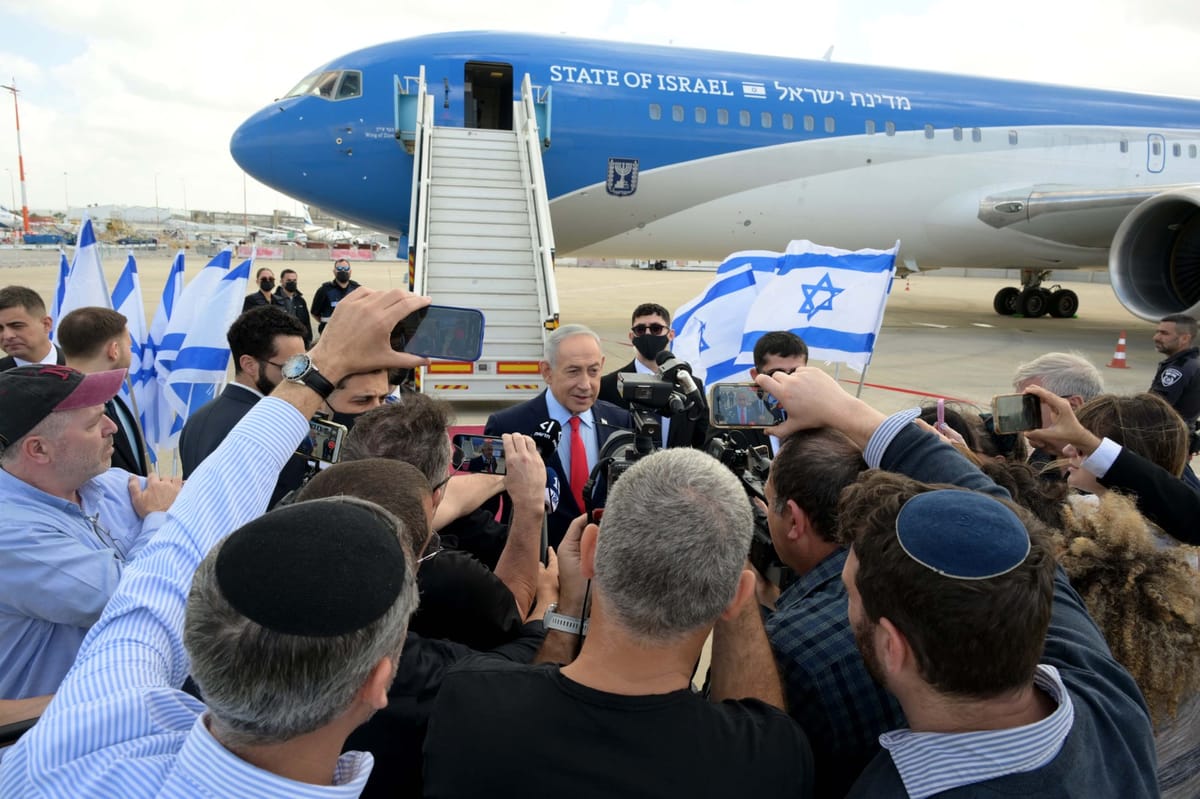
As Prime Minister Benjamin Netanyahu boarded his official aircraft for a high-stakes "flash meeting" with President Trump in Washington on Tuesday, a wave of anxiety swept through Arab capitals. The meeting, scheduled for Wednesday, is being watched by regional leaders who fear a decisive shift in U.S. policy toward Iran could destabilize their own tenuous grip on power.
According to Yoni Ben Menachem, a veteran Middle East analyst and senior researcher at the Jerusalem Center for Foreign Affairs, the primary concern among Arab rulers is "the chair," the survival of their regimes. In an interview with Channel 14, Ben Menachem described a region "in shock" over the possibility that Netanyahu will successfully persuade Trump to abandon ongoing nuclear negotiations in favor of a broad military campaign to topple the Islamic Republic.
While some Israeli officials have pushed for strikes against Iran’s ballistic missile sites, Arab leaders worry such an escalation would trigger a regional war that could "undermine the stability of the Middle East" and jeopardize their own internal security.
The anxiety is compounded by a perceived link between the campaign against Tehran and the future of Judea and Samaria. Ben Menachem noted that many in the Arab world believe a weakened Iran would pave the way for Israel to tighten its control over Judea and Samaria. Conversely, some regional actors view the continued rule of the Ayatollahs as a necessary counterweight that preserves the long-term prospect of a Palestinian state.
Strategic interests in the region are currently divided. While Israel and the United States maintain a "unique closeness" and have recently ramped up heavy-lift logistics into the Middle East, Arab states have adopted a strategy of compartmentalization. Their goal, Ben Menachem argued, is to separate the nuclear issue from Iran’s regional proxy activities and missile programs to "buy time" and dilute the threat of a combined U.S.-Israeli strike.
Before Netanyahu departed, he struck a firm tone, telling reporters on the tarmac that he would present "principles" for negotiations that are essential for "everyone in the world who wants peace and security." But for the monarchs and presidents across the Middle East, the prospect of "peace" through total military victory is exactly what has them checking their defenses and watching the White House with growing trepidation.