
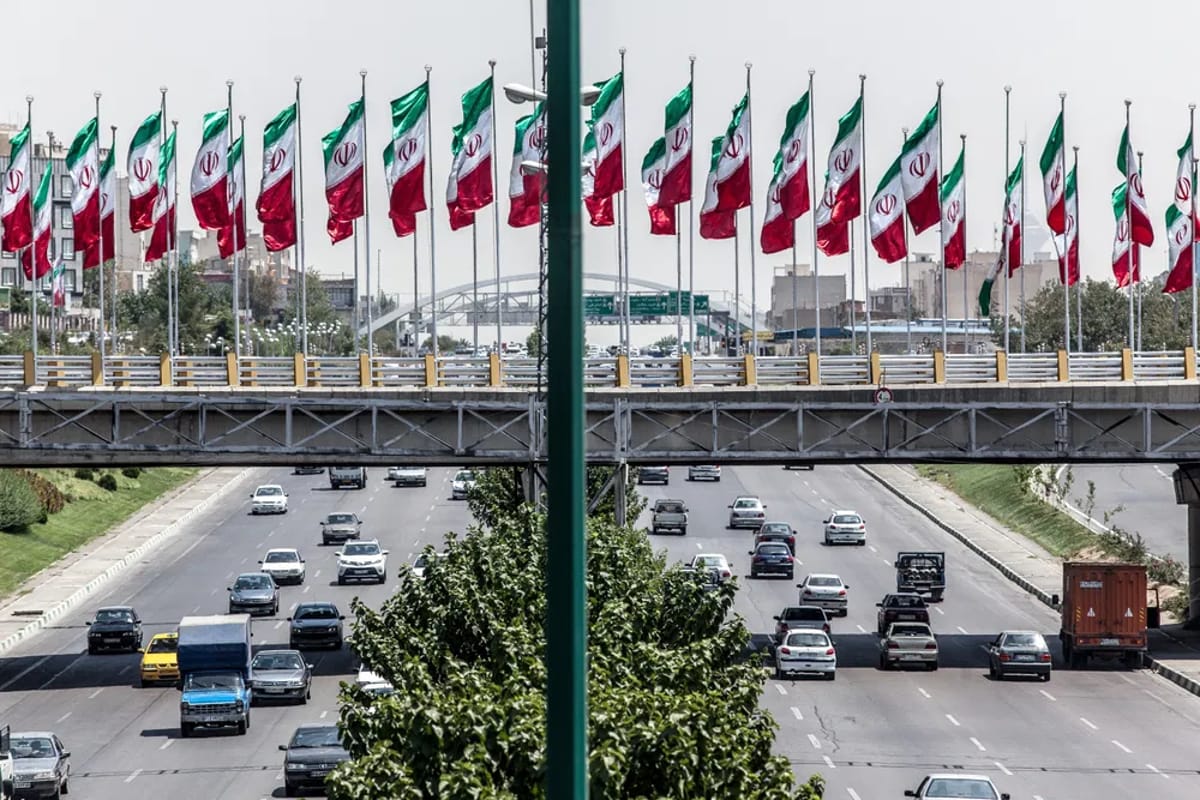
In a high-stakes address to the nation on Wednesday night, U.S. President Donald Trump sounded the alarm on Iran’s escalating military ambitions, labeling its civilian space program a "deadly" front for the development of Intercontinental Ballistic Missiles (ICBMs).
According to intelligence reports, Tehran is working feverishly to convert its existing medium-range ballistic missile capabilities into long-range weapons capable of reaching the United States mainland.
The Three Pillars of the Iranian Threat
Intelligence communities in both Israel and the West are closely monitoring three specific technological benchmarks that Iran is currently attempting to master:
Multi-Stage Propulsion: For a missile to reach intercontinental distances, it must utilize multiple engines that detach during flight. This reduces weight and allows the projectile to reach the speeds necessary to exit the atmosphere.
Precision Navigation: At such vast distances, the margin for error is non-existent. Experts warn that a deviation of just millimeters at launch can result in the missile missing its target by several kilometers. Iran is currently investing heavily in advanced flight computers to solve this.
Thermal Protection Systems: Perhaps the greatest challenge is the "re-entry" phase. As a missile returns from space into the atmosphere, the friction generates extreme heat. Developing a warhead capable of surviving this transition is essential for a functional weapon.
"The Iranian regime is using the cover of 'satellite launches' to test multi-stage engines and various types of solid and liquid fuels," Israeli security experts noted. "This is a military program in civilian clothing."
A Strategic 'Balance of Terror'
Beyond the missiles themselves, Iran is pouring massive resources into a sovereign spy satellite project. Currently, the Islamic Republic relies on third-party Western or international services for GPS and guidance. By establishing their own satellite network, they aim to complete an independent guidance system that would be immune to external interference.
While analysts suggest that Iranian technology has not yet fully matured into a precision ICBM, the progress made in 2025 and early 2026 indicates they are on a clear path toward achieving that goal. The ultimate fear remains the integration of a nuclear warhead onto these platforms, should the Iranian nuclear project reach fruition.