How America USES Israel to Control The Arabs Lust for Power
Why the "Israeli Tail" is a Myth: The Real Power Play Behind the U.S. Offensive is Coming from Gulf Oil, Not Jerusalem.
When the world watches the escalating conflict with Iran, the Middle Eastern perspective is almost always centered on Israel.
To the casual observer, the reasons seem obvious: the "intimate relationship" between Jerusalem and Washington is so deep that the two often seem to move as one.
However, there is a darker, more ancient reason for this focus. It is the persistent trope that the "small and weak" tail is somehow wagging the American dog. In reality, Israel is in the headlines because it lives in the headlines, it is the lens through which the world chooses to view the Middle East, even when the underlying mechanics are far more complex.
1. The Petrodollar and the Saudi Shield
The relationship between the United States and the Gulf states, particularly Saudi Arabia, is every bit as vital to U.S. national security as the alliance with Israel. The Petrodollar system and the strategic flow of energy are the invisible anchors of American global power.
For years, we saw a cynical balancing act. The Obama administration sought to strengthen Iran, not out of love for the Mullahs, but as a way to keep Saudi Arabia fearful and, therefore, close to Washington. Now, President Trump faces the inverse challenge: How do you keep the Gulf loyal if the Iranian threat is neutralized?
2. The "Israel Advantage": What Russia and China Can’t Offer
To maintain this loyalty, the U.S. must market a product that no other superpower can provide.
Where is the "Israel" that China can plant in the Middle East? Where is the "Israel" that Russia can provide? There is none. Israel provides a level of military capability, intelligence, and regional stability that is unparalleled.
Interestingly, Benjamin Netanyahu’s tactical "pivots" toward Moscow and Beijing in recent years were not a betrayal of Washington. Instead, they were a masterclass in leverage. By showing that Israel is a partner that everyone wants, he actually strengthened the U.S. hand in the eyes of the Saudis. It proved that the Americans possess the ultimate strategic asset, one that their rivals cannot replicate.
Moreover Israel singlehandedly removed Russia's and China's assets away from the Middle East.
3. The Gulf’s Internal Crisis
While the military conflict dominates the news, the Gulf states are facing a much deeper, internal struggle that America cannot fix with a precision strike: The crisis of modern Islam and the restlessness of the younger generation.
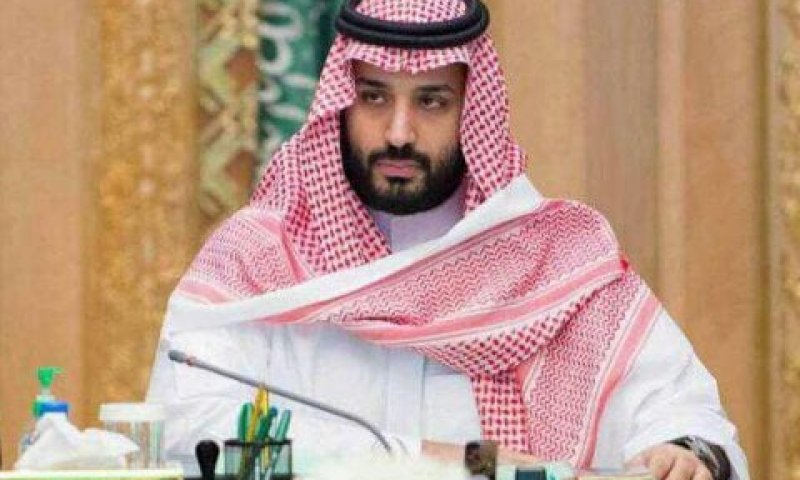
For the Saudi Crown Prince, weakening Iran is a foundational necessity to ensure the survival of his own reforms. This is where the interests of the U.S., Israel, and the Gulf converge. At this stage, the "heavy lifting" of dismantling Iranian influence is being performed by American power and Israeli operational skill.
4. The Blame Game
Here is the paradox: the Gulf states are currently "not supplying the goods" and coming to the table with heavy demands. They are exerting pressure on Trump to ensure their future is secured in any post-war settlement.
Yet, as this high-stakes negotiation unfolds, it is Israel that will inevitably bear the brunt of global criticism. While the Americans and Israelis execute the primary interest, weakening the Iranian regime, any friction or diplomatic fallout will be pinned on Jerusalem.
In the Middle East, the strategic interests are shared, but the PR costs are not. Israel will continue to be the face of the war, even as it serves as the primary engine for a new, stable, and pro-Western regional order that the Gulf so desperately needs.