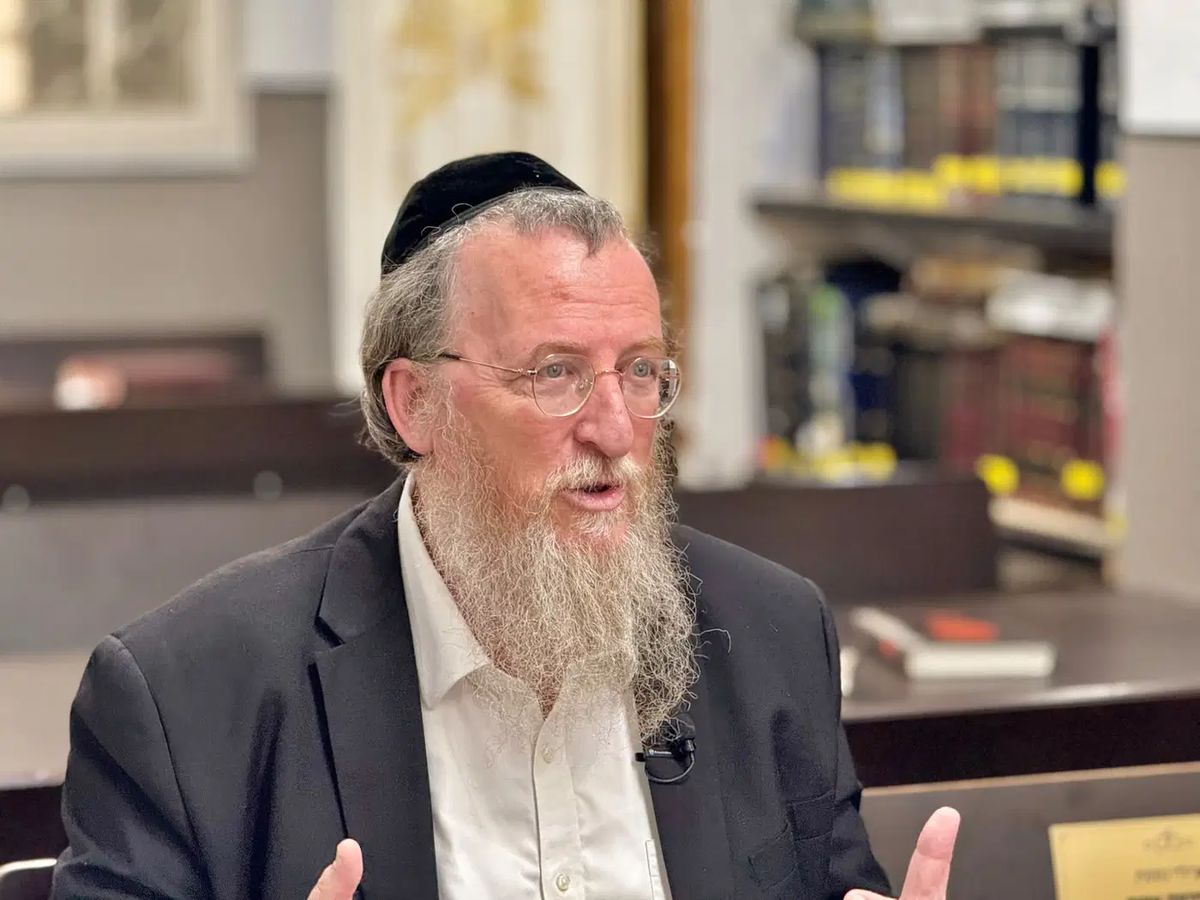
On Tisha B'Av, the Jewish calendar's day of mourning for the destruction of the Temple, Kikar HaShabbat launched "Project Zero," a national initiative aimed at preventing drowning deaths among yeshiva students during bein hazmanim, the summer recess period. The centerpiece of the campaign is an extended interview with Rabbi Shlomo Shpigel, whose two sons, Abraham Isaiah and Yissachar Dov, drowned at Netanya beach earlier this summer.
The Day at the Beach
Describing the lead-up to the tragedy, Rabbi Shpigel explained that his family went to the beach on a Friday afternoon during summer break. "We went out like any parents who want to give their children some rest during bein hazmanim," he said quietly. "We are always very careful about the sea, and especially during the counting of the omer, we didn't want to send them alone."
When the family arrived, they saw a barricade and broken stairs at the beach entrance. "We said to the children simply: we're not going down," Rabbi Shpigel recounted. "But suddenly we saw people coming up from the beach. We asked them if the beach was open, and they said yes—only the stairs were broken."
Because both he and his wife suffered from knee pain, they remained seated in a park above the cliff overlooking the water. "Our simple understanding from the people was that the beach was open," he said. "We thought for certain we were sending them to a declared beach. The sea didn't look dangerous. There were over 100 people on the beach below. I didn't see any warning sign saying not to enter."
Critically, neither parent knew at that moment that the lifeguard stationed at the beach had been called away to an emergency elsewhere. "We thought with 100 percent certainty that there was a lifeguard," Rabbi Shpigel said.
The Last Moments
Hours earlier that same day, the rabbi's other son, Avi, had refused to enter the water at the Sea of Galilee with his friends. "He told his friends: 'My father and mother don't allow me to go in without supervision or without a lifeguard,'" the rabbi said. "When that moment came, he thought: when will I get another opportunity like this to spend time with my brothers? That was his last time with them."
"They're Doing CPR on Dobi"
The peaceful afternoon shattered when the rabbi's youngest son appeared at the park, running toward them. "My youngest son ran to us, pale, and said: 'They're doing CPR on Dobi, and they're looking for Avi,'" Rabbi Shpigel recounted. "That was the sentence that brought us into a different life."
The family rushed down the broken stairs. One son was found and CPR was performed, but without result. "We saw Dovi lying there with no expression on his face. They're pushing, pushing, and nothing," the rabbi said.
The second son, Avi, remained missing. A rescue helicopter was dispatched, boats began searching. "Slowly time started passing, we saw them bringing up a helicopter and ships, and we understood that we probably wouldn't get him back alive. Everyone knows what happened after: they searched for ten days, until his body was finally found at Herzliya beach."
On Faith and the "Why Me" Question
When asked whether he struggled with the question "why my children?" Rabbi Shpigel offered a response grounded entirely in faith. "We tried immediately to examine our deeds, until the great rabbis of our generation came and told us: 'This is a public sacrifice. In me will I be sanctified,'" he said, referencing the Torah.
"Actually, that question doesn't trouble me at all. I have never seen a person who received much good from the Holy One, blessed be He, and asked 'why me?' Did someone ever ask that about the good? No. So when receiving suffering, one should not ask 'why me?' A person must bless the bad just as one blesses the good."
The Critical Safety Lesson: Verify the Lifeguard
Rabbi Shpigel then addressed the practical heart of his message. He emphasized that the tragedy was not the result of recklessness, but of a single critical gap: they did not verify independently that a lifeguard was present.
"The minimum caution for anyone is to verify with certainty that there is a lifeguard," he stated. "We thought 100 percent that we sent them to a declared beach. It turned out only afterward that the lifeguard who arrived was from a nearby beach. Rescue personnel told us that if there had been a lifeguard on site, he would have identified the 'return current'—something that happens suddenly and is hard to notice with an untrained eye."
The "return current," he explained, is a dangerous underwater phenomenon that only professional lifeguards are trained to recognize. An amateur observer, even among 100 people on a beach, cannot spot it.
A Direct Call to Parents and Yeshiva Students
As thousands of yeshiva students prepare to leave for summer recess, Rabbi Shpigel issued a piercing call:
"Do everything according to Jewish law, and the law does not permit entering into danger. I would suggest to everyone: do not be 'wiser' than the laws that nature authorities or sea authorities set. I know that sometimes it seems to us they exaggerate, but just as we trust a doctor and do exactly what he says, so we have no choice but to follow the laws as much as possible. When there is any doubt about life, we must be strict in every possible way."
He specifically instructed: "The minimum caution is to check with absolute certainty that there is a lifeguard. Don't rely on seeing other people in the water, and don't think that a declared beach automatically means a lifeguard is present at that exact moment."
A Final Request
At the end of the interview, Rabbi Shpigel made one final request of every yeshiva student heading out during the summer break:
"I want to ask all those boys who went out, thank God, during bein hazmanim on vacation: if you have a few minutes to remember our two dear children, perhaps on the way to a trip, study a chapter or two of Mishnah in their merit—for the elevation of the soul of Abraham Isaiah and Yissachar Dov, may their memory be blessed. Perhaps that will also protect you."