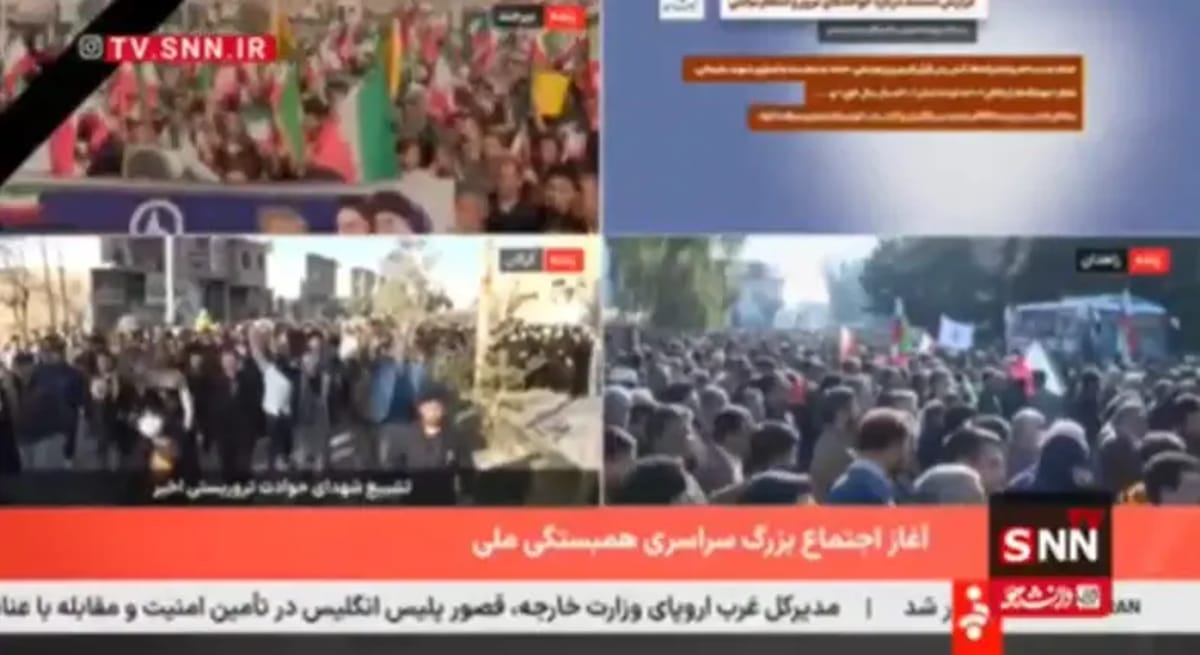
The iron grip of the Iranian regime over its domestic media was momentarily shattered this Sunday evening as state television broadcasts were reportedly hijacked by opposition hackers. For approximately ten minutes, the standard government programming was replaced by defiant imagery and a powerful address from Reza Pahlavi, the exiled son of the late Shah of Iran. This high profile cyber attack comes at a time of extreme tension within the country, as the government struggles to maintain order amidst widespread economic hardship and a growing sense of domestic unrest. The breach allowed millions of viewers to see forbidden footage of anti government protests and hear direct calls for the overthrow of the current leadership, marking one of the most significant propaganda failures for the Ayatollahs in recent years.
A Message to the Nation and the Military
During the broadcast takeover, the screen displayed bold slogans designed to reignite the spirit of the protest movement, which has faced a brutal crackdown in recent weeks. Messages such as "The national revolution of the Iranians" and "People of Iran, continue your struggle, freedom is closer than ever" flashed across the monitors. The hackers did not limit their message to the general public, they also targeted the regime's security forces. In a direct appeal to the soldiers and police officers responsible for suppressing demonstrations, the broadcast stated, "This is a message to the personnel of the military and the security forces. Do not turn your weapons against the people. Join the people for the freedom of Iran."
Reza Pahlavi’s recorded address served as the centerpiece of the hack. He spoke directly to those serving the state, urging them to consider their legacy. "You have an opportunity to choose, to stand with the people, to be in the heart of the people and assist them, or to choose partnership with the murderers of the people," Pahlavi stated. He further emphasized the distinction between the nation and its current rulers, telling the security forces, "Do not take upon yourselves the disgrace and slavery of the people. You are the national army of Iran, not the army of the Islamic Republic. It is your duty to protect your own lives and the lives of your people."
International Pressure and Rhetorical War
This technological breach occurred against a backdrop of escalating verbal warfare between Tehran and Washington. Just hours before the hack, Supreme Leader Ali Khamenei had publicly accused the United States of being responsible for the "death, damage, and defamation" currently facing the Iranian people, claiming that Washington is inciting internal violence. President Donald Trump responded forcefully in an interview with Politico, stating that the time has come to seek new leadership in Iran. Trump’s comments followed a review of Khamenei’s aggressive posts on the social media platform X, where the President accused the Supreme Leader of the "complete destruction of the country."
The President did not hold back in his criticism of the regime's tactics, stating that Khamenei has used violence at "levels not seen before" just to preserve his grip on power. "Leadership is a matter of honor, not of fear and death," Trump remarked. The convergence of these high level political statements and the grassroots technical defiance shown in the state TV hack suggests that the pressure on the Iranian regime is reaching a breaking point. As hackers continue to prove that the regime's digital defenses are penetrable, the message of the "national revolution" continues to spread, even when the government attempts to pull the plug on the internet and the airwaves.