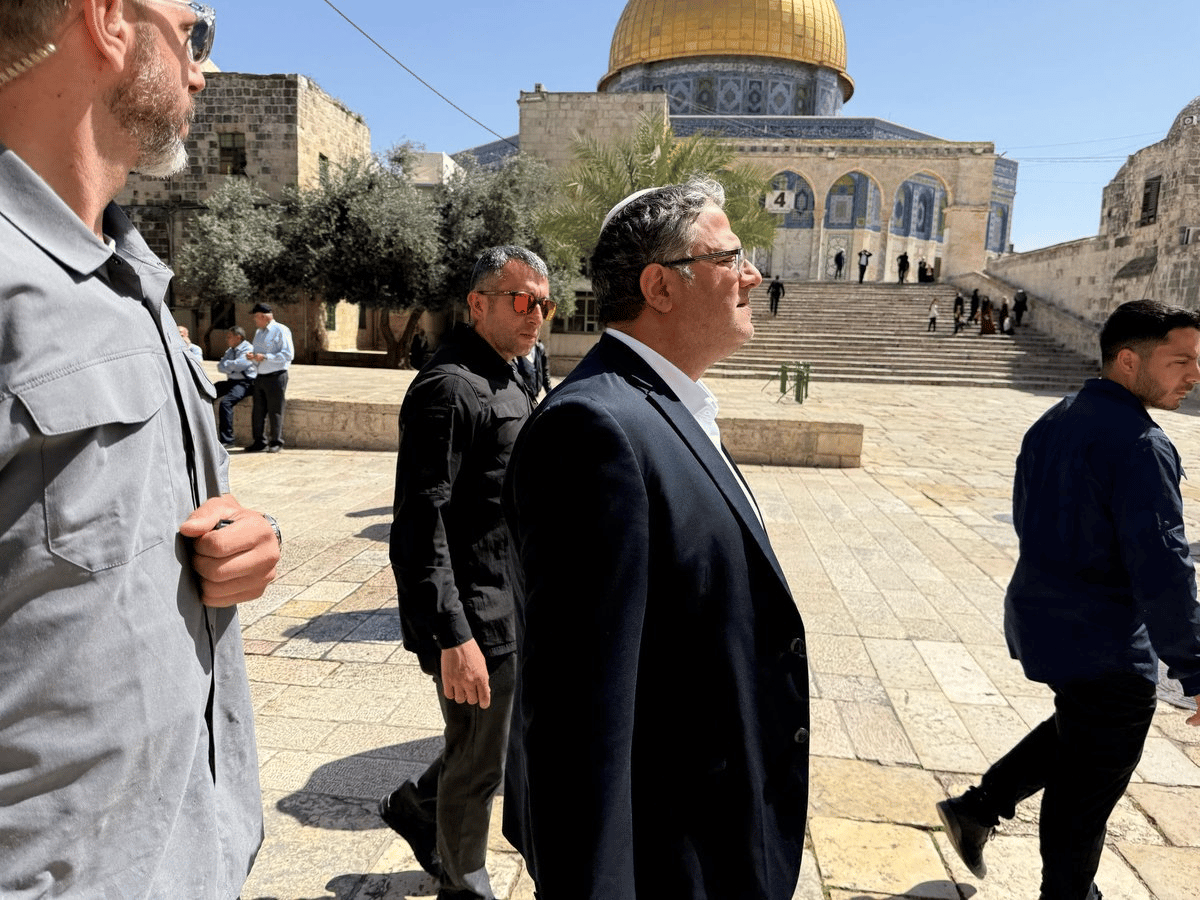
National Security Minister Itamar Ben Gvir visited the Temple Mount on Sunday morning for prayer, marking his first ascent to the site since the conclusion of the recent military operations.
Accompanied by Rabbi Elisha Wolfson, head of the Temple Mount Yeshiva, Ben Gvir highlighted what he described as a radical transformation in the status quo for Jewish visitors. "I remember coming here at age 14 or 15," the Minister remarked during the visit. "Back then, there were constant shouts of 'Allahu Akbar' surrounding us, and a Jew was arrested for even mumbling a prayer. Today, you feel like the master of the house here."
Despite the visible changes, Ben Gvir emphasized that his goals for the site have not yet been fully realized.
"There is still more to do and more to improve," he stated, adding that he continues to lobby the Prime Minister to implement further policy shifts at the holy site.
Rabbi Wolfson echoed these sentiments, describing the current atmosphere as an "enormous historic change" for the Jewish people after 2,000 years of longing.
The Halacha and Diplomatic Fallout
The Minister’s visit comes amid long-standing religious and geopolitical sensitivities. The Chief Rabbinate of Israel maintains a strict and official prohibition against Jews ascending the Temple Mount, citing Halacha (Jewish law) concerns regarding the spiritual purity required to enter the sacred compound.
Furthermore, Ben Gvir’s actions are expected to draw sharp international condemnation, particularly from the Arab world. Diplomatic sources suggest the move could further strain relations with Jordan, the formal custodian of the site, at a time when regional tensions are already at a breaking point. With the ongoing conflict against Hezbollah and existing fury over recent Israeli strikes in Iran, critics warn that such high-profile visits serve to "add fuel to the fire," potentially triggering renewed unrest across the Middle East.