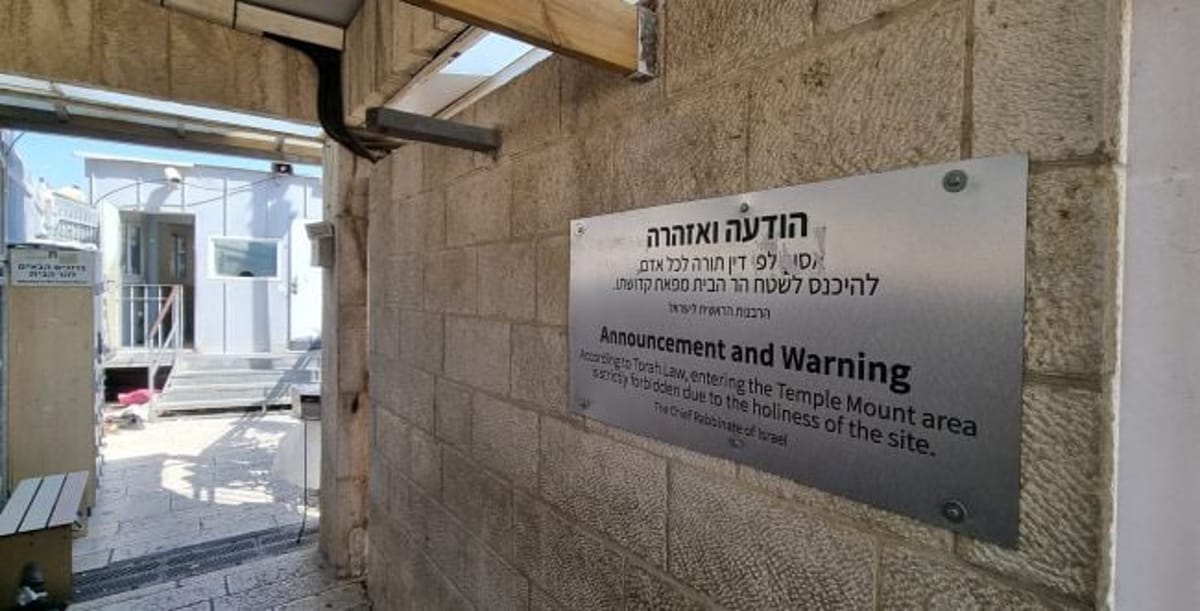
A wave of indignation is sweeping through Jerusalem’s Jewish community following a police decision to restrict access to the Western Wall and Temple Mount, while simultaneously permitting limited Christian services at the Church of the Holy Sepulchre. The move comes as Israel faces a sustained and unprecedented aerial campaign from Iran.
Security Directives and Religious Disparity
Citing Home Front Command regulations, Israel Police have prohibited gatherings of more than 50 people in areas lacking adequate reinforced shelters. Under these guidelines, the Western Wall plaza, a vast open space, has been largely cleared of worshipers. Simultaneously, authorities have barred entry to the Temple Mount complex.
However, the decision to allow a limited number of Christian congregants into the Church of the Holy Sepulchre has sparked accusations of a double standard. Jewish residents, particularly those preparing for the upcoming Passover holiday, argue that if security risks allow for restricted Christian liturgy, similar provisions should be made for Jewish prayer at the nation’s holiest sites.
Jerusalem: No Longer a "Red Line"
The current security climate marks a radical departure from previous encounters with Tehran. During the earlier phase of the Iranian conflict (operation am kelavi), the Israeli capital remained largely outside the primary strike zones. However, in the current "Operation Roaring Lion" (Sha'agat HaAri) campaign, Jerusalem has already been targeted by over 40 sirens.
Military analysts suggest that Iran has abandoned its previous hesitation regarding the Holy City. Missiles are now being directed toward the Old City, indicating that Tehran is willing to risk a direct hit on the Temple Mount itself. Such an event would likely ignite a diplomatic firestorm, causing irreparable friction between Iran and the Arab world, most notably Jordan. Experts warn that in the event of a strike on the mount, Iran would almost certainly attempt to deflect blame onto Israel to avoid regional backlash.
The Temple Mount Debate
The restrictions have met additional pushback from Temple Mount faithful groups. These activists, who seek to enter the compound where the Holy Temples once stood, argue that the security echelon is unfairly targeting Jewish access.
This movement continues despite the long-standing position of the Chief Rabbinate of Israel, which maintains that ascending the Temple Mount is strictly forbidden under Jewish Law (Halakha) at this time. While the Rabbinate’s ruling provides the religious basis for the status quo, activists argue that the political and security-based closure is unjustified given the partial opening of Christian landmarks.
A City Under Pressure
As the Passover holiday approaches, the tension between religious necessity and physical safety remains taut. With the Iranian threat evolving into a daily reality for Jerusalemites, the "Lion’s Roar" has turned the capital into a primary front, leaving no corner of the city, holy or secular, safe from the reach of Tehran’s arsenal