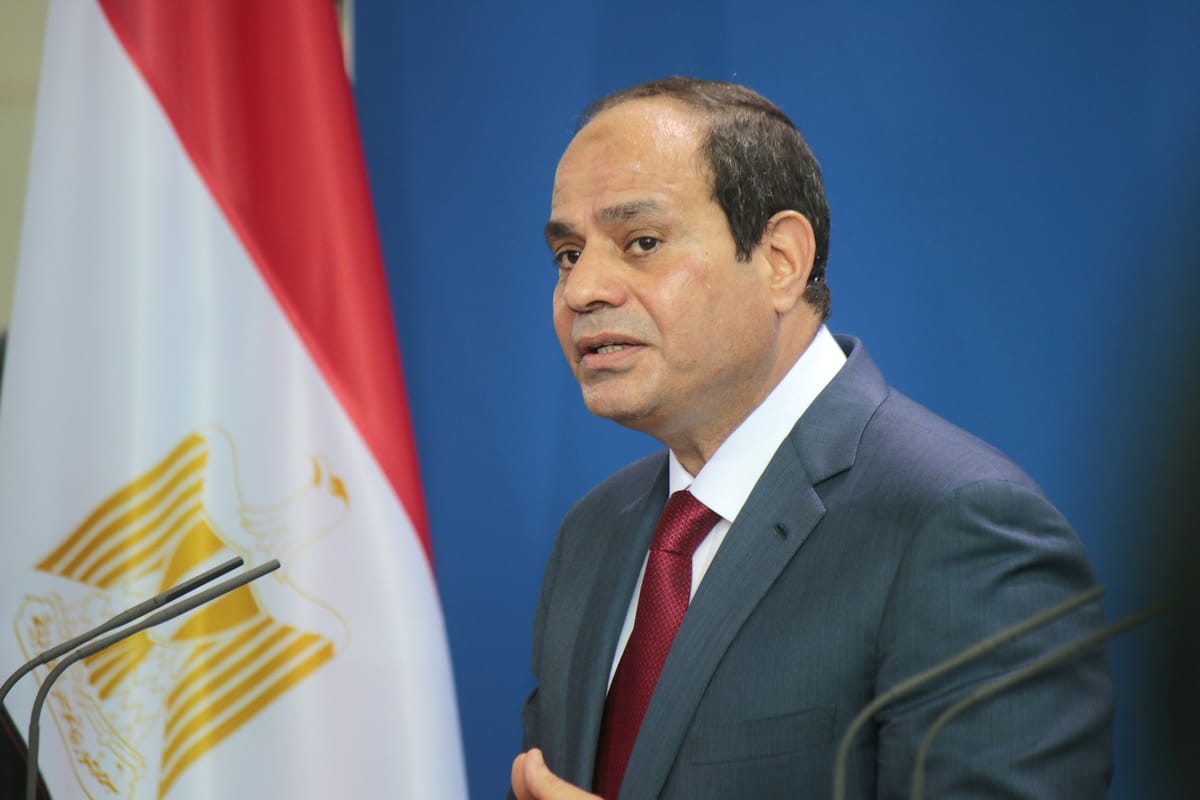
Egypt is currently trapped in a paradoxical position, according to analysis by Professor Uzi Rabi. While the nation remains a vital strategic player with control over the Suez Canal, its internal economic foundations are crumbling under the weight of regional wars. President Abdel Fattah el-Sisi is navigating a landscape where Egypt is no longer the undisputed leader of the Arab world, yet it remains the primary buffer against total regional collapse. The ongoing war between Israel and Iran, combined with the instability in Gaza, has placed Cairo in a defensive crouch, fearing that economic hardship could lead to domestic unrest.
The economic numbers are particularly grim. Since the start of the war with Iran, approximately $10 billion in short term foreign capital has fled the country. This exodus of wealth is a direct threat to Egypt's internal stability, impacting everything from energy prices to tourism. Furthermore, Egypt relies on Israel for 15 to 20 percent of its natural gas supply. When the Leviathan gas field was temporarily shut down due to fears of an Iranian strike, the flow of energy to Egypt stopped, highlighting just how vulnerable the country has become to external shocks.
In response to these pressures, Sisi recently hosted French President Emmanuel Macron to present a list of demands. Egypt is seeking European backing for its stance against the displacement of Palestinians into the Sinai Peninsula, as well as financial credit and investment to keep its economy afloat. The message to Europe is clear: if the West wants Egypt to remain a "defense wall" against refugees and a protector of global trade through the Suez Canal, it must provide immediate and substantial economic and political support.
On the diplomatic front, Egypt is performing a delicate balancing act regarding Iran. While Cairo frequently condemns Tehran to please its allies in Saudi Arabia and the United Arab Emirates, it has no interest in joining a military coalition against the Islamic Republic. Instead, Egypt is partnering with countries like Pakistan and Turkey to call for an immediate ceasefire. For Sisi, the war is not a distant geopolitical game, it is an immediate tax on his country’s survival, manifesting in rising insurance premiums for ships in the Suez and a sharp drop in export declarations.
The situation in Gaza remains the most volatile issue for Egyptian security. Cairo views the territory not through the lens of Palestinian statehood, but as a border management problem. The primary fear is a mass influx of refugees into Sinai, which would turn the peninsula into a permanent security zone and threaten Egyptian sovereignty. While Sisi views Hamas as a dangerous offshoot of the Muslim Brotherhood, he recognizes them as a necessary address for humanitarian aid and border security, aiming to reduce them to a restrained player rather than a sovereign power.
Ultimately, Egypt is fighting to ensure the region is not rebuilt without its participation. With new trade corridors being planned between Asia and Europe that could bypass the Suez Canal, Cairo is desperate to prove it is still the essential gatekeeper. Whether through its role as a mediator in Gaza or its strategic geography, Egypt is trying to turn its vulnerabilities into leverage, demanding that the international community pay the price to keep the country stable.