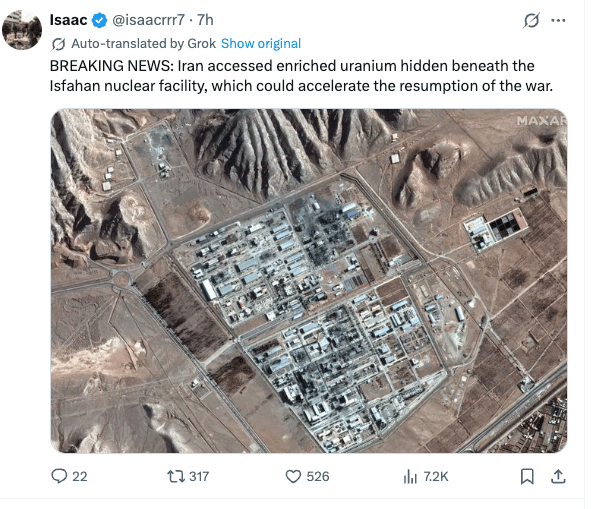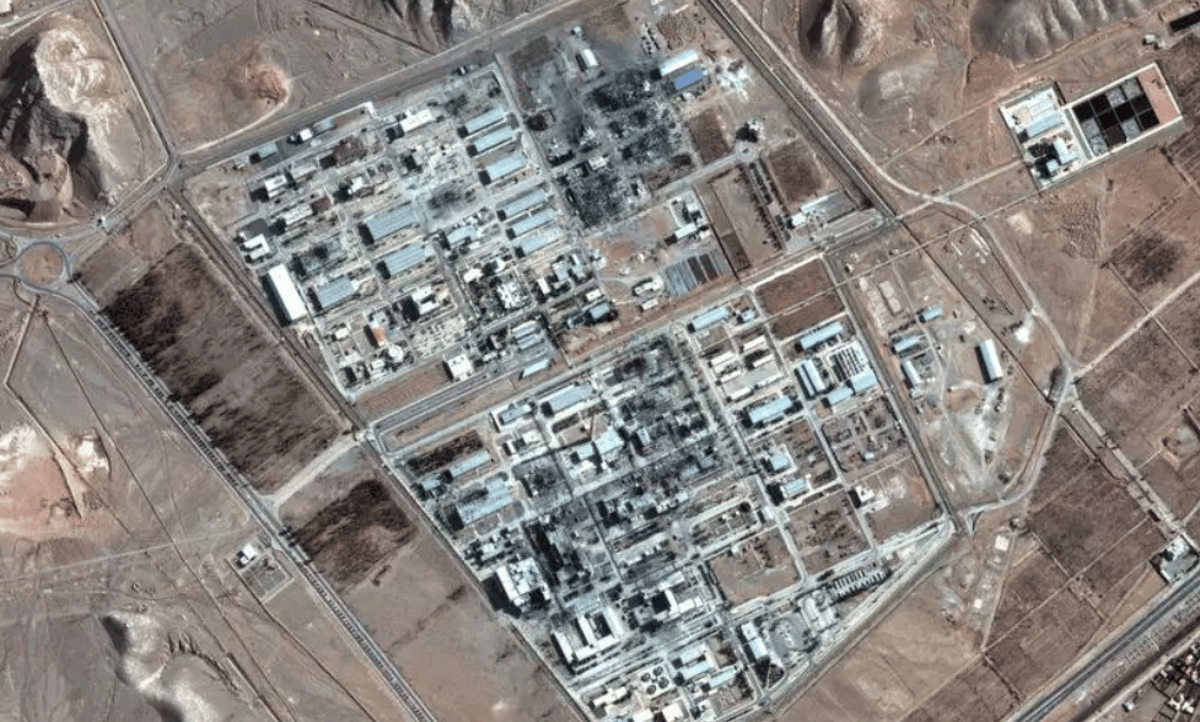
Iran has resumed activity at its Isfahan Nuclear Technology Center, one of its primary nuclear research facilities, following U.S. and Israeli strikes in June 2025 that targeted the site, according to nuclear researcher David Albright of the Institute for Science and International Security. Satellite imagery, shared via X posts by @DAVIDHALBRIGHT1 and @TheGoodISIS today, revealed vehicles and heavy engineering equipment at the northernmost tunnel entrance of the Isfahan complex.
The Isfahan facility, Iran’s largest nuclear research center, employs approximately 3,000 scientists and houses critical infrastructure, including uranium conversion facilities, fuel fabrication plants, and three Chinese-supplied research reactors. It plays a key role in preparing uranium for enrichment at other sites like Natanz and Fordow. In June 2025, U.S. forces, as part of Operation Midnight Hammer, struck the site with Tomahawk cruise missiles, damaging at least 18 surface buildings, including a fuel rod production facility, according to a CNN report citing U.S. intelligence. Israeli airstrikes on June 13 and 21 further targeted structures, but the research reactors remained intact, and the International Atomic Energy Agency (IAEA) reported no radiation leaks.
The recent activity, observed within the last week, involves efforts to access tunnel entrances that were collapsed or filled post-strikes, possibly to recover equipment or secure uranium stores. Albright noted that Iran had planned to install 2,000–3,000 additional centrifuges at a new enrichment plant in Isfahan before the strikes, raising questions about the location of these components. Jeffrey Lewis of the Middlebury Institute suggested Iran may have undisclosed facilities, complicating efforts to fully neutralize its nuclear program. A U.S. intelligence assessment from June 25, 2025, indicated that while surface infrastructure was significantly damaged, core underground facilities likely remain operational, limiting the strikes’ long-term impact.