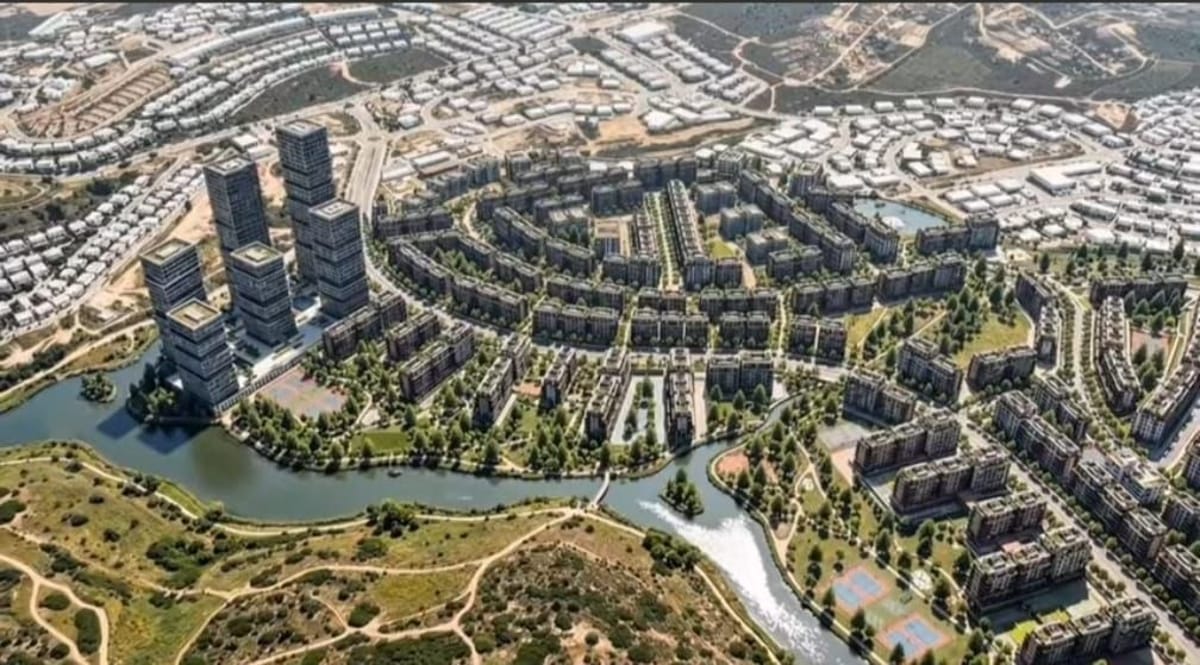
The committee's decision emphasized phased implementation: residential complexes will advance in parallel with road networks, public buildings, and open spaces. The committee mandated that portions of the employment zone must be developed alongside the first residential phase, and that occupancy of housing units will be conditional on completion of public buildings, roads, and necessary development work in each section.
Planners based the district on a "15-minute city" concept, enabling residents to reach educational institutions, commerce, employment, and public services on foot. The development is expected to connect the Ramat Beit Shemesh neighborhoods with older parts of the city and serve as a cornerstone in preparing Beit Shemesh for growth to approximately 500,000 residents.
The regional committee praised the plan's advancement, stating it creates "quality urban fabric" while making "proper use of urban land resources" and adding substantial employment areas, public buildings, and open spaces.
Shimon Goldberg, chairman of the local planning and building committee and member of the regional committee, who serves as deputy mayor, said: "Approval of the Central District is a strategic milestone for Beit Shemesh's future. Some 16,000 housing units in the city center, with construction adapted to the needs of the haredi public, alongside employment, public institutions, open spaces, and advanced transportation infrastructure—this is essentially establishing a new city within the city."
Goldberg added: "The decision that development will proceed in a gradual and integrated manner, so that roads, public institutions, and employment are developed together with housing, is especially significant and will enable us to build a quality district that truly addresses all residents' needs. The new district will connect parts of Beit Shemesh and constitute a central pillar in our preparation for a city of over half a million people."