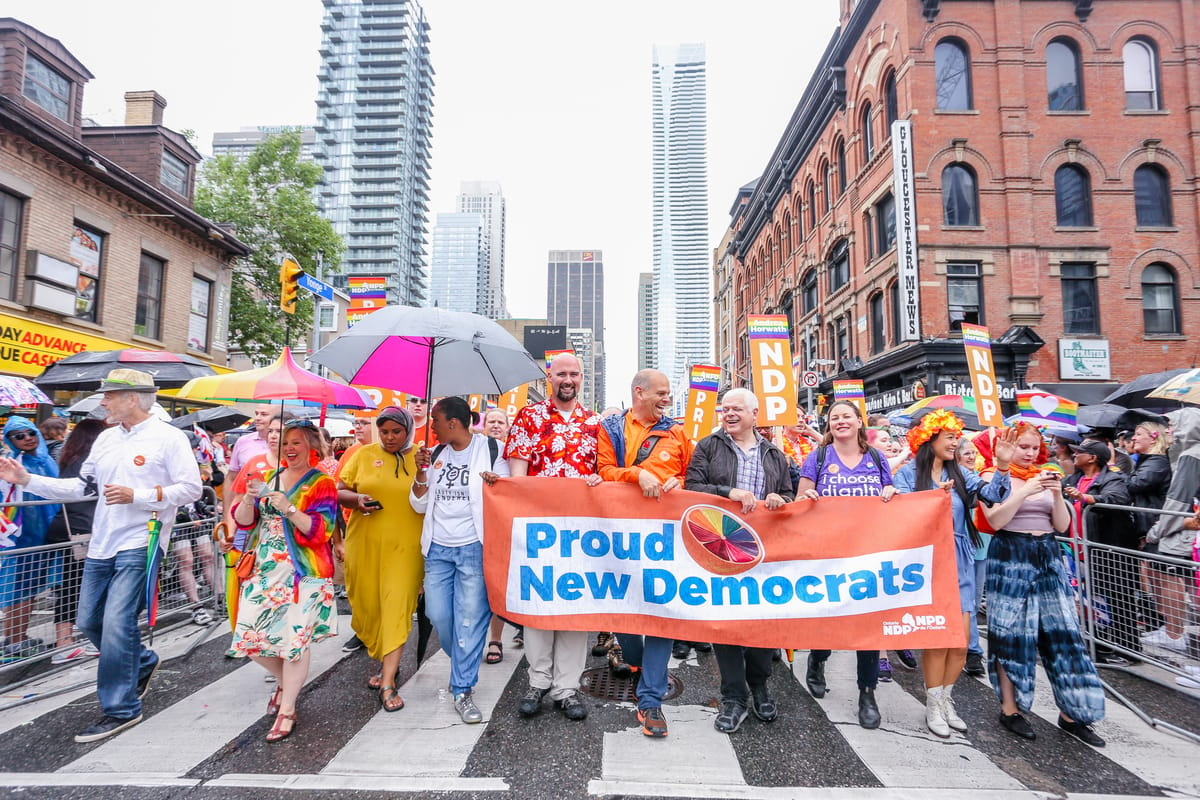
Canada’s left-leaning New Democratic Party has chosen former journalist and activist Avi Lewis as its new leader, following a significant decline in support in the most recent federal election.
Lewis, who is Jewish , secured 56% of the vote in a first-ballot victory, defeating Member of Parliament Heather McPherson and several other candidates. He takes over a party that now holds just six seats in the House of Commons, after losing 17 seats in the 2025 election.
He comes from a prominent political family with deep ties to the party. His grandfather, David Lewis, was a founding figure of the NDP and served as its leader in the 1970s, cementing the family’s longstanding influence within Canada’s left-wing political movement.
In his victory speech in Winnipeg, Lewis pledged to rebuild the party around working-class concerns and the rising cost of living. His platform includes strengthening worker protections in the age of artificial intelligence, halting new oil and gas projects, and exploring publicly owned, non-profit grocery stores.
The leadership change comes at a moment of internal strain for the NDP, including ongoing criticism and divisions over allegations of antisemitism tied to the party’s stance on Israel and the war with Hamas.
Jewish advocacy organizations, including the Centre for Israel and Jewish Affairs and B’nai Brith Canada, have raised concerns about what they describe as a shift toward more strongly pro-Palestinian positions within the party, as well as opposition to adopting the International Holocaust Remembrance Alliance definition of antisemitism. Critics argue these positions risk blurring the line between legitimate criticism of Israeli policy and antisemitic rhetoric.
Tensions have also surfaced within the party itself. In 2024, a cabinet minister in British Columbia resigned from the provincial NDP caucus, citing what she described as an unsafe environment for Jewish members, though other Jewish lawmakers rejected claims of systemic issues. Additional controversies, including campaign materials referencing “genocide” in Gaza, have drawn further criticism.
The NDP leadership has repeatedly stated that it condemns antisemitism and supports a two-state solution, while maintaining that criticism of Israeli government policy should not be equated with hate. However, the issue has contributed to internal divisions and declining support among some voters.
Lewis, 58, does not currently hold a seat in parliament and is expected to run in a future federal election or by-election. Until then, he will not be able to participate directly in parliamentary debates.
Despite the party’s federal struggles, it continues to hold power at the provincial level in British Columbia and Manitoba. Still, polling suggests the NDP faces a significant challenge in rebuilding its national profile, with a sizable share of former supporters viewing the party as increasingly irrelevant.