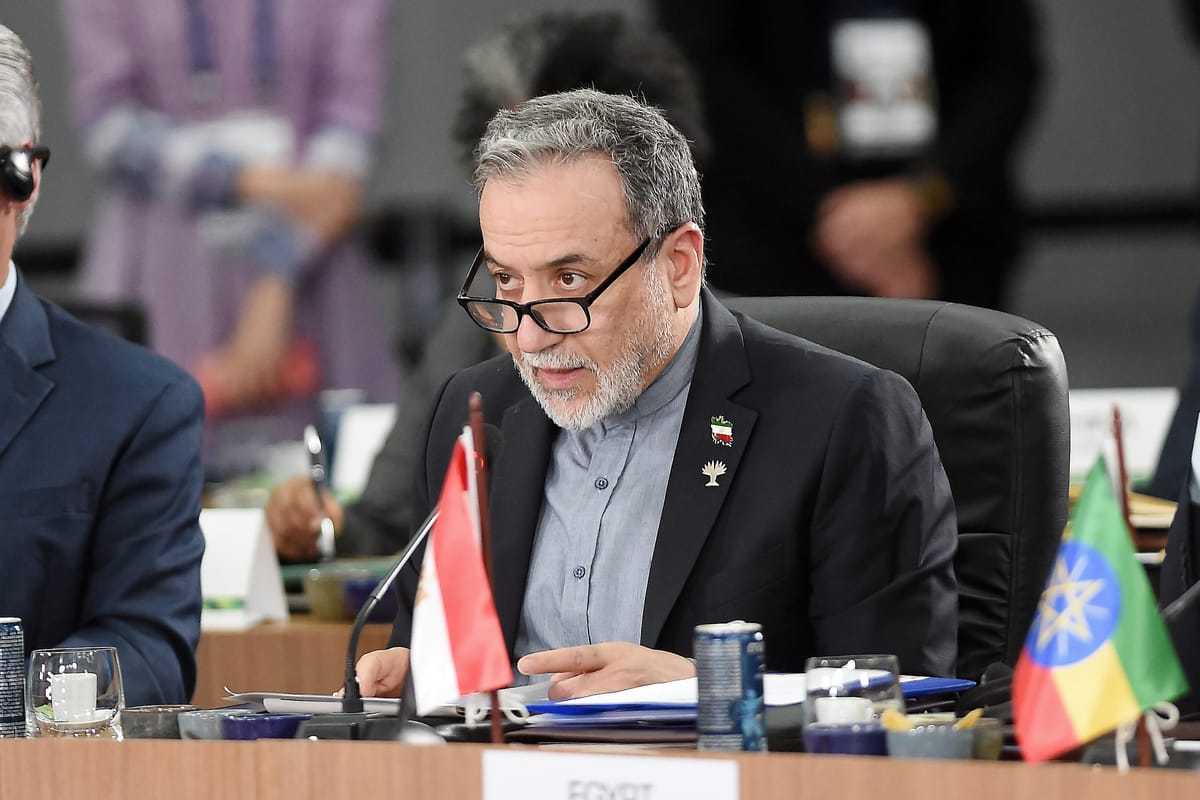
Iran has not requested a ceasefire and is not seeking negotiations with Washington, Iranian Foreign Minister Abbas Araghchi said Sunday, pushing back against claims by US President Donald Trump that Tehran may be ready to negotiate.
Speaking in an interview with CBS’s Face the Nation, Araghchi rejected suggestions that Iran was looking for a way out of the conflict.
“No, we never asked for a ceasefire, and we have never asked even for negotiation,” Araghchi said. “We are ready to defend ourselves as long as it takes.”
Trump had previously suggested that Iran appeared willing to consider negotiations but only under conditions unacceptable to the United States.
Araghchi also dismissed the idea that the war represents an existential threat to the Iranian regime.
“This is not a war of survival,” he said, adding that Iran remains “stable and strong enough.” He framed the conflict as a defensive effort, accusing the United States and Israel of launching an aggressive campaign against the country.
The foreign minister also addressed the status of Iran’s highly enriched uranium stockpile, saying it was now buried beneath the ruins of nuclear facilities struck by US and Israeli forces.
According to Araghchi, Iran’s nuclear infrastructure was heavily damaged during strikes on sites including the Isfahan facility, where much of the country’s enriched uranium had reportedly been stored.
“Our nuclear facilities were attacked, and everything is under the rubble,” he said.
Iran is believed to have possessed roughly 440 kilograms of uranium enriched to up to 60 percent purity before the strikes. That level of enrichment is close to weapons grade and could potentially be further refined to the 90 percent purity typically required for nuclear weapons.
Araghchi acknowledged that the material could theoretically be recovered but said Tehran currently has no plans to retrieve it.
“There is the possibility to retrieve them, but under the supervision of the International Atomic Energy Agency,” he said, adding that the issue might only be considered in the future if negotiations resume.
The comments come as Iran continues to threaten maritime traffic in the Strait of Hormuz, one of the world’s most important shipping routes.
Araghchi said several countries have approached Tehran seeking assurances that their ships would be allowed to pass safely through the strait. He declined to identify the governments involved but said Iran had already allowed vessels from certain countries to pass.
At the same time, Israel said it had expanded its air campaign across Iran. The IDF reported striking more than 200 targets in western and central parts of the country in the past day, including command centers used by the Islamic Revolutionary Guard Corps and the Basij paramilitary force.