
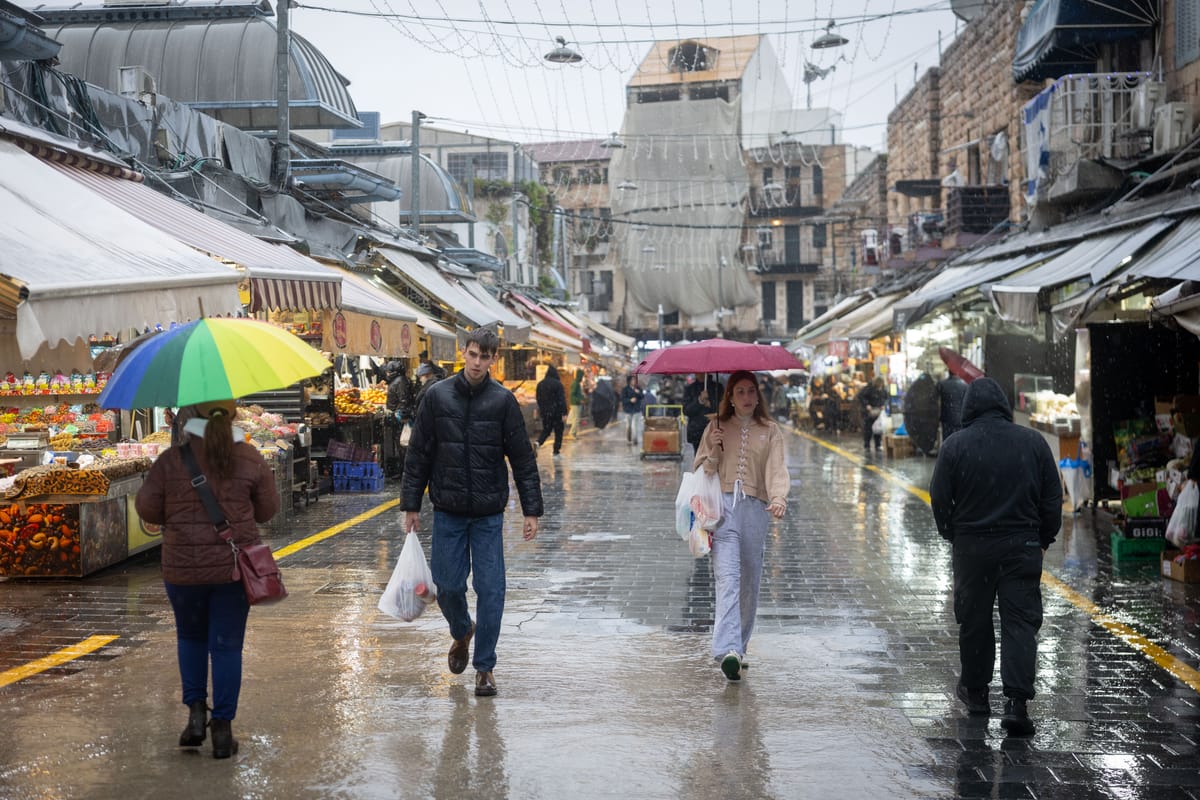
Every winter in Israel brings the same strange mix of dread and resignation. The sky darkens, the forecasts turn serious, WhatsApp fills with warnings, and the country braces itself not for rockets or earthquakes, but for rain. Israelis are more afraid of rain than of missiles. It sounds like a joke, until you realize how often it’s true.
The most absurd part is that none of this should surprise us. It rains every year. Not unexpectedly, not once in a generation. Every winter, like clockwork. And every winter, we watch the same scenes play out. Streets turn into rivers. Underpasses become traps. Cars float, walls collapse, homes are damaged, and every few years, people lose their lives.
We’re so afraid of a storm that stores close when tall people sneeze, and somehow we’ve convinced ourselves this is normal. It isn’t.
This isn’t about extreme weather or bad luck. It’s about infrastructure. Rain doesn’t overwhelm Israel because it’s unusually heavy or unpredictable. It overwhelms us because our systems were never built, or never updated, to handle what we know is coming. Drainage systems are outdated or incomplete. Cities are built up without enough absorption. Paved surfaces replace open land, and water has nowhere to go. When it does, we act shocked.
That’s the part that’s hardest to accept, because Israel is not a poor country scrambling to cope with limited means. It’s no longer a third world country, if it ever was. This is a place that intercepts missiles in midair, turns seawater into drinking water, and exports technology to the world. We know how to plan, build, and innovate when we decide something matters.
Yet a few hours of rain can still shut down major cities.
Part of the problem is that infrastructure is invisible when it works. No one notices a drainage tunnel that quietly does its job for decades. There’s no headline when streets don’t flood, no applause when people get home safely because a system functioned as intended. Missiles make for dramatic images. Flood prevention makes for boring spreadsheets and long construction timelines. And boring rarely wins budgets or elections.
But the consequences of neglect are anything but boring. Families lose cars, apartments, and savings every winter. Businesses shut down. Municipalities spend millions reacting instead of preventing. Emergency services risk their lives rescuing people who never should have been in danger to begin with. And sometimes, the price is paid in lives, which is the one cost that can’t be written off as damage.
Climate change only adds urgency. Rainfall is becoming more intense, falling in shorter bursts that overwhelm systems already stretched thin. When infrastructure operates on the edge of failure, even small changes turn inconvenience into disaster. Hoping the next storm won’t be as bad is not a plan.
The solutions are not mysterious. Israel needs a serious, coordinated effort to upgrade drainage, manage runoff, and plan cities with water in mind. That means long-term investment, better coordination between government and municipalities, and the willingness to dig up streets now so they don’t turn into rivers later. It means planning for rain we know will fall, not treating each storm as an unforeseeable crisis.
Yes, it costs money. Yes, it takes time. But leadership is measured by what prevents tragedy, not by what reacts to it after the fact.
Missiles are meant to scare us. Rain shouldn’t.