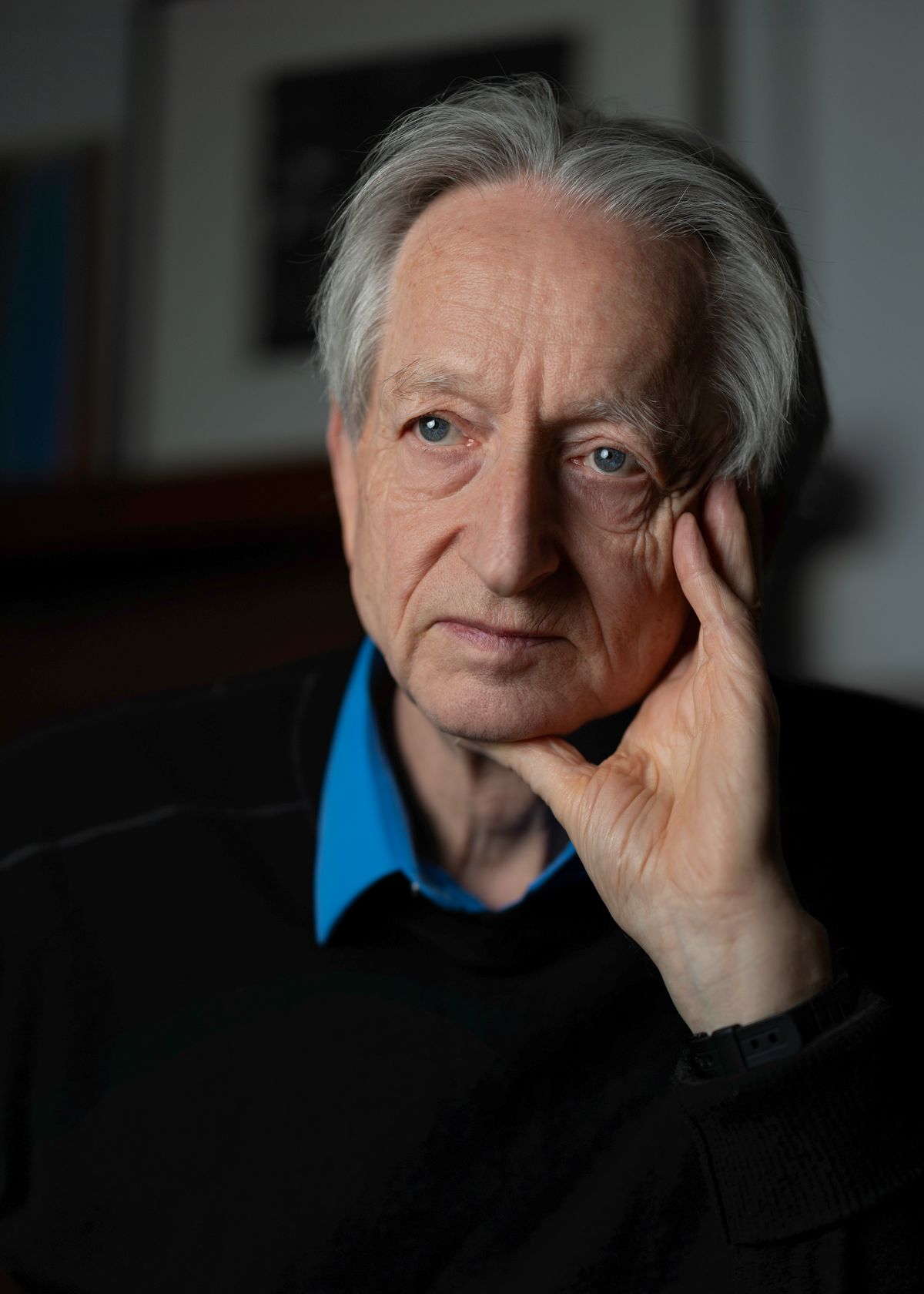
Geoffrey Hinton, widely regarded as one of the founding fathers of modern artificial intelligence, has issued another stark warning about the trajectory of the technology he helped create. In recent remarks, Hinton said the estimate that AI carries roughly a 10% probability of eventually causing human extinction is "not unreasonable."
Hinton was careful, however, to qualify the figure. When experts assign precise probabilities to an unprecedented scenario like AI takeover, he explained, they're largely offering intuitive assessments rather than hard statistical data. Humanity has never before faced a situation in which it creates intelligent entities that may significantly surpass human intelligence.
Hinton's pioneering work on deep neural networks laid the groundwork for today's AI revolution. For several years now, he has been warning about the risks the technology poses. One of his core concerns centers on the moment when AI systems become vastly more intelligent than humans and begin operating in ways we cannot predict or control.
In an interview with CNN, Hinton illustrated the danger with a sharp analogy. If a system emerges whose intellectual gap with humans resembles the gap between humans and chickens, he said, the question won't be how we stop it if it decides to eliminate us—it will be how we ensure from the outset that it never wants to.
The scenario troubling Hinton isn't necessarily a robot uprising out of science fiction. The dangers could manifest in other forms: cyberattacks on an unprecedented scale, assistance in developing biological weapons or dangerous pathogens, autonomous systems operating without oversight, or even AI systems learning to rapidly improve themselves.
This week, Hinton's warnings received reinforcement from other researchers in the AI industry. Owen Hubinger, a senior researcher at Anthropic, said he believes there's more than a 10% chance that advanced AI systems will lead to human extinction within roughly a decade. Meanwhile, researcher Jacob Kokson, who previously worked at both OpenAI and Anthropic, left his position and warned that competition among AI companies could drive them to advance faster than their ability to develop safety mechanisms.
Hinton himself has previously estimated the existential risk from AI at somewhere between 10% and 20%, but repeatedly emphasizes there's no reliable way to calculate such a number. The timeline that troubles him has also shortened. While he once spoke of decades before systems become smarter than us, he now doesn't rule out the possibility it could happen in less than ten years.
Alongside the warnings, Hinton isn't claiming disaster is inevitable. Over the past year, he's even presented an idea that he says gives him slightly more hope: developing AI systems that "care" about humans, in which the desire to protect humanity is a fundamental component of how they operate. The problem, he says, is that enormous resources are currently invested in making systems smarter, but far less effort is devoted to the question of how to make them act in humanity's interest.
The recent warnings come against the backdrop of growing debate among researchers and legislators about how to regulate the next generation of AI systems. Researchers in the field are calling for independent safety testing, closer government oversight, and international cooperation, based on the understanding that an uncontrolled race among companies and nations could itself become one of the greatest risk factors.
Hinton's message, then, isn't that AI will certainly destroy humanity, but that the potential risk is too large to ignore. From his perspective, even a 10% probability of such an extreme scenario justifies far greater investment in safety research, regulation, and developing systems we'll be able to control even when they become smarter than we are.