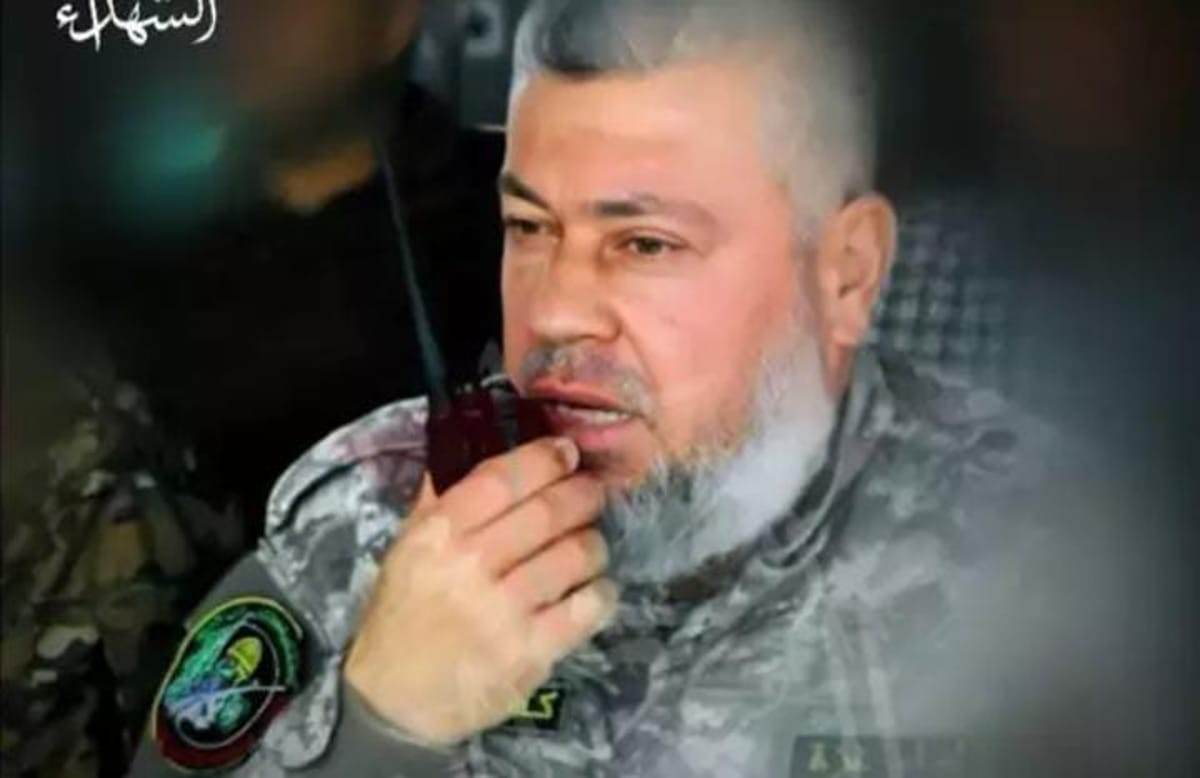
The recent successful elimination of several top Hamas leaders has created a leadership vacuum and left the critical decision regarding the hostage deal in the hands of a figure ill-equipped for political negotiations: Azz ad-Din al-Haddad, the remaining field commander, who is isolated and reportedly paranoid within the subterranean tunnels. According to this analysis, al-Haddad was never trained to manage the complex, political scenario of ending the war, making the traditional negotiation process ineffective.
President Donald Trump has put a comprehensive 21-point deal on the table, which has the reported backing of all Arab states. While Hamas leadership abroad may struggle to reject it outright, the key to the release of the hostages remains with al-Haddad, the man deep in the tunnels. To understand Hamas's current decision-making, which is now defined by functional, managerial, and operational crises, one must consider the group's current state of shock and disappointment.
From Initial Success to Strategic Crisis
Hamas’s initial plan, "Al-Aqsa Flood" on October 7, achieved surprise and resulted in the brutal mass murder and kidnapping of approximately 250 people. However, the plan also met with numerous setbacks. The organization was not prepared for the sheer volume of captives, and it soon recognized that kidnapping women, children, and the elderly was damaging its standing and its patron, Qatar, more than it was serving its aims. International pressure forced the early release of women and children at low prices.
Furthermore, Hamas was disappointed that Hezbollah did not commit its full capabilities on the northern border, and it failed to incite widespread involvement from Palestinians in Judea, Samaria, and Israeli Arabs as seen in previous rounds of violence. This necessitated a rapid shift in its strategy.
The group was subsequently surprised by the intensity and destructive power of the Israeli military manoeuvre and soon began losing its key architects, founders, and leaders, including figures like Yahya Sinwar, Muhammad Deif, Saleh al-Arouri, Ismail Haniyeh, and others. The vacuum has been filled by individuals, both in the external and internal leadership, who were not properly chosen or prepared, struggling to formulate a cohesive strategy for managing and ending the war. Communication between the internal and external leadership has become difficult and dangerous, further hindering deep strategic dialogue.
Personal Survival and the Path Forward
A recent attempted strike by the Israeli military, which missed high-ranking Hamas officials in Qatar but eliminated their aides, created a chilling realization among the surviving leaders: their personal survival is temporary. They understand that after any deal is finalized, their fate may mirror that of the deceased Hamas leaders. This fear is why the current 21-point plan reportedly includes guarantees that Israel will not target the group's senior officials, along with a commitment not to strike in Qatar again.
The motivations of the current decision-makers are split between personal survival, organizational continuity, and Palestinian national interests. While the 21-point plan may address the personal and national aspects, it represents a fatal blow to the organization itself.
The analysis concludes that if Israel is serious about securing the deal, a radical approach is needed to bypass the field commanders' isolated paranoia. The only viable solution is to allow Egyptian security officials to safely extract Azz ad-Din al-Haddad from the tunnels. Once above ground, they can explain the principles of the deal, detail the guarantees provided by Arab states, and clearly communicate the far-reaching consequences of refusing the agreement. Signatures and polished speeches from Washington must be physically translated into absolute guarantees delivered to the commanders in the tunnels of subterranean Gaza; otherwise, the talks will inevitably reach a stalemate.