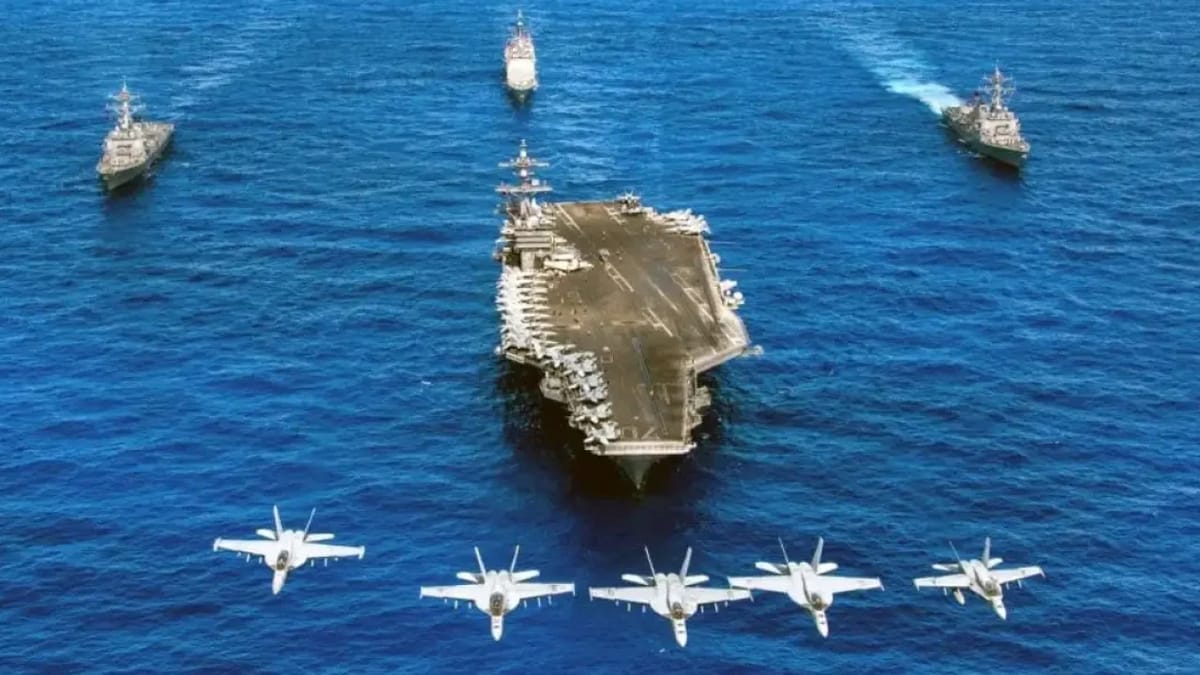
The United States is weighing the imposition of a naval blockade on Iran as a potential alternative to direct kinetic military strikes, according to leading Iran expert Danny Citrinowicz, a senior researcher at the Institute for National Security Studies. Citrinowicz based his assessment on the significant number of US ships heading to the Middle East, including aircraft carriers and support vessels, creating operational flexibility that could prioritize economic pressure over immediate bombing campaigns.
President Donald Trump recently stated that “a lot of ships are heading towards Iran,” adding, “We have an armada heading their way. They know what we want.” He expressed hope the force would not be needed but left open the possibility of action. Citrinowicz noted that this presence allows Washington to pursue options beyond airstrikes. “The American presence in the Gulf region allows for operational flexibility that does not necessarily mean there will be a kinetic attack, but may also move toward imposing a blockade on Iran,” he explained.
Israel prefers the United States take the lead on any major action against Iran but remains prepared for all scenarios. Citrinowicz said Israel must stay vigilant because “all options are on the table,” though predicting Trump's intentions remains difficult due to “daily contradictions in Trump’s tweets.” Former National Security Advisor Eyal Hulata agreed that the current buildup does not point to an imminent large-scale war. “It is possible that as a result of the pressure, [the US] will succeed in getting the Iranian leader to agree to their terms and come to the negotiating table,” he said, referencing Trump's preference for deal-making.
Both experts cautioned that while Iran might refrain from retaliating against Israel over a limited or symbolic strike, a broader campaign aimed at regime change could provoke direct attacks on Israeli targets to disrupt the operation. Hulata warned such a move would be a grave error by Tehran, as Israel would respond forcefully against “expensive and extremely important infrastructure,” inflicting severe damage on Iran's military and economy. He advised restraint, noting Israel “does not have the ability to reignite unrest through a strike of its own” but could amplify existing domestic protests if the regime is sufficiently weakened.
Hulata expressed confidence in Israel's Home Front Command. “Despite all the noise,” he said, “I estimate that the Home Front Command and the security establishment will not take unnecessary risks. It will be important to make sure everyone is within a protected range and that we are prepared.”
The blockade option would exploit Iran's heavy reliance on maritime trade, particularly oil exports through the Strait of Hormuz, potentially crippling its economy without the risks of widespread airstrikes. This approach aligns with Trump's history of maximum pressure tactics while avoiding the political and human costs of a full-scale war. As US forces continue to amass in the region, the strategy appears designed to corner Tehran into concessions or collapse, though the final decision rests with the president and his national security team.