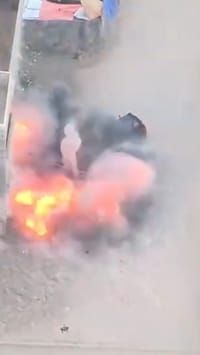

As Operation "Lion’s Roar" continues to shake the foundations of the Islamic Republic, a new reality is setting in within Israel’s security establishment. According to military officials speaking to the Wall Street Journal, Israel now acknowledges that completely dismantling Iran’s military capabilities is an "ambitious mission" that cannot be achieved within the scope of the current operation.
Despite this admission, the defense establishment maintains that the campaign has been a resounding success, having significantly degraded Tehran's ability to threaten Israeli and American interests.
The shift in strategy is visible on the ground. Military sources indicate that the IDF has pivoted away from attempts to spark an immediate regime collapse from the air. Instead, the focus has narrowed to the systematic destruction of Iran’s military-industrial complex.
What has been achieved so far?
Production Paralyzed: U.S. military officials noted yesterday that the majority of Iran’s missile and drone production facilities, as well as its naval assets, have been neutralized.
The Basij Retreat: While initial strikes on the Basij paramilitary forces forced them into hiding, Israel has reportedly ceased these strikes, acknowledging that they did not sufficiently destabilize the regime's grip on the streets.
Rhetorical Shift: Analysts point out that Prime Minister Benjamin Netanyahu has notably stopped his public calls for the Iranian people to rise up and topple the regime.
The timing of this pivot is not coincidental. With President Donald Trump reportedly pushing for a swift conclusion to the war or a temporary ceasefire as a springboard for negotiations, Israel is racing to lock in its gains.
Tehran, meanwhile, is signaling a cautious openness to talks but demands that Washington soften its "15-Point Plan." The U.S. demands, which include the dismantling of the nuclear program, an end to proxy support, and strict missile limitations, are currently viewed by the Ayatollahs as "excessive."
Despite the tactical successes, some Israeli security officials remain wary. They point to two critical "red flags" that suggest the job is far from over:
The Underground Threat: Iran still possesses a massive stockpile of uranium enriched to 60%, hidden deep underground. This material can be converted to weapons-grade fuel with relative ease.
Defiance: Tehran continues to flatly refuse any permanent restrictions on its missile program or its support for regional terror proxies.