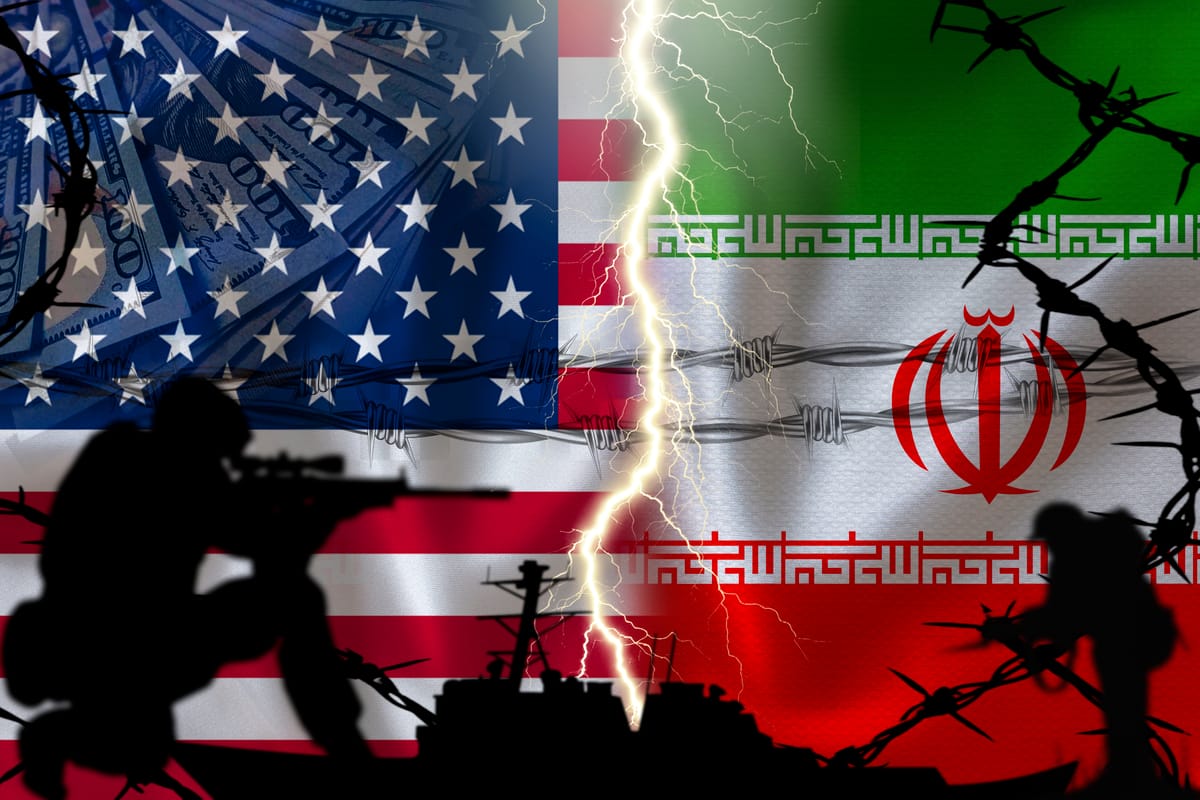
Israeli officials assess that the likelihood of a diplomatic agreement between the United States and Iran remains “very small,” despite recent statements from President Donald Trump suggesting progress in talks.
According to officials familiar with ongoing discussions, significant gaps persist between the two sides, particularly over core demands related to Iran’s nuclear program, ballistic missile capabilities, and freedom of navigation in the Strait of Hormuz.
Iran, for its part, is reportedly insisting on compensation from the United States as well as guarantees that no further military action will be taken against it under any future agreement.
Two sources involved in mediation efforts said those demands remain a major obstacle, with neither side showing signs of meaningful compromise.
Even as Trump described recent contacts as “very good and productive,” officials on both the Israeli and American sides indicated that military operations are continuing unchanged.
“Everything is continuing as usual. There is no change in the American war plans,” one Israeli source said.
A US source echoed that assessment, stating that “the strikes are continuing as planned,” underscoring the disconnect between diplomatic messaging and operational reality.
The ongoing military buildup in the region reflects that gap.
US forces continue to deploy significant reinforcements to the Middle East, including Marine units that could be used in a potential operation targeting Iran’s Kharg Island, a key hub for the country’s oil exports.
The USS Tripoli and USS New Orleans, carrying approximately 2,500 Marines, are expected to arrive in the region in the coming days. They will be joined by an Amphibious Ready Group led by the USS Boxer, which includes additional ships, aircraft, and roughly 4,500 personnel.
The deployment of these forces is widely seen as preparation for a possible escalation, including a ground operation aimed at securing the Strait of Hormuz and ensuring the flow of global oil shipments.
Senior American officials have previously indicated to Israeli counterparts that such a move may ultimately be unavoidable.
At the same time, the US Army is reportedly considering deploying elements of the 82nd Airborne Division, a rapid-response force capable of mobilizing thousands of troops within hours. The recent cancellation of a planned large-scale exercise has fueled speculation that the unit could be redirected to the Middle East.
Despite the diplomatic channel remaining open, Israeli officials say there has been no adjustment in coordination with US forces or in broader operational planning.
The dual track of continued negotiations alongside ongoing military preparations suggests that Washington is keeping multiple options on the table, including the possibility of a significant escalation if talks fail.
For now, officials on the Israeli side appear unconvinced that diplomacy will succeed.
Behind the optimistic public statements, the working assumption remains that a deal is unlikely, and that the conflict may yet expand rather than wind down.