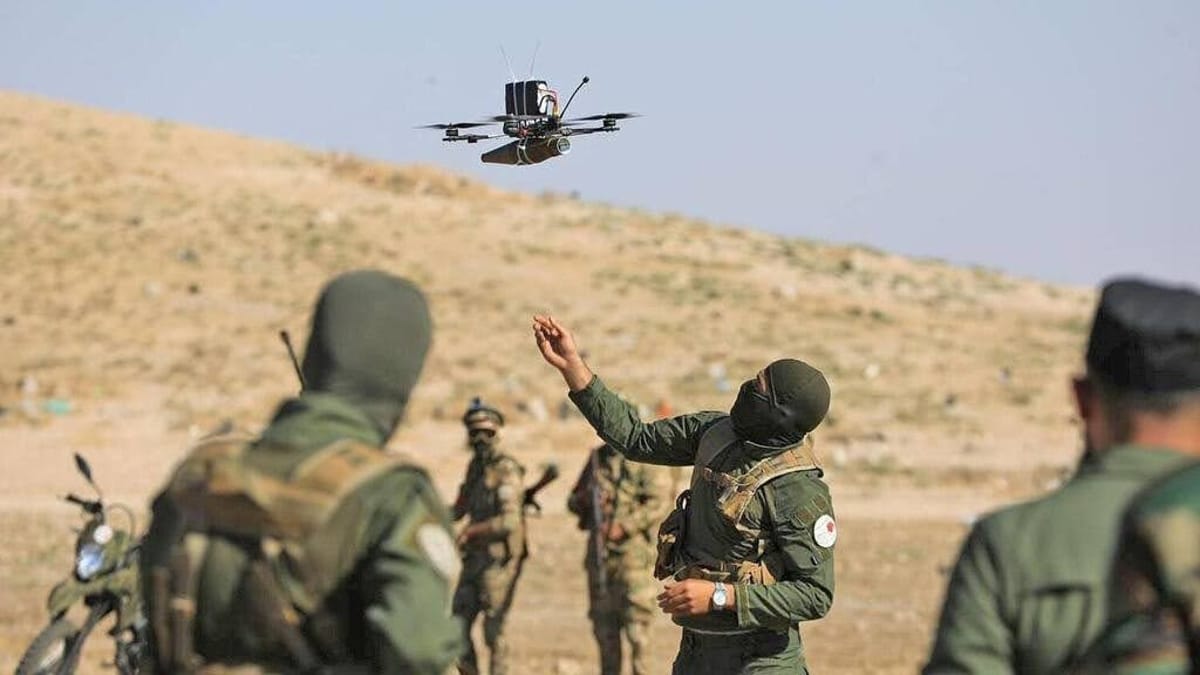
The tactical reality of modern warfare is shifting rapidly, prompting urgent warnings from seasoned military officers who assert that the explosive first-person-view drone threat currently face by forces along the northern border will inevitably expand into central Israel, Judea, and Samaria. The strategic warning was brought to light by Colonel Oren Zini, the former commander of the Menashe Brigade, who clarified that the arrival of these precision kamikaze aircraft in high-density civilian hubs like Kfar Saba is merely a matter of time. Zini dismissed any skepticism regarding the trajectory of the threat, stating that anyone who doubts this development fails to comprehend the basic operational dynamics of the modern Middle East.
According to the veteran commander, the military establishment cannot rely purely on passive technological shields to safeguard civilian populations from these low-altitude aerial threats. The only permanent solution requires an aggressive, continuous physical presence on the ground, with combat forces operating deep within hostile territory to actively liquidate drone manufacturing laboratories and apprehend the specialized technical cells operating them. Zini noted a historical pattern where advanced combat methodologies utilized by Hezbollah in Lebanon systematically migrate to southern terrorist factions, a process he termed the Lebanonization of Gaza, which is now actively repeating within regional arenas.
The urgency of the aerial threat was echoed by defense analysts who warned that a severe lack of systematic preparation could inadvertently facilitate a catastrophic scenario reminiscent of past border breaches, including coordinated swarm attacks on isolated military bases and civilian outposts. Commentators noted that the fact that Gaza-based factions have not yet launched a mass volley of thirty or forty explosive drones simultaneously to completely overwhelm frontline positions is nothing short of a miracle. The ongoing vulnerability has been characterized as a institutional failure, with critics pointing out that lessons from international conflict zones like Ukraine, where cheap drones permanently altered conventional battlefield doctrines, were largely ignored by procurement officials.
Despite the systemic delays in widespread deployment, private Israeli technology firms have already developed highly effective, sophisticated anti-drone defense systems, though many of these innovations remain caught in bureaucratic government approval pipelines rather than reaching frontline units. To demonstrate the capability of current localized security responses, observers recounted how a recreational drone flown near a restricted military installation was successfully intercepted within mere seconds by automated base systems. The primary operational problem is that these effective counter-measures are currently too bulky, lacking the mobility required to accompany ground troops as they maneuver through complex combat zones.
In direct response to growing intelligence pointing toward an imminent proliferation of drone terrorism within the interior sectors, the military has quietly launched a massive, coordinated confiscation sweep. Security forces managed to seize approximately one hundred advanced and recreational drones across Judea and Samaria within the past two weeks alone, representing a massive escalation in defensive operations. This single fortnightly total accounts for nearly twenty-five percent of all drone seizures recorded throughout the entire year, illustrating the frantic pace at which military planners are working to strip hostile cells of their aerial capabilities before a major escalation occurs.