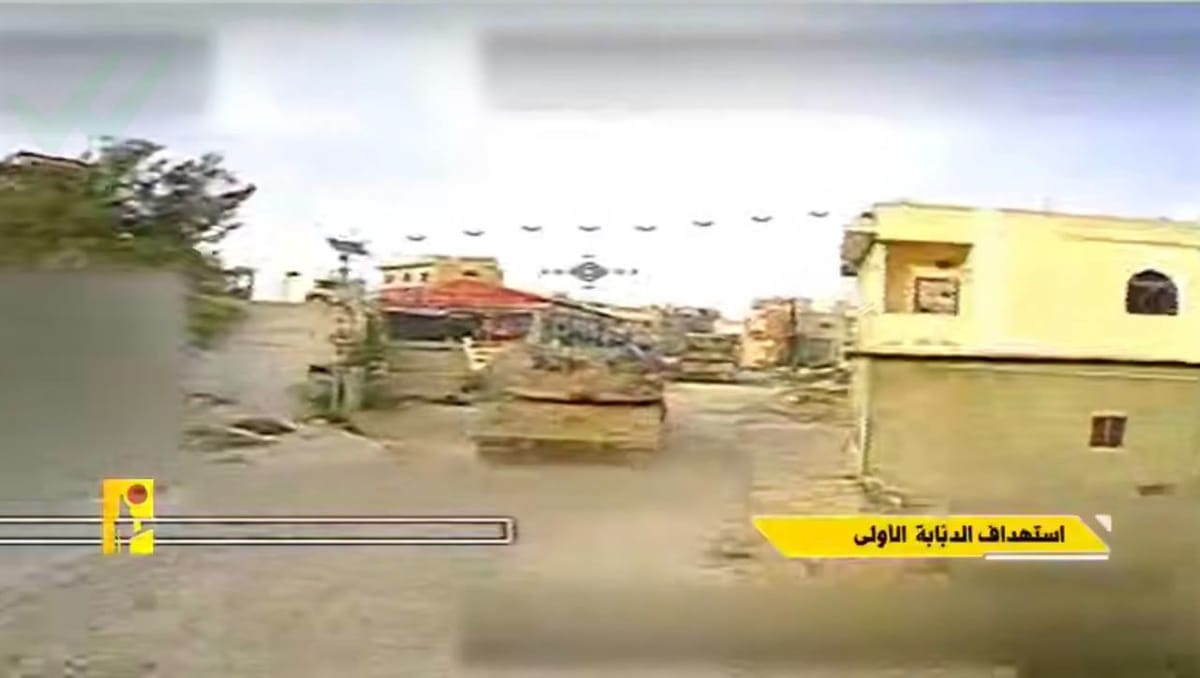
As Hezbollah ramps up first-person-view (FPV) drone attacks on IDF troops and armor in southern Lebanon, many using fiber-optic guidance copied straight from the Ukraine battlefield, Israeli forces are facing a low-cost, high-impact weapon that has already transformed modern warfare. The good news? Ukraine has spent years bleeding in the lab of real combat and developed practical defenses that could save Israeli lives right now.
Hezbollah has dramatically escalated its use of small, explosive FPV drones, with reports of more than two dozen strikes in recent weeks. These cheap kamikaze quadcopters, often carrying RPG warheads, are proving more persistent than traditional anti-tank missiles. The game-changer is fiber-optic versions that trail a thin cable behind them, making them completely immune to radio jamming, a tactic pioneered and refined in Ukraine.
Ukraine’s Hard-Earned Lessons for Israel
1. Electronic Warfare Is No Longer Enough
Traditional jammers that work against standard radio-controlled drones fail against fiber-optic FPVs. Ukraine learned this the hard way and shifted to layered defenses.
2. Kinetic and Drone-vs-Drone Interception
Ukrainian units now use mobile radars to detect incoming FPVs early, then launch their own cheap interceptor drones to ram or detonate near the threat. This “drone-on-drone” tactic has become a standard brigade-level tool. Ukraine has even downed Russian attack helicopters with FPVs, a capability Hezbollah could copy.
3. Cheap Physical Barriers Work Wonders
- Steel mesh, fishing nets, or slat armor cages over vehicles and positions to snag or prematurely detonate drones.
- Widespread use of decoys, camouflage, and rapid dispersion to avoid presenting easy targets.
4. Training and Organization
Ukraine created dedicated anti-drone teams at the small-unit level, drilled soldiers on rapid rifle fire (“all guns up”), shotgun anti-drone rounds, and net guns. Simulators help troops react in seconds instead of freezing.
Experts at the Foundation for Defense of Democracies and others have explicitly urged Israel to work directly with Ukraine on these countermeasures. Ukraine has already dispatched advisors to Gulf states facing Iranian drones and is open to deeper cooperation.
Israel’s Existing Advantages and Urgent Gaps
Israel fields world-class systems like the Trophy active protection system (with new anti-drone upgrades) on Merkava tanks and Namer vehicles, plus advanced electronic warfare and lasers in development. But against low, slow, fiber-optic FPVs operating in Lebanon’s terrain, these are not always enough on their own. Troops have been forced to shoot drones down manually with small arms, a desperate last line of defense.
The IDF doesn’t have years to iterate. Bringing in Ukrainian advisors, scaling interceptor drones, and blanketing forward positions with physical and kinetic layers could blunt Hezbollah’s new favorite weapon before it becomes the new normal.
In the drone age, the side that adapts fastest wins. Ukraine has paid in blood for the playbook. Israel would be wise to read it.